2026 Best XLPE Cable Insulation Types for Global Buyers
Choosing the right Xlpe Cable Insulation in 2026 requires more than comparing voltage ratings or purchase prices. Global buyers must examine conductor size, operating voltage, installation environment, and expected service life. A 6 kV cable buried in dry soil faces different demands from a 33 kV cable installed near coastal infrastructure. Moisture, heat, mechanical stress, and network loading can change insulation performance over time.
This guide reviews common XLPE insulation options, including standard XLPE, tree-retardant XLPE, and formulations designed for demanding medium- and high-voltage systems. It considers thermal endurance, water-tree resistance, partial discharge behavior, and compatibility with IEC or equivalent regional standards. Manufacturing quality matters equally. Clean extrusion lines, controlled curing, and careful screening can prevent small defects from becoming expensive failures. Field experience shows that test certificates are useful, but production consistency deserves equal attention.
No single formulation wins everywhere. That is worth remembering. A low-cost cable may appear suitable until soil moisture, emergency overloads, or difficult jointing conditions are considered. Supplier claims can also be difficult to compare because test methods and reporting details vary between markets. Buyers should request type-test evidence, routine-test records, material data, and traceable factory information. Independent inspection may add cost, yet it can reveal weaknesses before shipment. This overview offers a practical framework for comparing Xlpe Cable Insulation types, while recognizing that final selection should follow project-specific engineering review and applicable local requirements.
What XLPE Cable Insulation Is and Why It Matters in 2026
XLPE means cross-linked polyethylene, a thermoset insulation used around copper or aluminum conductors. Heat and chemical links lock its molecular structure after curing. That stability supports a 90°C continuous conductor rating in many medium-voltage designs. Short circuits are different. Under relevant IEC cable standards, the conductor may reach 250°C briefly, when the design permits it. These limits still depend on screens, joints, installation, and fault duration.
Why does this matter in 2026? IEA Electricity 2024 expects global electricity demand to grow by about 4% annually through 2026. IRENA’s Renewable Capacity Statistics 2025 records 585 GW of renewable capacity added during 2024. More generation requires denser networks, longer underground routes, and steadier thermal performance.
For wet soil or high-voltage service, buyers should examine tree-retardant XLPE, semiconductive screens, and moisture barriers. Clean processing matters. Small contamination can become a weak point under electrical stress.
In practical procurement, compare peroxide-cured and silane-cured XLPE against voltage class, water exposure, and installation temperature. Peroxide curing is common for demanding medium- and high-voltage applications. Silane curing can suit selected lower-voltage or simpler production requirements. Do not treat the insulation label as the whole cable.
IEC 60502-1, IEC 60840, and IEC 62067 address different voltage ranges and test expectations. Yet standards do not remove field uncertainty. A cable can pass factory tests and still fail after poor jointing, bending, or overloaded ducts. That is the uncomfortable part. Buyers should request routine-test records, type-test scope, and installation guidance, not only a low price.
Key XLPE Insulation Types for Different Cable Applications
For global cable buyers, XLPE selection should follow voltage, installation environment, and service life. Standard XLPE suits low- and medium-voltage distribution, including buried feeders, commercial buildings, and industrial plants. It provides low dielectric loss and stable thermal performance. IEC 60502-1 covers many low-voltage and medium-voltage cable designs.
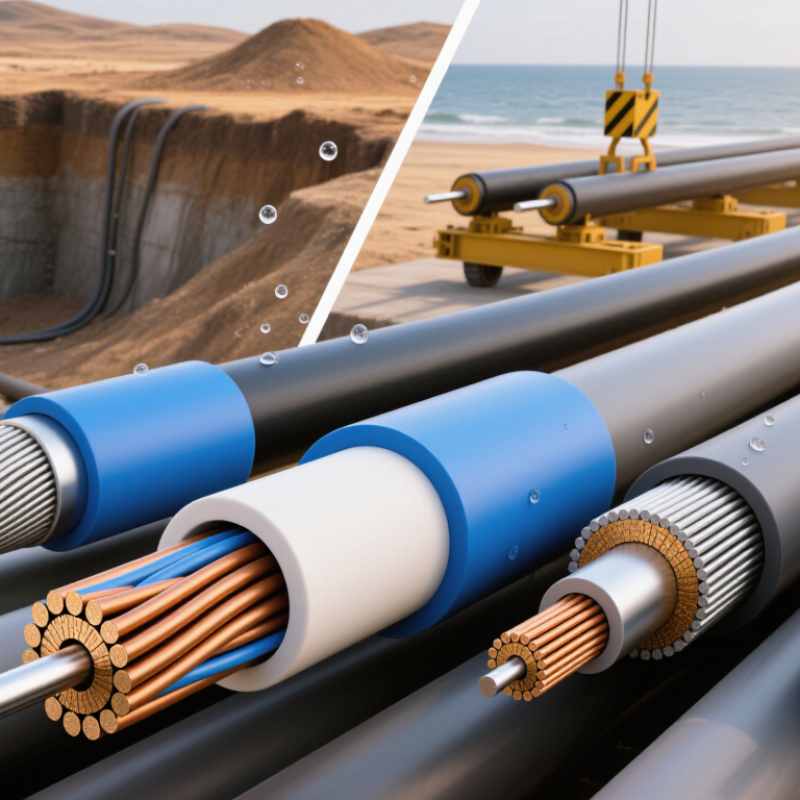
Tree-retardant XLPE is more suitable for medium-voltage networks exposed to moisture. Its formulation slows water-tree growth inside insulation, especially in buried or damp systems. That detail matters in coastal soil and areas with frequent groundwater contact. For high-voltage alternating-current links, ultra-clean XLPE supports stricter insulation control. IEC 60840 applies to cables above 30 kV, while IEC 62067 addresses systems above 150 kV.
HVDC projects require DC-grade XLPE, not simply conventional AC insulation. DC operation creates electric-field behavior and space-charge risks that need dedicated compound design and qualification. The IEA reported that global grids may need 80 million kilometers of new or upgraded lines by 2040. Its 2023 grid report also estimated annual grid investment must rise above 600 billion dollars by 2030. Those figures increase demand for reliable cable systems, but procurement decisions still need project-specific testing. A specification can look complete and still miss soil thermal resistance, joint compatibility, or emergency loading conditions. That is where buyers often need to rethink the first design choice.
How to Compare XLPE Performance, Safety, and Service Life
When comparing XLPE cable insulation, look beyond the temperature rating.
A 90°C continuous rating is useful, but it does not guarantee long service life. Check the cable’s voltage class, insulation thickness, conductor temperature, and emergency overload limits. Ask for routine and type-test records, including partial discharge, thermal aging, and voltage withstand results. Testing should follow recognized international standards.
Safety depends on the installation environment. A cable in wet soil faces different risks from one inside a dry industrial building. Review water resistance, flame behavior, smoke production, UV exposure, and chemical contact. Confirm the outer sheath matches the site conditions. Installation quality matters too. Excessive pulling tension or a tight bending radius can damage insulation before energization.
Tips:
Compare full test reports, not only catalog figures. Request the expected service life under your actual load profile. Inspect storage conditions and sealing before installation. A field check with a calibrated insulation tester can reveal moisture or handling damage. Datasheets are helpful, but they cannot predict every failure. I have seen well-rated cables perform poorly after careless jointing and poor drainage. That detail is easy to underestimate. Allow thermal expansion, verify grounding, and record test results before commissioning. Review them again after the first heavy-load season.
Global Standards and Buyer Requirements for XLPE Cables
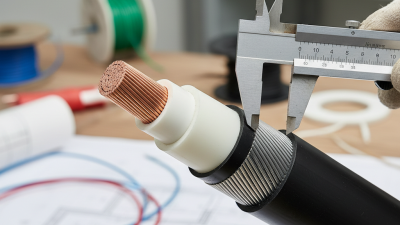
Global XLPE cable buyers should match insulation design with the correct international standard, not rely on the “XLPE” label alone. IEC 60502-2 covers medium-voltage cables from 6 kV to 30 kV. IEC 60840 applies above 30 kV and up to 150 kV. IEC 62067 covers higher-voltage systems above 150 kV and up to 500 kV. These boundaries affect factory testing, electrical-screen design, accessories, and documentation. Buyers should request conductor material, insulation thickness, water-blocking method, sheath composition, and test certificates. A missing test detail can create expensive delays.
Installation conditions matter equally. The IEA Electricity 2024 report forecasts average global electricity-demand growth of 3.4% annually from 2024 through 2026. More grids will require cables for dense cities, renewable projects, and long underground routes. Buyers should therefore specify soil temperature, burial depth, bending radius, short-circuit duration, UV exposure, and possible water ingress. IEC 60228 remains important for conductor class and resistance verification, while IEC 60811 supports polymer and sheath testing. One detail is often overlooked. Thermal rating depends on the complete installation, not insulation alone. Engineers should verify ampacity using local soil data and actual spacing. A standard-compliant cable can still perform poorly when the project assumptions are incomplete. That is an uncomfortable, but useful, procurement lesson.
How to Select the Best XLPE Insulation for Your Project
2026 Best XLPE Cable Insulation Types for Global Buyers
How to Select the Best XLPE Insulation for Your Project
Project selection should begin with voltage, installation conditions, and expected loading. Standard XLPE suits many medium-voltage networks with stable soil and controlled moisture. Water-tree-retardant XLPE is safer where groundwater, wet ducts, or coastal exposure may accelerate insulation ageing. For high-voltage direct-current systems, choose compounds designed to control space charge. Ordinary AC-grade XLPE is not automatically suitable.
Use the applicable voltage standard. IEC 60502-2 covers medium-voltage cables, while IEC 60840 addresses high-voltage cables above 30 kV. IEC 62067 applies to systems above 150 kV. These standards define testing, construction, and performance requirements. They do not replace site engineering. A cable’s thermal rating can fall sharply in dry soil, crowded ducts, or poorly ventilated tunnels.
Scale matters. The IEA’s Electricity Grids and Secure Energy Transitions report estimates that 80 million kilometres of grids must be added or refurbished globally by 2040. It also projects annual grid investment above 600 billion dollars by 2030. That expansion increases demand for durable insulation and verifiable test records. Ask suppliers for partial-discharge results, ageing evidence, installation limits, and factory-test certificates. CIGRE guidance also stresses system-level assessment, including joints and terminations. A practical rule helps, but it is imperfect. Many failures begin at accessories, not inside the XLPE itself. Be cautious with impressive catalogue numbers. Real soil, bending radius, and workmanship decide performance.
2026 Best XLPE Cable Insulation Types for Global Buyers
How to Select the Best XLPE Insulation for Your Project
XLPE cables commonly use a 90°C maximum continuous conductor temperature and a 250°C maximum short-circuit conductor temperature for up to five seconds, subject to the applicable cable standard and design. Select the insulation type according to voltage class, moisture exposure, electrical stress, installation environment, and whether enhanced water-tree resistance is required. TR-XLPE is typically preferred for medium-voltage systems exposed to moisture, while HV and HVDC XLPE designs require strict manufacturing and testing controls.