Hesheng Cable
Leave Your Message

2026 How to Choose Mv Cables Specifications for Global Buyers?

Selecting the right MV cables specifications is crucial for buyers in the global market. Each region has unique requirements, and understanding these is vital. Many buyers overlook this aspect, leading to inefficient installations.

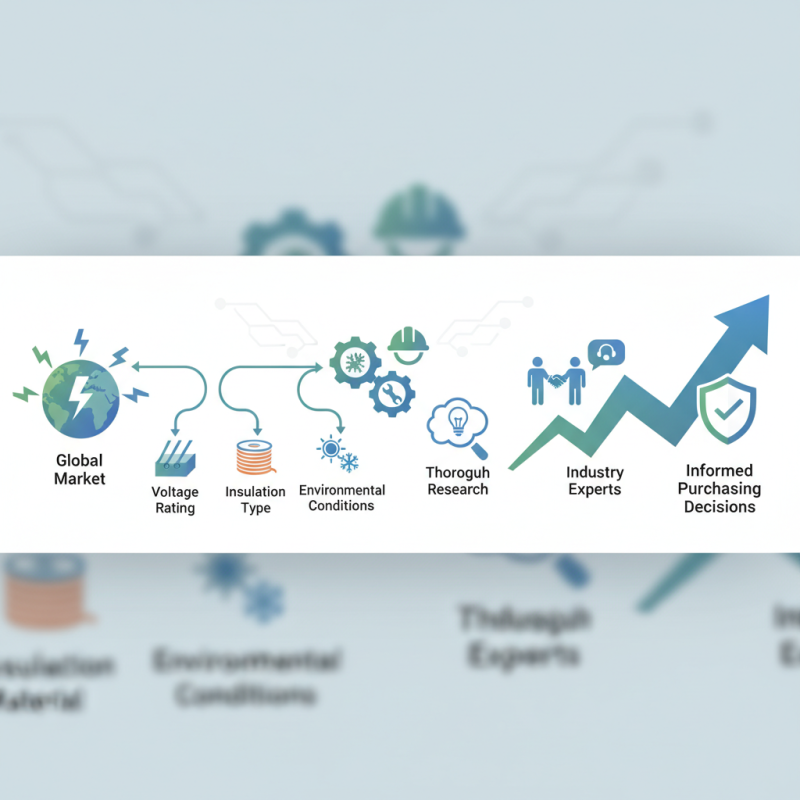
MV cables are essential for power distribution. These cables must meet specific criteria to ensure safety and reliability. Key specifications include voltage rating, insulation type, and conductor material. Each option has its pros and cons that buyers must evaluate.

Navigating the technical details can be overwhelming. It's easy to miss important factors, such as environmental conditions and installation methods. Engaging with industry experts can provide clarity. Ultimately, thorough research and consideration of MV cables specifications will lead to informed purchasing decisions.
2026 How to Choose Mv Cables Specifications for Global Buyers?

Understanding MV Cables: Key Terminology and Specifications

2026 How to Choose Mv Cables Specifications for Global Buyers?

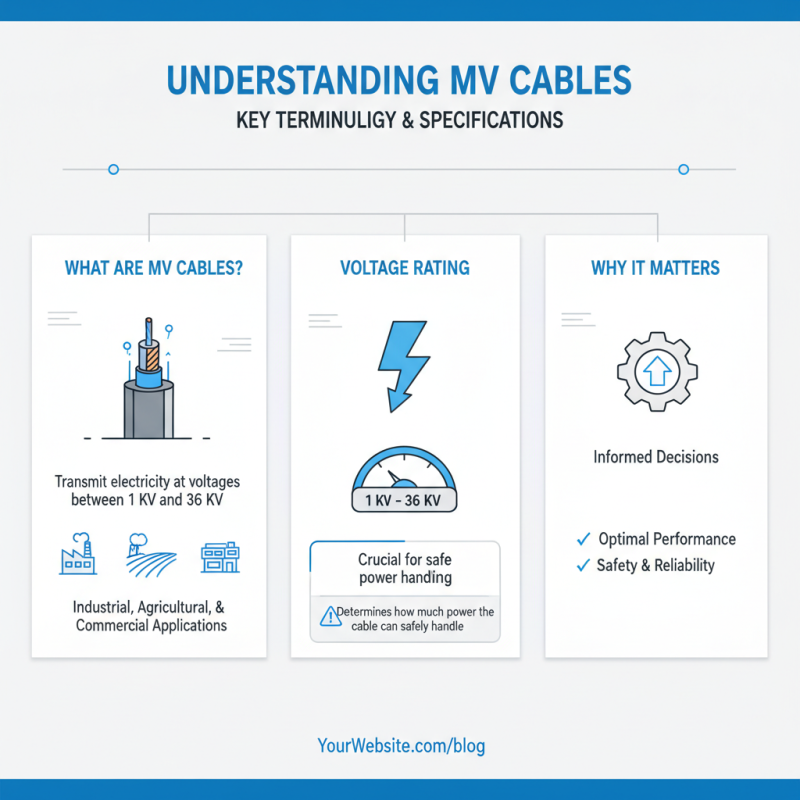
In the world of medium voltage (MV) cables, understanding key terminology and specifications is crucial for informed decisions. MV cables are designed to transmit electricity at voltages between 1 kV and 36 kV. This range allows them to serve industrial, agricultural, and commercial applications. Knowing the voltage rating is essential; it determines how much power the cable can safely handle.

Another important aspect to consider is insulation type. Different materials, like XLPE or PVC, offer distinct characteristics in durability and heat resistance. For instance, XLPE cables are known for their superior thermal performance, while PVC cables might suit environments with less heat generation. These factors significantly influence long-term reliability and efficiency.

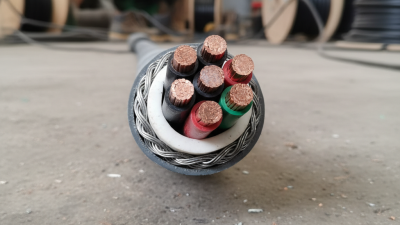
Then there’s the matter of construction standards. Various regions may have specific requirements. This can lead to confusion for global buyers. The number of conductors, sheath color, and mechanical protection also vary considerably. Such details may seem minor, but they greatly impact installation and maintenance. Buyers often overlook these aspects, risking project delays or failures. Carefully reviewing each specification allows for better project outcomes and ultimately, satisfaction.

Factors Influencing MV Cable Selection for Global Buyers

When selecting medium voltage (MV) cables, buyers face various factors that shape their decisions. The environment plays a critical role. Cables may be used underground or overhead. Temperature fluctuations can affect performance. Buyers must assess local climate conditions and installation methods.

Electrical specifications are equally important. Buyers need to consider voltage ratings and ampacity. Choosing cables that match system requirements ensures reliability. However, many overlook the impact of cable length on performance. Longer runs might increase resistance, causing energy loss.

Material choice is another factor. Copper and aluminum have different attributes. Copper offers better conductivity but is more expensive. Yet, some buyers question whether the extra cost is justified. Efficiency and cost-effectiveness often clash, leading to challenging decisions. Ultimately, understanding these nuances can guide buyers in making more informed choices.

Factors Influencing MV Cable Selection for Global Buyers

Comparative Analysis of MV Cable Materials and Performance

2026 How to Choose Mv Cables Specifications for Global Buyers?

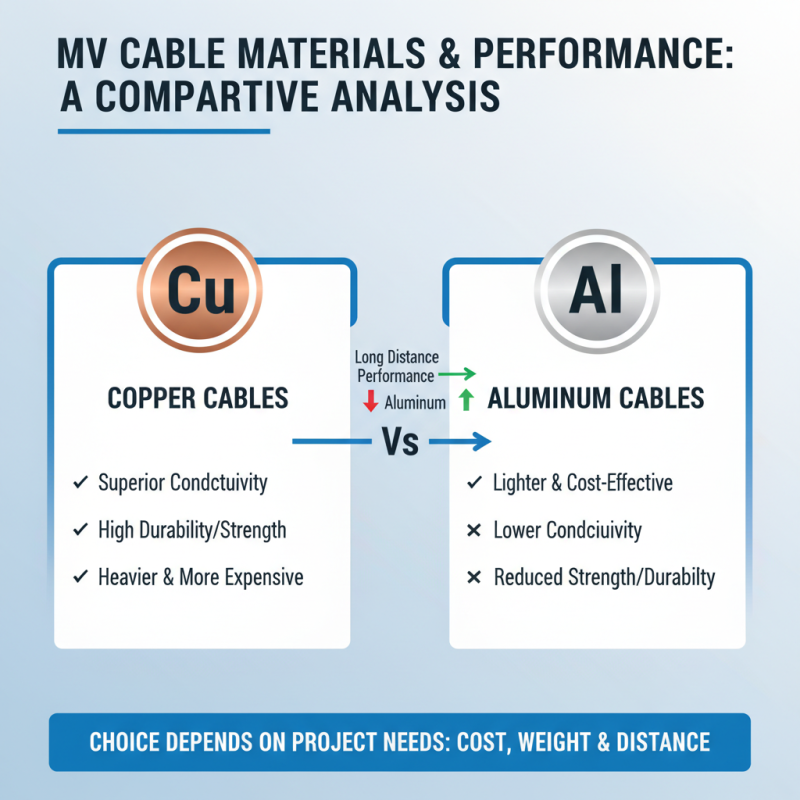
When choosing medium voltage (MV) cables, understanding material properties is crucial. Different materials, such as copper and aluminum, each bring unique advantages and disadvantages. Copper offers superior conductivity and durability. However, it is also heavier and more expensive than aluminum. Aluminum, while lighter and cost-effective, may have lower conductivity, affecting performance over long distances.

Performance factors also include thermal and environmental resistance. Cross-linked polyethylene (XLPE) is common for insulation, offering excellent thermal stability and moisture resistance. Polyvinyl chloride (PVC) is another option but may not withstand extreme temperatures as well. Selecting the right insulation material ensures that cables can handle varying environmental conditions.

Buyers must analyze these factors critically. For instance, a lower initial cost might lead to higher maintenance over time. It's important to consider long-term performance and operational efficiency. Misjudgments in this area can result in costly repairs and downtime. Hence, a thorough understanding of MV cable specifications is essential for making informed decisions.

Regulatory Standards and Certifications for MV Cables Worldwide

When selecting medium voltage (MV) cables, understanding regulatory standards and certifications is crucial for global buyers. Globally, the International Electrotechnical Commission (IEC) sets important standards. These standards define safety, performance, and environmental impact. For instance, IEC 60502 governs the dimensions and electrical properties of MV cables.

Many regions require specific certifications to ensure quality. In North America, Underwriters Laboratories (UL) provides critical safety certifications. In Europe, cables often need to comply with RoHS regulations regarding hazardous substances. Compliance can enhance market acceptance and boost consumer confidence. According to recent industry reports, about 70% of buyers prioritize certifications when choosing MV cables.

However, navigating these standards can be complex. Some buyers may overlook regional differences in requirements. For example, what meets standards in Europe might not suffice in Asia. This inconsistency may lead to compliance challenges and increased costs. Keeping abreast of local regulations is necessary to avoid pitfalls. Ultimately, awareness of regulatory standards is essential for making informed purchasing decisions.

2026 How to Choose MV Cables Specifications for Global Buyers? - Regulatory Standards and Certifications for MV Cables Worldwide

Dimension Specification Regulatory Standard Certification Authority
Voltage Rating 3.6/6 kV to 18/30 kV IEC 60502-2 IEC
Conductor Material Copper or Aluminum UL 83 UL
Insulation Type XLPE or PVC BS 7870-2 BSI
Sheath Type PVC or LSF IEC 60332 IEC
Temperature Rating -40°C to +90°C NEMA WC 70 NEMA

Best Practices for Evaluating MV Cable Suppliers and Manufacturers

When evaluating MV cable suppliers and manufacturers, focus on key aspects. Assess their industry experience. Look for companies with extensive backgrounds in cable production. A solid track record often indicates reliability. Experience matters. Check if they have delivered quality products in challenging environments.

Next, evaluate their quality assurance processes. Reliable manufacturers implement rigorous testing standards. This might include inspecting raw materials and finishing cables under various conditions. Ask for documentation of their testing methods. It reflects their commitment to quality.

Moreover, consider customer feedback. Reviews can offer unique insights into a manufacturer’s reliability. Engage with past customers. Seek their opinions on product performance and supplier responsiveness. Sometimes, the best picture comes from shared experiences. Keeping these factors in mind can lead to informed decisions. Evaluating suppliers should not be taken lightly.