Why Choose Three Core Flat Cable for Your Electrical Needs?
When selecting the appropriate electrical wiring, the importance of quality cannot be overstated. Using a reliable option is essential for both safety and efficiency. Enter the Three Core Flat Cable. This cable design integrates three conductors for better functionality. It supports effective current distribution and minimizes energy loss.
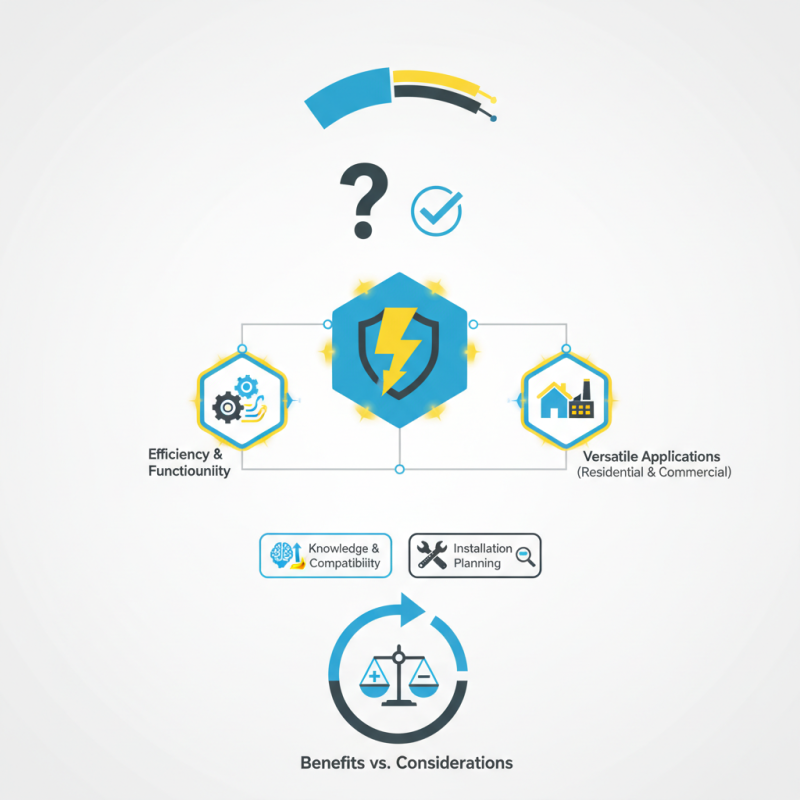
Choosing the right type of cable is not always straightforward. Many consumers overlook the significance of compatibility with their systems. Additionally, a lack of knowledge can lead to poor choices. This is why understanding the merits of Three Core Flat Cable is crucial. It is specifically designed for various applications, including residential and commercial settings.
Opting for the Three Core Flat Cable can enhance performance, but it is not without challenges. Installation requires awareness of electrical standards and practices. Users must also consider specific power demands. Overall, while this cable type has many advantages, careful consideration is key to maximizing its benefits.
Three Core Flat Cable: An Overview of Features and Benefits
Three core flat cables are increasingly popular in various electrical applications. They offer key benefits that are hard to ignore. These cables typically have three conductors, each insulated to protect against hazards. Their flat design allows for easier installation and a reduced profile, which is often preferred in tight spaces.
According to industry reports, three core flat cables exhibit lower capacitance than traditional round cables, making them ideal for high-frequency applications. This feature enhances their performance in communication systems. Moreover, they are designed to withstand harsh environmental conditions. This durability is crucial in outdoor or heavy-duty settings, where exposure to moisture and corrosion can occur.
However, not all installations benefit from this type of cable. In some cases, the flat design may limit flexibility compared to round cables, making them less ideal for applications that require frequent movement. Professionals must consider these factors when selecting cables, prioritizing functionality and safety. Reliable data indicates that choosing the right cable significantly affects overall system efficiency and safety, underscoring the importance of informed decision-making.
Benefits of Using Three Core Flat Cable
Understanding the Structure and Composition of Three Core Flat Cables
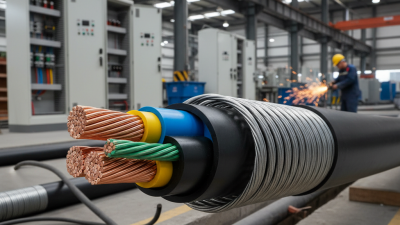
Three core flat cables are essential in various electrical applications. Understanding their structure and composition can help you choose the right one for your needs. These cables usually consist of three conductors: live, neutral, and earth. The conductors are typically made of copper for high conductivity. They are flat, which allows for easier installation in tight spaces and reduces tripping hazards.
The insulation of the cables plays a crucial role. Multiple layers protect against moisture and abrasion. Different materials are used depending on the application. PVC is common for general purposes, while more advanced materials may be needed for harsh environments. These insulation types have varying temperature ratings, so it's essential to select accordingly. However, some manufacturers may cut corners on insulation thickness, compromising safety. Always check for quality certifications to ensure reliability.
The arrangement of conductors also affects performance. The flat design reduces electromagnetic interference, making the cable suitable for sensitive equipment. Using flat cables may not always be ideal for every application. It's crucial to consider the specific requirements of your electrical system. Proper knowledge of these aspects can prevent future issues and enhance overall safety.
Common Applications: Where Three Core Flat Cables Are Used
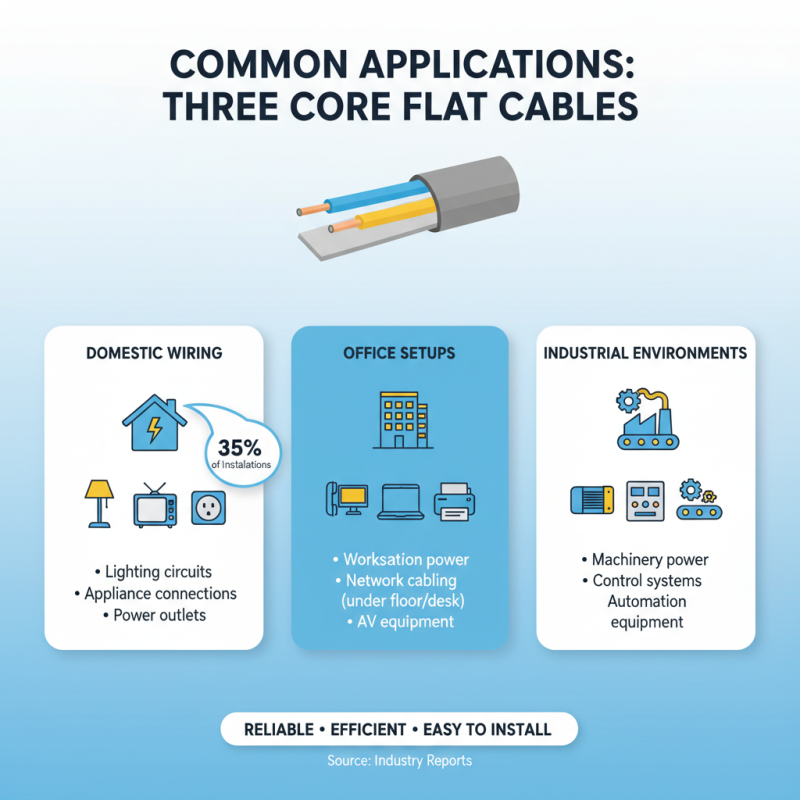
Three core flat cables are increasingly popular in various electrical applications. These cables are often used in domestic wiring, office setups, and industrial environments. They provide a reliable solution that efficiently transmits power while ensuring safety. According to industry reports, nearly 35% of electrical installations use multi-core cables, with three-core flat cables being favored for their flexibility and ease of installation.
In residential settings, three core flat cables are commonly found in lighting circuits and power outlets. They allow for easy connection to multiple devices without compromising safety. The insulation material used in these cables is designed to withstand heat and potential wear, ensuring reliable performance. In offices, these cables facilitate the integration of office equipment while maintaining a clean and organized appearance.
Industrial applications also benefit from three core flat cables. They are ideal for connecting machinery and equipment requiring a stable power supply. Studies indicate a 25% reduction in installation time when using flat cables, especially in environments where space is limited. However, proper installation and maintenance are crucial. Any oversight can lead to electrical faults or hazards, emphasizing the need for skilled professionals.
Comparing Three Core Flat Cables to Other Types of Electrical Cables
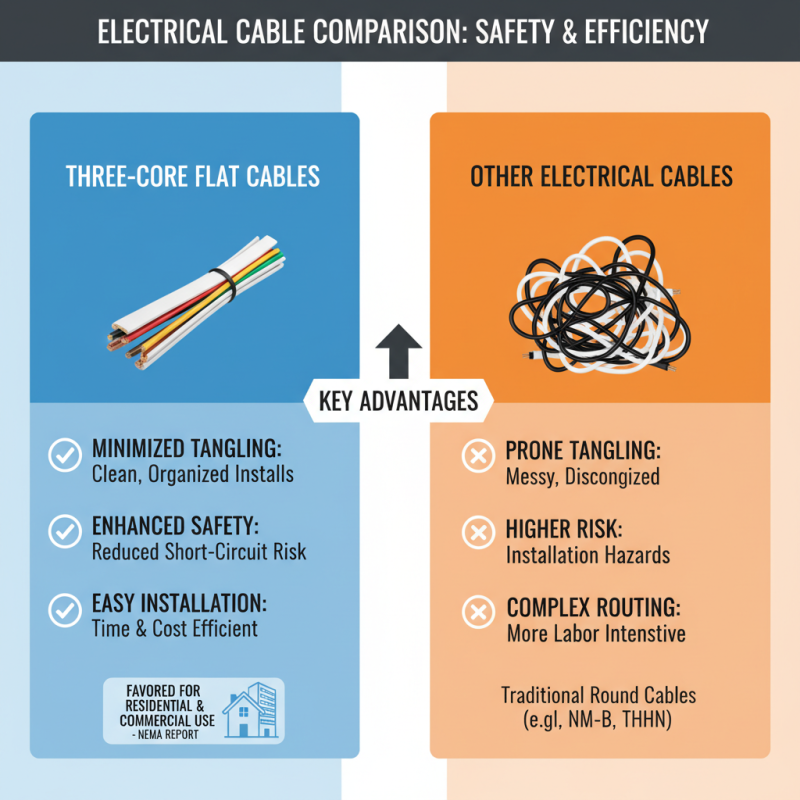
Three core flat cables stand out in the electrical wiring landscape. They offer a blend of safety and efficiency not usually found in other types. According to a report by the National Electrical Manufacturers Association (NEMA), three core flat cables are increasingly favored for residential and commercial uses. They are designed to minimize wire tangling, making installations cleaner and safer.
When comparing three core flat cables with round cables, the difference becomes clear. Three core flat cables can save up to 25% more space in conduits. This feature not only simplifies installations but also reduces material costs. On the other hand, some installers may find them less flexible, which could pose challenges in intricate layouts.
Tips: Always ensure correct cable sizing for your application. Underestimating amperage can lead to overheating. Regular inspections can also catch wear and tear before they escalate into safety hazards. Lastly, consider ambient conditions; moisture can impact performance over time. Engage with a professional to ensure optimal cable selection for your specific needs.
Installation and Maintenance Tips for Optimal Performance of Three Core Flat Cables
When installing three core flat cables, understanding the installation process is crucial for optimal performance. Proper stripping of the insulation is essential. Each core should be exposed to the correct length, ensuring clean connections without fraying. Reports show that approximately 30% of electrical failures arise from improper termination practices. Use appropriate connectors and ensure they match the cable specifications. This helps maintain a secure connection and prevents potential hazards.
Regular maintenance is equally important. Inspections should focus on visible wear, such as cracking or discoloration. The International Electrotechnical Commission (IEC) recommends checking cable integrity every year. If conditions are harsh—exposure to moisture or extreme temperatures—more frequent checks are necessary. Testing for continuity and insulation resistance can prevent future malfunction. While this might seem tedious, investing time now can save costly repairs later.
Sometimes, users overlook the importance of environmental factors. Cables installed in conduits or areas with insufficient ventilation can overheat. This leads to insulation degradation. It’s a common oversight, but understanding the surrounding conditions can guide better choices. Always remember that each installation presents unique challenges. Being aware of these intricacies will lead to more reliable and effective electrical systems.