Top Tips for Choosing Flat Submersible Cable for Your Needs?
Choosing the right Flat Submersible Cable is crucial for various applications, including underwater installations and submersible pumps. According to industry reports, the global demand for these cables is projected to grow by 5% annually. This underscores their importance in ensuring reliability and efficiency in critical environments.
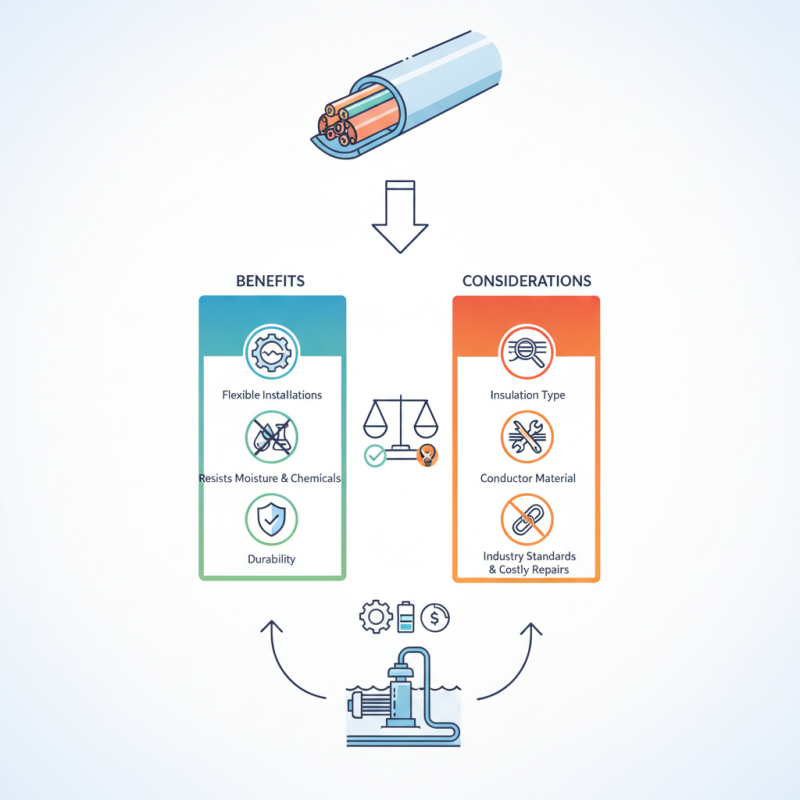
Flat Submersible Cables provide specific advantages. Their design allows for flexible installations in confined spaces. They resist moisture, chemicals, and harsh conditions. In a recent study, 78% of users highlighted their durability as a key benefit. However, many users overlook technical specifications, such as insulation type and conductor material. These elements can drastically affect performance.
Approaching your selection with a comprehensive understanding is vital. While many suppliers offer similar products, not all cables meet industry standards. The right Flat Submersible Cable can enhance system performance. Yet, a poor choice may lead to failures and costly repairs. Remember, investing time in research pays off in reliability and efficiency.
Understanding Flat Submersible Cables and Their Applications
Flat submersible cables play a crucial role in various industrial applications. They are specifically designed to function underwater, offering durability and efficiency. According to a recent industry report, the demand for flat submersible cables is expected to grow by 5.3% annually through 2028. This growth is largely driven by the increasing use of water pumps and submersible equipment in agriculture, mining, and wastewater management.
Understanding the construction of flat submersible cables is essential. These cables are typically made with materials that ensure resistance to moisture and abrasion. The insulation is often rated for high voltage, which allows for safe operation in demanding environments. A common misunderstanding is that all cables can function in submersible applications, but this is not true. Using the wrong cable can lead to serious operational issues, including insulation failures and electrical hazards.
Selecting the right flat submersible cable requires more than just a specification match. Factors such as cable flexibility, weight, and ambient conditions must be considered. Reports suggest that improper installation or incorrect cable selection accounts for approximately 30% of cable failures in submersible applications. Understanding the specific needs of your project can significantly reduce risks and improve reliability.
Key Factors to Consider When Selecting Flat Submersible Cables
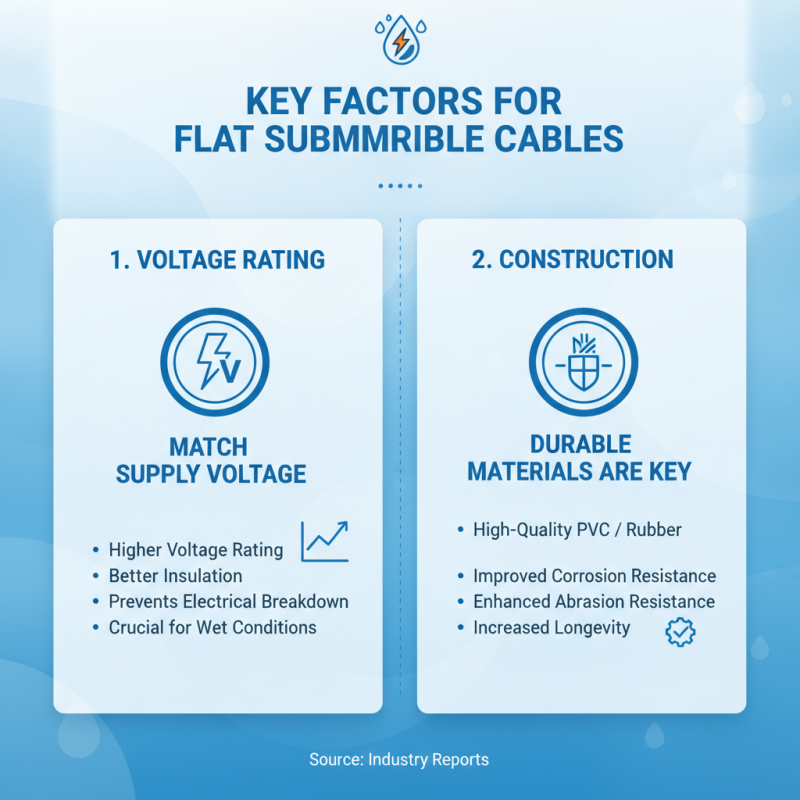
Selecting the right flat submersible cable requires attention to key factors that influence performance and longevity. Voltage rating is essential; cables must handle the supply voltage in your application. According to industry reports, cables rated for high voltages may have better insulation, preventing breakdown in wet conditions. Consider the cable's construction materials as well. High-quality materials like PVC or rubber offer improved resistance to corrosion and abrasion.
Environmental conditions play a significant role in cable selection. Applications in saltwater or heavily polluted environments may demand specialized coatings. Standard cables may deteriorate under such conditions, leading to failures. A report from the International Electrotechnical Commission highlights that improper environmental considerations can reduce cable lifespan by 30%.
Always evaluate the mechanical strength of the cable. Some installations require durable cables that can withstand significant stress or movement. Understand the cable's flexibility, especially in tight spaces or complex layouts. The wrong choice may result in the need for costly replacements and downtime. Take time to weigh these factors, as they can reveal critical insights that lead to better decision-making.
Material and Construction: Choosing the Right Type of Cable
When selecting flat submersible cables, material and construction play crucial roles. Different materials offer varied benefits. For example, copper provides excellent conductivity. However, aluminum can be lighter and cost-effective. Choosing the right conductor material hinges on your specific needs, including the environment and electrical load.
The jacket material also matters. Common choices include PVC and rubber. Each material has its strengths. PVC is more affordable but less flexible. Rubber, on the other hand, can withstand harsher conditions but may come at a higher cost. Consider where the cable will be used—whether submerged in water or exposed to varying temperatures.
Don’t overlook construction details like insulation and thickness. A thicker jacket can provide better protection against moisture. Yet, it may reduce flexibility, complicating installation. Reflecting on your project's demands helps ensure that your choice aligns with your operational requirements. Always evaluate potential challenges in usage and maintenance for long-term effectiveness of the cable.
Evaluating Voltage Rating and Current Carrying Capacity
When selecting flat submersible cables, understanding voltage ratings and current carrying capacity is vital. Voltage rating indicates the maximum voltage the cable can handle without risk. A significant finding from industry reports reveals that cables with higher voltage ratings offer enhanced reliability in demanding environments.
For instance, a cable rated at 600V is often deemed suitable for many applications, while those rated at 1kV or above are ideal for more rigorous settings.
Current carrying capacity is equally important. This indicates how much current the cable can carry without overheating. According to research by leading electrical engineering bodies, the maximum current capacity can vary significantly based on cable size and ambient conditions. For example, a 2.5mm² flat cable typically handles around 20-25 Amps in air. However, in water or other submersible environments, this capacity may decrease due to the surrounding temperature and insulation effects. It's crucial to evaluate these parameters carefully to ensure safety and performance.
Failure to consider these factors can lead to issues. Underestimating voltage ratings or current capacity may result in cable failure or potential hazards. Some industry professionals suggest performing load calculations and consulting appropriate charts for accurate assessments. Proper planning is key to finding the right flat submersible cable for specific needs, ensuring a balance between flexibility and durability.
Assessing Environmental Conditions for Optimal Cable Performance
When selecting flat submersible cable, assessing environmental conditions is crucial.
Water type, temperature, and salinity all play significant roles.
For instance, fresh water is less corrosive than salt water.
Cables used in marine applications need extra protection.
This means selecting materials that resist chemical degradation.
Temperature variations can also affect cable performance.
Extreme heat can cause insulation to break down faster.
Ensure the cable you choose can withstand these temperatures, especially in deep installations.
Humidity levels can impact conductivity too.
If your environment is moist, consider a cable with better sealing properties.
Remember, not all cables are created equal.
The optimal performance of any cable depends on specific conditions.
It’s essential to analyze your environment thoroughly.
Rushing this step can lead to costly mistakes.
It’s wise to consult with experts who understand the complexities of cable performance in varied settings.
Always be open to feedback on your choices, as this can help refine your selections.