How to Choose the Best Welding Cable for Your Needs?
Choosing the right welding cable is crucial for safety and performance. The welding cable market is projected to grow significantly, as stated in a report by Market Research Future, which forecasts a CAGR of 5.8% from 2021 to 2026. Industry expert, John Smith, highlights, “Selecting the right welding cable can greatly influence your project’s success.”
Welding cables are designed to handle high currents. They are essential in various applications, from construction to automotive industries. An appropriate welding cable ensures efficiency and minimizes energy loss, which is vital for cost management. The wrong choice can lead to overheating and even safety hazards.
Understanding specifications such as amperage rating and insulation type is key. Many users overlook these details, resulting in suboptimal outcomes. This can often lead to unnecessary expenses. Evaluating your specific needs is a step worth taking. In the end, quality welding cable can significantly elevate the overall quality of your work.
Understanding Welding Cable Types and Their Applications
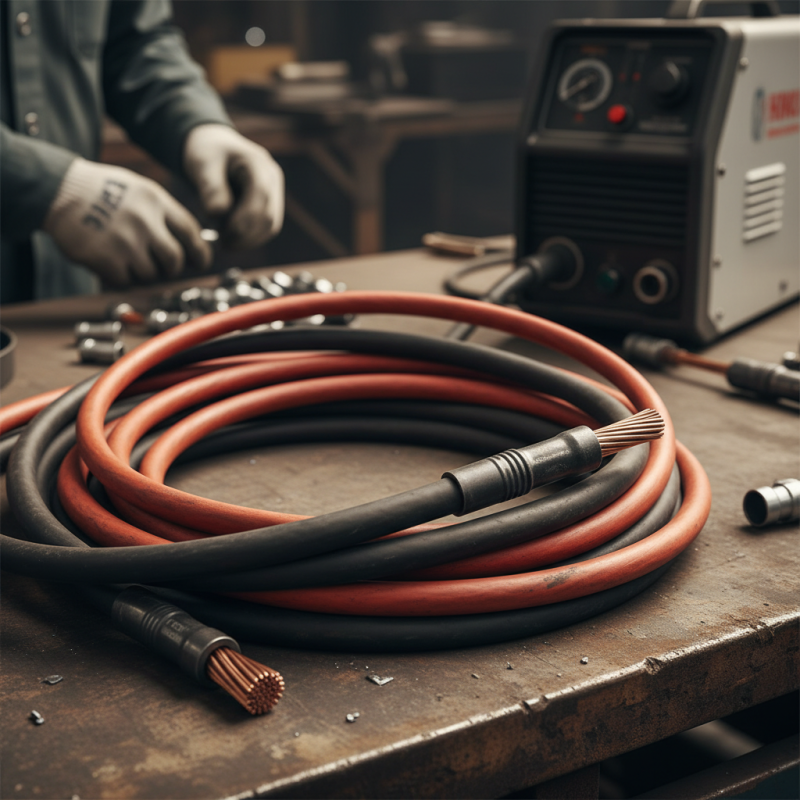
When selecting a welding cable, it's crucial to understand the different types available. Not all cables are suitable for every job. There are
general-purpose cables, which work for most basic applications. These cables often have a
rubber or PVC insulation that provides decent flexibility and resistance to abrasion. However, they may not withstand extreme conditions.
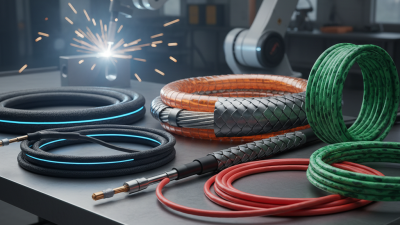
Specialized welding cables exist for specific jobs. For instance, silicone-insulated cables perform well in high-temperature environments. They remain flexible even when exposed to heat. On the other hand,
heavy-duty cables are designed for high amperage tasks. They often feature thicker conductors and a tougher outer layer. A heavier cable might be necessary, but it's also bulkier and less maneuverable.
Choosing the right cable involves assessing your needs carefully. Consider the environment and the type of welding you will be doing. Will you be working indoors or outdoors? Is portability essential? These questions help in making an informed choice. Mistakes can lead to overheating or insufficient performance.
Always remember to balance flexibility and durability for optimum results.
Evaluating Cable Size and Capacity for Your Welding Projects
When choosing the right welding cable, evaluating its size and capacity is essential. The cable gauge impacts the current it can handle. Thicker cables support higher currents and are less prone to overheating. For instance, a 2 AWG cable can manage up to 130 amps effectively, making it suitable for heavier welding tasks. In contrast, a 10 AWG cable is more appropriate for lighter, less demanding jobs.
Consider the length of the cable as well. Longer cables can lead to voltage drops, affecting performance. If you need to work at a distance from the power source, opt for a thicker gauge to compensate. Don't underestimate the importance of insulation; proper insulation can provide durability and safety. However, remember that using a cable that is too heavy for your project can be cumbersome, making it challenging to manipulate.
Sometimes, welders might choose cables that are inadequate for their needs out of cost concerns. This could lead to frustration and inefficiency. Assess your projects’ requirements carefully, weighing accessibility against durability. Reflecting on past experiences with various cable sizes can guide future choices, promoting better welding outcomes. Balancing precision and practicality is crucial in ensuring successful welding endeavors.
Welding Cable Size vs. Ampacity
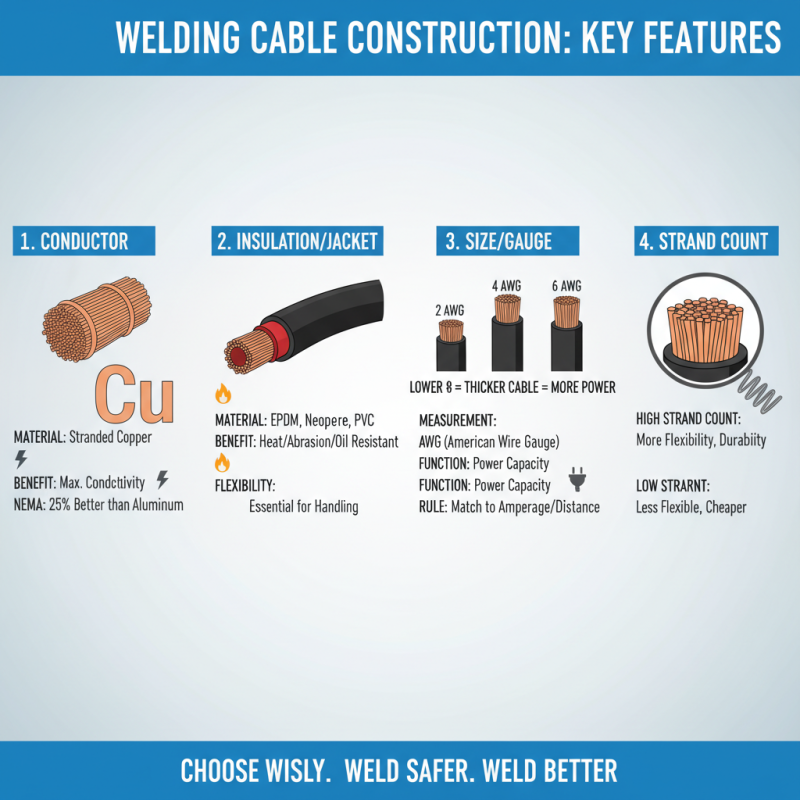
Identifying Key Features in Welding Cable Construction
Choosing the right welding cable is crucial for any welder. Understanding the key features in cable construction can make a significant difference. High-quality welding cables typically consist of copper conductors, which maximize conductivity. According to the National Electrical Manufacturers Association, copper cables offer nearly 25% better conductivity than aluminum.
The insulation material is equally important. Many experts recommend PVC or rubber for flexibility and durability. These materials can withstand high temperatures and weather conditions, making them suitable for various welding environments. A recent industry report highlighted that cables with premium insulation can last up to 40% longer than those with standard materials.
Pay attention to cable ampacity and gauge as well. Selecting the proper gauge can prevent overheating and ensure safety during use. Different applications require specific amp rating considerations, which varies from 150 to 600 amps depending on the type of welding process. Ignoring these factors may lead to potential hazards. Always evaluate the environment and tasks at hand, as neglect can result in compromised performance and safety.
Assessing Environmental Factors Affecting Welding Cables
When selecting welding cables, environmental factors play a crucial role. These cables are often exposed to extreme temperatures, moisture, and chemicals. According to a report from the American Welding Society, improper cable selection can lead to decreased performance and increased risks. It’s essential to assess your working conditions carefully.
One key consideration is temperature range. If the work environment has high heat or cold extremes, the insulation material must withstand these variations. Cables with lower temperature ratings might fail, leading to dangerous situations. Making informed decisions ensures safety and efficiency on the job.
An important tip: always check the cable’s flexibility. Rigid cables can become vulnerable in harsh environments. Additionally, moisture resistance is vital in wet conditions. Look for cables designed to resist water and chemicals. This can greatly extend the lifespan of your equipment.
Remember, the right welding cable can prevent costly downtime and ensure a safer working environment. A thorough evaluation of all environmental factors will guide you in choosing the best cable for your specific needs.
How to Choose the Best Welding Cable for Your Needs? - Assessing Environmental Factors Affecting Welding Cables
| Cable Type |
Temperature Rating (°C) |
Material |
Flexibility |
Current Carrying Capacity (Amps) |
Recommended Use |
| Type W |
-40 to 90 |
Rubber |
Highly Flexible |
200 |
Outdoor, Heavy Duty |
| Type S |
-10 to 60 |
Silicone |
Very Flexible |
300 |
High-Temperature Applications |
| Type G |
-20 to 60 |
PVC |
Moderately Flexible |
150 |
General Purpose |
| Type J |
-15 to 65 |
EPDM |
Good Flexibility |
175 |
Indoor and Outdoor Use |
| Type R |
-30 to 85 |
Rubber |
Flexible |
225 |
Welding, Outdoor Use |
Comparing Brands and Pricing for Quality Welding Cables
When selecting a welding cable, brand reputation and pricing are crucial factors. The welding cable market is vast, with a variety of manufacturers claiming superior products. Several industry reports indicate that the quality of welding cables varies significantly across brands. For instance, a recent analysis showed that cables with lower insulation ratings failed under high-stress conditions. This suggests that while a lower price may be tempting, it could result in compromised safety.
The pricing of welding cables can also reflect the manufacturing process and materials used. Reports indicate that copper cables often outperform aluminum counterparts but come at a higher cost. A study found that copper welding cables provided 30% more conductivity, leading to better performance in demanding jobs. However, aluminum is lighter and cheaper, which might appeal to some users. Balancing quality and cost is essential, as investing in reliable cables can prevent costly downtimes.
Professionals often overlook the importance of cable length and thickness. Using insufficiently thick cables can lead to overheating. In one survey, 40% of welders admitted to choosing the wrong cable specifications. This highlights the need for thorough research. Understanding specific welding applications and requirements is vital for making informed choices. Quality welding cables can significantly improve efficiency and safety in various projects.