How to Choose the Right Household Wire for Your Projects?
Choosing the right household wire is crucial for your projects. Various types of wires exist, each serving unique purposes. Understanding these options ensures safety and efficiency in your electrical tasks.
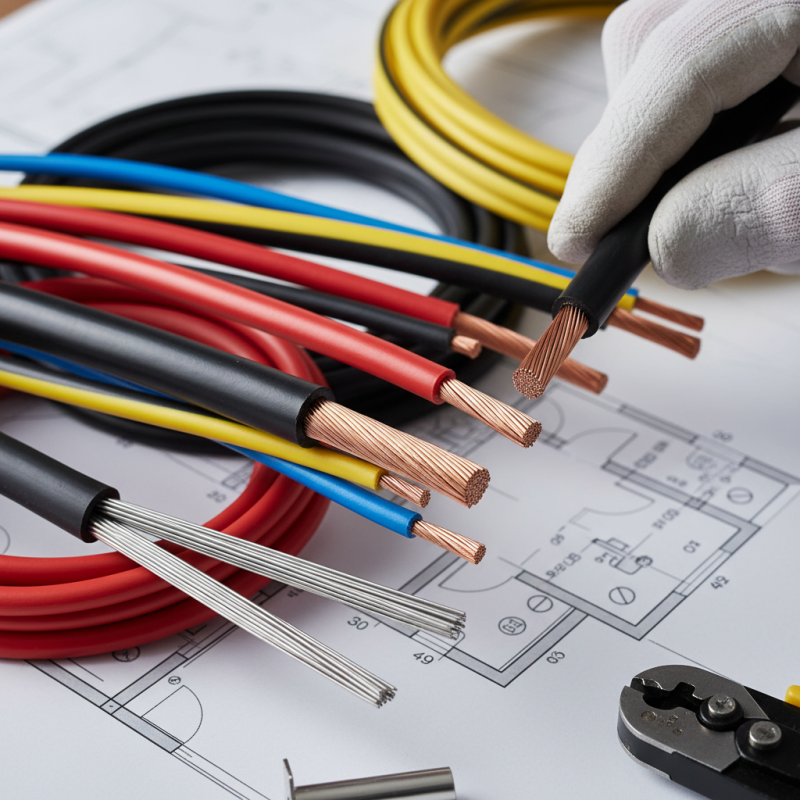
Household wire comes in different gauges and materials. The gauge determines how much current can safely pass through. For instance, smaller gauge wires handle more current. Meanwhile, copper wires are more conductive than aluminum. This choice impacts both performance and cost.
Selecting the right household wire can be challenging. Misjudgments can lead to improper installations. This might cause overheating or other electrical hazards. Therefore, it’s essential to research and consult reliable sources before proceeding. By doing so, you'll enhance the reliability of your projects and prevent avoidable issues.
Understanding Different Types of Household Wires and Their Uses
When selecting household wires, understanding their types is crucial. There are several common types, each serving specific purposes. For instance, NM-B cable, often referred to as non-metallic sheathed cable, is typically used for interior wiring. It is rated for a maximum of 600 volts, making it suitable for typical residential applications. According to the National Electric Code (NEC), NM-B is one of the most commonly used wires for lighting and outlet circuits.
Another vital type is THHN wire. This is a thermoplastic high heat-resistant nylon-coated wire used in commercial and industrial applications. It is suitable for dry locations and can handle higher temperatures, making it adaptable. The Wire and Cable Manufacturers Association (WCMA) reports that THHN wire is popular due to its versatility and favorable performance characteristics across various installations.
Sometimes, individuals overlook the importance of using the right gauge. For instance, 14-gauge wire is commonly used for 15-amp circuits, while 12-gauge is needed for 20-amp circuits. Choosing the incorrect gauge can lead to overheating, posing a fire hazard. A study by the U.S. Fire Administration shows that improper wire gauges contributed to 18% of residential electrical fires. Awareness of these factors can save lives and avoid costly repairs.
How to Choose the Right Household Wire for Your Projects?
| Wire Type |
Gauge |
Voltage Rating |
Common Uses |
Notes |
| NMC (Non-Metallic Cables) |
14 to 10 AWG |
600V |
Residential wiring for outlets and lighting |
Moisture resistant; ideal for indoor use |
| Romex |
14 to 6 AWG |
600V |
Main residential wiring, including circuits for outlets, switches |
Flexible and easy to install |
| THHN/THWN |
14 to 2 AWG |
600V |
Commercial and industrial applications |
Suitable for wet or dry locations |
| UF (Underground Feeder) |
14 to 6 AWG |
600V |
Powering outdoor lights, garden equipment |
Direct burial capable |
| Speaker Wire |
16 to 14 AWG |
Low voltage |
Wiring for audio systems, home theaters |
High flexibility and ease of installation |
Identifying the Appropriate Gauge for Your Electrical Projects
When working on electrical projects, choosing the right wire gauge is crucial. Wire gauge affects how much current can safely flow through it. A wire that is too thin can overheat and become a fire hazard. For typical household applications, 14-gauge wire is commonly used for lighting. It supports up to 15 amps of current.
Selecting the appropriate gauge depends on the project’s requirements. Consider the devices you’ll be using. A 12-gauge wire is suitable for higher-capacity circuits, like those for kitchens or power tools. This wire can handle up to 20 amps safely.
**Tip:** Always refer to the National Electric Code (NEC) for guidance on wire sizing.
Choosing the right gauge also depends on the distance the wire runs. Longer distances may require a thicker wire to reduce voltage drop. If the wire is too thin over a long distance, it can lead to inefficiencies.
**Tip:** Measure the distance carefully before selecting the wire.
Be mindful of the installation environment. Wet areas may need special wiring. Reviewing the specific needs of each project ensures safety and reliability. Trust the process, and take your time to evaluate each project carefully.
Safety Considerations When Selecting Household Wiring
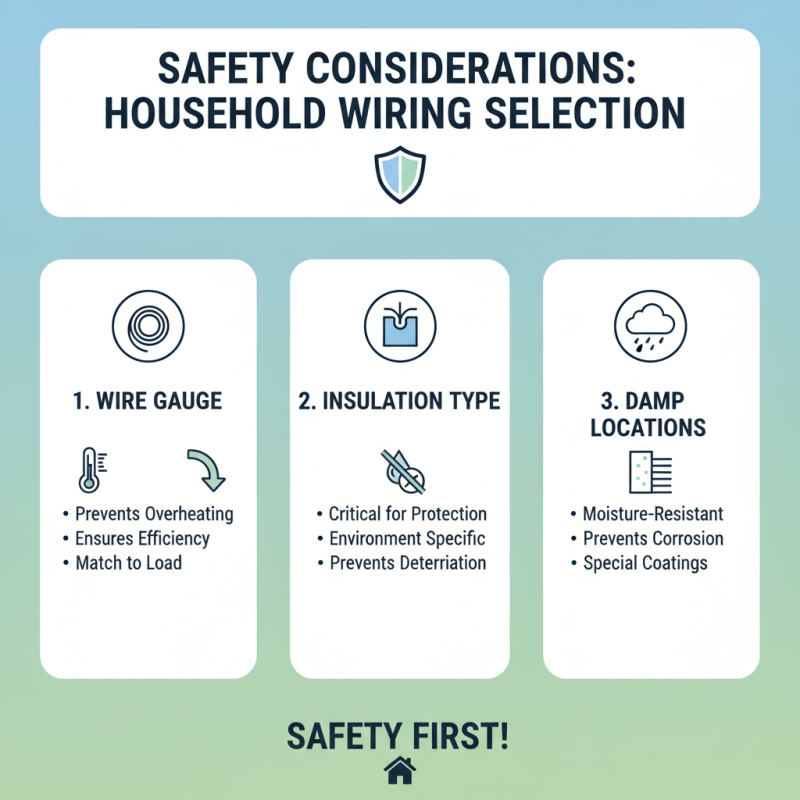
When selecting household wiring, safety must always come first. Proper wire gauge ensures your project runs efficiently without overheating. Choosing the right insulation type is critical too. Different environments require specific materials to prevent deterioration. For instance, wires in damp areas need moisture-resistant coatings.
Consideration of voltage and current ratings is essential. Using wires that cannot handle the load can lead to serious hazards. Many underestimate the significance of connections. Loose or poorly made connections can cause arcing, which is a fire risk. Using proper techniques can prevent these issues, yet it is often overlooked.
It’s also vital to pay attention to codes and regulations in your area. Compliance with these standards ensures safety and reliability. However, some may feel tempted to cut corners for convenience. This could lead to dangerous outcomes. Always prioritize safety, even if it means more effort or expense. Balancing practicality with safety is a reflection of responsible wiring practices.
Assessing Environmental Factors Impacting Wire Selection
When selecting household wire, environmental factors play a crucial role. These factors include temperature, humidity, and exposure to sunlight. Each of these elements can significantly impact the wire's performance and longevity. For example, high temperatures can cause insulation to degrade faster. A wire subjected to direct sunlight may need better UV protection. Understanding these conditions is fundamental for any project.
Humidity is often overlooked. In damp areas, corrosion becomes a concern. It can compromise the wire's integrity over time. Choosing a wire with corrosion-resistant properties can make a difference. We often underestimate how these factors influence wire choices. A wire that performs well in one environment may fail in another.
Additionally, consider the installation location. For outdoor projects, extra durability is needed. Indoor wires may prioritize flexibility over strength. Ultimately, evaluating these environmental conditions will lead to better decisions. Consumer awareness can lead to safer and more effective wiring choices. Always reflect on the specific needs of your project while assessing these factors.
Navigating Local Electrical Codes and Regulations for Wiring
When dealing with household wiring projects, understanding local electrical codes is essential. These regulations vary by location and are designed to ensure safety and consistency. Many home improvement enthusiasts make the mistake of ignoring these codes. This oversight can lead to dangerous situations.
Before starting any wiring project, research your local regulations. Check with your city or county. Many municipalities have specific codes that govern wire types, installation methods, and safety protocols. Some areas require permits before work begins, while others mandate inspections once the job is complete. Failing to follow these rules can result in penalties or the need to redo your work.
It's essential to consider the materials you choose based on local guidelines. For example, certain wire types may not be approved for specific applications. Many DIYers opt for cheaper solutions, only to find out later that they aren’t compliant. This can be frustrating. Always strive for quality and compliance. If you're unsure, consult a licensed electrician. Their knowledge can help avoid costly missteps.