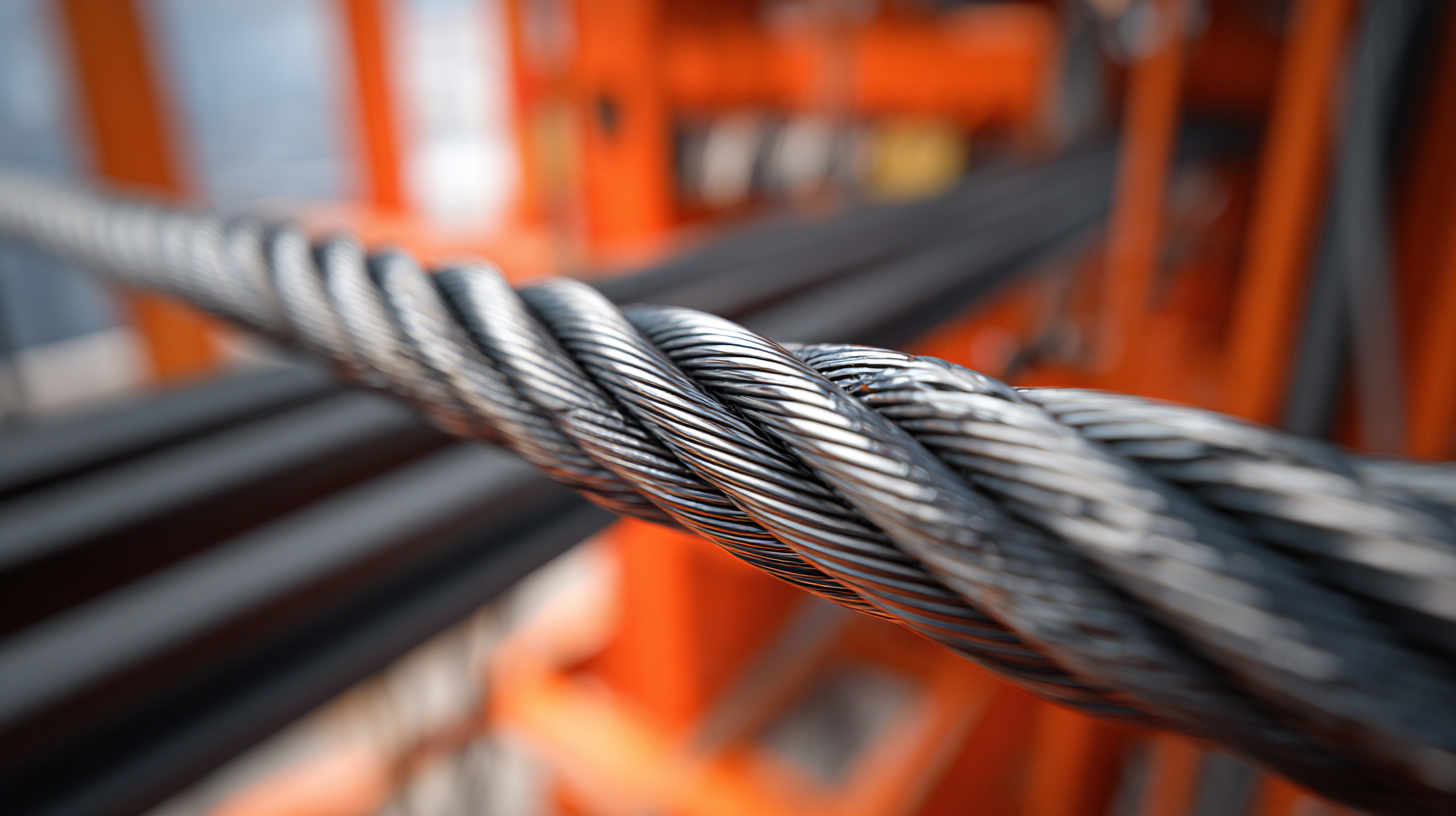
The Future of Lift Cable Technology Innovations and Trends
The evolution of lift cable technology is pivotal for the vertical transportation industry, with recent advancements poised to reshape the landscape of urban mobility.
According to a report by Research and Markets, the global elevator and escalator market, which heavily relies on lift cable innovation, is expected to reach approximately $121 billion by 2026,
growing at a CAGR of 6.3% from 2021 to 2026. This growth is driven by increasing urbanization and the rising demand for efficient transportation solutions in high-rise buildings.
Innovations in lift cable materials, such as the development of lighter and stronger composite cables, are set to enhance system performance while reducing energy consumption.
Furthermore, the emergence of smart technologies, including IoT integration, promises to optimize maintenance schedules and improve overall operational efficiency.
As we delve into the future of lift cable technology, it is essential to explore these trends and their implications for safety, sustainability, and operational efficiency in the vertical transportation sector.
Emerging Materials Enhancing Lift Cable Durability and Performance
Recent advancements in lift cable technology are largely driven by the emergence of innovative materials that enhance both durability and performance. Traditional lift cables have often relied on steel fibers, which, while strong, can be prone to wear and environmental degradation over time. The introduction of composite materials—blending high-strength polymers with reinforced fibers—has revolutionized the field. These composites not only offer superior resistance to corrosion and fatigue, but they also significantly reduce weight, which can lead to improved operational efficiency and reduced energy consumption.
Furthermore, advances in nanotechnology have paved the way for the creation of cables with enhanced performance characteristics. For instance, the incorporation of nanomaterials can improve tensile strength and flexibility, allowing for more robust structures capable of withstanding the increasing loads and stresses of modern urban settings. As these materials become more prevalent in the industry, manufacturers are poised to create lift cables that not only meet but exceed current safety and performance standards, ultimately leading to safer and more efficient elevator systems.
The Future of Lift Cable Technology Innovations and Trends - Emerging Materials Enhancing Lift Cable Durability and Performance
| Material Type |
Durability Rating |
Weight (kg/m) |
Cost per Meter ($) |
Environmental Resistance |
| Fiber-Reinforced Polymer |
8/10 |
0.5 |
25 |
High |
| High-Performance Steel |
9/10 |
1.2 |
40 |
Moderate |
| Carbon Fiber |
10/10 |
0.3 |
120 |
Very High |
| Synthetic Fiber Cables |
7/10 |
0.6 |
20 |
Moderate |
| Aluminum Alloys |
6/10 |
0.8 |
30 |
Low |
Integration of Smart Technology in Lift Cable Systems
As the demand for more efficient and intelligent transport systems grows, the integration of smart technology in lift cable systems is becoming increasingly prominent. Advanced sensors are being embedded within cable systems, allowing for real-time data collection and analysis. This data enables predictive maintenance, which can identify potential issues before they escalate into costly breakdowns. By monitoring factors such as cable tension, wear and tear, and performance metrics, lift operators can ensure safety and reliability while minimizing downtime.
Furthermore, the use of IoT (Internet of Things) technology is revolutionizing how lift systems operate. Through IoT connectivity, lift cables can communicate with other building systems, allowing for optimized elevator dispatching and improved energy efficiency. Smart algorithms can analyze user patterns, adjusting performance based on peak usage times and minimizing energy consumption during off-peak hours. This not only enhances user convenience but also contributes to sustainable practices in building management, making lift systems smarter and more eco-friendly.
Sustainable Practices in Lift Cable Manufacturing and Maintenance
The focus on sustainable practices in lift cable manufacturing and maintenance is becoming increasingly critical as the industry seeks to enhance safety and environmental responsibility. Recent discussions highlight the need for updated standards in crane sheave maintenance, pointing towards a collective effort by industry organizations to prevent mechanical failures that could lead to accidents. This push towards rigorous inspection protocols reflects a broader trend in ensuring that sustainability is integrated into safety measures.
Tips for sustainable lift cable practices include using eco-friendly materials and optimizing the lifecycle of cables through better maintenance. Regular inspections not only prolong the lifespan of lift cables but also reduce waste, which is crucial for minimizing environmental impact. Implementing a proactive maintenance schedule can help identify issues before they escalate, ensuring both safety and sustainability.
Another valuable tip is to invest in training for maintenance personnel on new standards and sustainable practices. Educating staff about the importance of proper cable sizing and installation can lead to fewer mechanical failures, which enhances safety and reduces the need for frequent replacements. Adopting these practices will contribute to a safer and more sustainable future in lift cable technology.
Future Trends in Safety Standards for Lift Cable Design
As the lift cable industry evolves, future trends in safety standards for lift cable design are becoming increasingly important. Innovations in materials and technology are enhancing the structural integrity and reliability of lift cables, leading to safer operations. Manufacturers are expected to adopt advanced monitoring systems that can detect wear and tear in real-time, allowing for proactive maintenance and reduced risk of accidents.
Tips: Regular inspections and timely upgrades of lift cable systems can significantly enhance safety. Operators should stay informed about the latest safety standards and ensure compliance to avoid potential hazards.
Another emerging trend is the integration of smart technology in lift systems, which can automatically adjust operations based on real-time data. This not only improves safety but also enhances energy efficiency. Collaboration between engineers, manufacturers, and regulators will be crucial in shaping these trends, ensuring that safety remains at the forefront of lift cable design as innovations continue to advance.
Tips: Prioritize collaboration with certified engineers and safety experts when implementing new technologies in lift systems. Investing in training for maintenance staff on the latest safety protocols is essential for minimizing risks.

Impact of Urban Development on Lift Cable Technology Innovations
As urban development continues to escalate, lift cable technology is evolving to meet the demands of modern infrastructure. The rise in high-density living and vertical building designs necessitates innovative solutions that enhance efficiency and safety. These conditions are pushing engineers and developers to explore advanced materials and systems that can support longer, faster, and more reliable cable lifts. Additionally, the integration of smart technologies is becoming pivotal, allowing for real-time monitoring and maintenance that aligns with the fast-paced nature of urban environments.
Moreover, urbanization is influencing design trends, with a focus on sustainability and energy efficiency. Lift systems are increasingly being designed with eco-friendly materials and energy recovery systems that minimize environmental impact. This not only meets regulatory demands but also addresses the growing consumer preference for green technologies. As cities expand upward, the necessity for innovative lift cable solutions will become imperative, driving further advancements in both technology and design methodologies to ensure safety and seamless connectivity within urban landscapes.