What Are the Key Electrical Cable Standards in China?
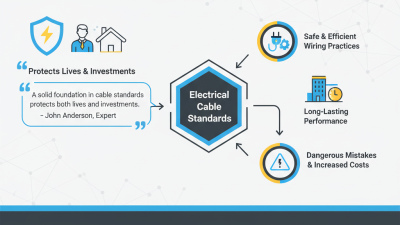
Electrical cable standards are crucial for ensuring safety and reliability in various applications. In China, these standards govern the manufacturing and usage of electrical cables. Compliance with these regulations is vital for protecting both people and equipment.
Many manufacturers and suppliers are navigating a complex landscape of electrical cable standards. These standards encompass various aspects, such as material quality, performance, and safety requirements. Adhering to these guidelines can enhance product quality. However, not all companies fully understand the implications of these standards.
Moreover, the evolving nature of technology presents challenges for maintaining compliance. Innovations in materials and production methods often outpace current standards. This creates opportunities for improvement, but also raises questions about safety and reliability. As the demand for high-quality electrical cables grows, so does the need for awareness and understanding of electrical cable standards in China.
Key Regulatory Bodies for Electrical Cable Standards in China
In China, several key regulatory bodies oversee electrical cable standards.
The National Standardization Administration (NSA)
plays a crucial role in formulating standards. It works to ensure safety and quality in electrical products.
The administration collaborates with various industry stakeholders to establish guidelines that keep pace with technological advancements.
Another significant organization is the Ministry of Industry and Information Technology (MIIT).
MIIT focuses on the development and regulation of the electrical and electronics sectors. This body not only monitors compliance but also promotes innovations in cable technology.
They ensure that new materials and methods are tested before they enter the market.
Compliance with these standards is critical.
However, gaps often exist between regulations and practice. Some manufacturers may overlook specific requirements due to cost-saving measures.
This raises concerns about product reliability. Striking a balance between innovation and safety remains a challenge.
Therefore, ongoing assessments and updates of standards are essential for maintaining high-quality electrical cables in China.
Overview of National Standards for Electrical Cables in China
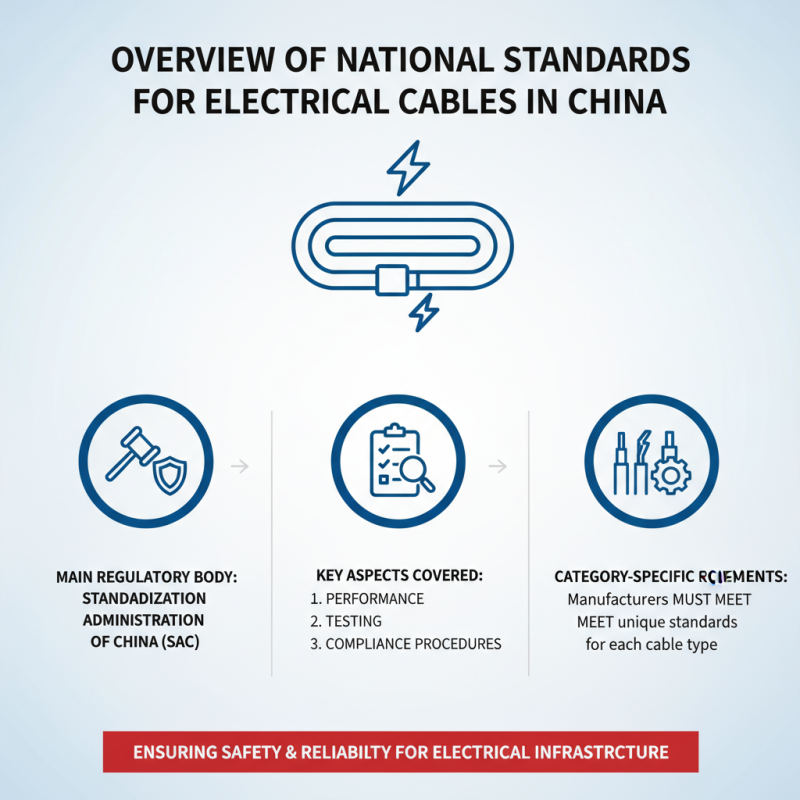
In China, electrical cables are governed by a series of national standards that ensure safety and reliability. The main regulatory body is the Standardization Administration of China (SAC). These standards cover various aspects, including performance, testing, and compliance procedures. Each category of electrical cables has specific requirements that manufacturers must meet.
One of the critical standards is GB/T 19666 for general insulated cables. It outlines necessary performance criteria, including insulation resistance and thermal endurance. Additionally, GB/T 5023 focuses on PVC insulated cables, detailing their construction and testing methods. These documents serve as a foundation for quality assurance.
Implementing these standards is not always straightforward. Some manufacturers may struggle with compliance due to a lack of expert knowledge. Additionally, the rapid evolution of electrical technology creates challenges in keeping standards updated. Therefore, regular audits and education for manufacturers are essential for maintaining high-quality production. Comprehending and applying these standards can be complex yet crucial for ensuring safety in the electrical industry.
Common Types of Electrical Cables and Their Standards
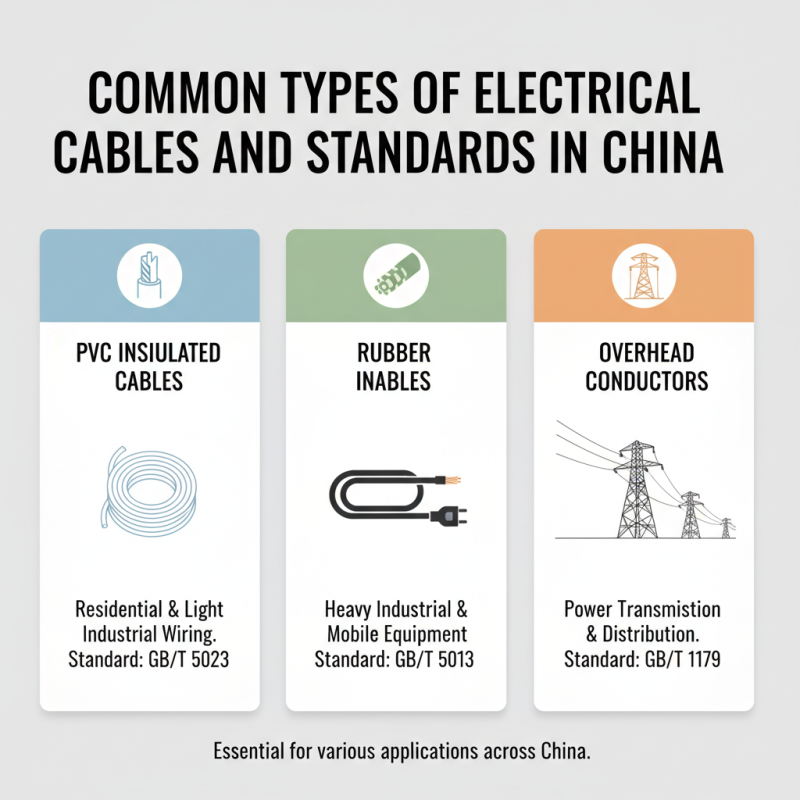
When discussing electrical cables in China, it’s essential to highlight the common types and their standards. The country uses various cables, including PVC insulated cables, rubber insulated cables, and overhead conductors. Each type serves specific purposes, from residential wiring to industrial applications.
PVC insulated cables are popular for indoor installations. They offer good insulation and fire resistance. Their production follows the GB/T 12706 standard, which ensures safety and reliability. Rubber insulated cables, on the other hand, provide flexibility and durability. They are ideal for outdoor and heavy-duty uses. The GB/T 5013 standard governs their specifications.
Overhead conductors are another significant category. These cables often use aluminum due to its lightweight properties. Their standards, guided by GB/T 1179, focus on tensile strength and weather resistance. However, there are concerns about the impact of environmental factors on cable longevity. Manufacturers must continuously reflect on how to enhance durability while ensuring performance meets regulatory standards.
Testing and Certification Processes for Electrical Cables in China
In China, the testing and certification processes for electrical cables are crucial to ensure safety and reliability. Various organizations oversee these processes, including the China National Center for Quality Supervision and Test of Electrical Products. Their role is significant, as they set the standards for cable testing and validation.
Testing typically involves several steps. The physical properties, thermal performance, and chemical resistance of cables are examined. Samples are taken from production batches. These undergo rigorous testing in accredited labs. Measurements on insulation resistance and voltage capabilities are standard. Each test has specific criteria that must be met to pass certification.
Certification reinforces trust in electrical cables. It assures users of compliance with national and international standards. However, the process can sometimes feel opaque. Manufacturers may find it challenging to navigate the requirements. There can be missteps in documentation. Ensuring compliance can be resource-intensive. Consequently, a deeper understanding of the testing processes is essential for stakeholders in the industry.
What Are the Key Electrical Cable Standards in China? - Testing and Certification Processes for Electrical Cables in China
| Standard Name |
Standard Number |
Testing Method |
Certification Body |
Applicable Products |
| GB/T 12706 |
GB/T 12706-2008 |
Insulation Resistance and Voltage Test |
National Certification Body |
XLPE Insulated Power Cables |
| GB/T 19666 |
GB/T 19666-2018 |
Flame Test |
Chinese National Standards Institute |
Wires and Cables Used in Buildings |
| GB/T 27766 |
GB/T 27766-2011 |
Mechanical Testing |
State Administration for Market Regulation |
Low Voltage Power Cables |
| GB 50057 |
GB 50057-2010 |
Insulation Crystal Test |
China Quality Certification Center |
Special Cables |
International Comparisons of Electrical Cable Standards with China
Electrical cable standards vary significantly across countries, impacting safety and efficiency. In China, standards are governed by the National Standard of the People's Republic of China (GB). These standards focus on materials, design, testing, and performance criteria. The certification process ensures cables meet rigorous safety standards. However, international standards, such as IEC (International Electrotechnical Commission), provide broader guidelines that countries might adopt.
Comparing China's standards with international ones reveals both concordance and divergence. For example, while China follows GB standards, some global manufacturers adhere strictly to IEC guidelines. This can create confusion in trade and safety. Differences may arise from local environmental conditions or varying industrial practices. It is crucial for businesses to remain aware of these distinctions when operating in multiple regions.
Tips: Always check local regulations before deploying electrical cables. Compliance with regional standards minimizes risks and enhances safety. Engage with local experts to ensure proper understanding. Collaboration between international and local standards could optimize product quality. Remember, adapting to local requirements is key.
Key Electrical Cable Standards in China vs. International Standards
This chart compares the compliance rate of various electrical cable standards in China with select international standards. Each bar represents the percentage of adherence to standards such as IEC, UL, and GB within the electrical cable manufacturing industry.