Top 10 Flexible Cable Wire Options for Global Buyers?
The market for Flexible Cable Wire is evolving rapidly, catering to diverse global needs. Recent reports highlight that the demand for flexible cables is projected to grow at a CAGR of 5.3% from 2022 to 2030. This growth is fueled by advancements in technology and an increasing emphasis on renewable energy sources. "The versatility of Flexible Cable Wire is paramount in modern applications," says industry expert John Smith, emphasizing its critical role in various sectors.
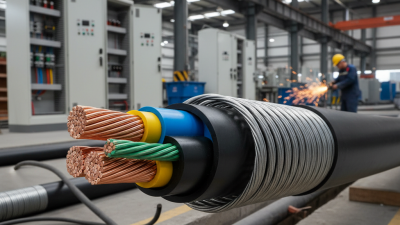
Flexible cables offer adaptability, essential for installation in tight or complex environments. They are widely used in sectors like automotive, telecommunications, and robotics. Their ability to withstand bending and twisting without compromising performance sets them apart from rigid cables. However, not all flexible wires are created equal, and buyers must navigate numerous options carefully.
In addition to functionality, safety is crucial. Reports indicate that improper cable selection leads to increased failure rates and safety hazards. Hence, it is vital for buyers to consider not only flexibility but also temperature ratings and insulation types. Despite the wealth of information available, many still encounter challenges in choosing the right cable for their specific application.
Top Trends in Flexible Cable Wire Production and Usage Worldwide
Flexible cable wire production is evolving rapidly. Advances in materials and technology are enhancing performance. Manufacturers are now focusing on lightweight and durable options. This shift addresses growing demands in various industries, including construction and electronics.
Sustainability is also a major trend. Many suppliers are seeking eco-friendly materials. This movement supports global initiatives to reduce waste. Consumers are becoming more environmentally conscious. They prefer products that align with this value. However, not every manufacturer is on board. Some still prioritize cost over sustainability, leading to a dilemma.
Moreover, customization plays a key role. Buyers often require tailored solutions for specific applications. This need can complicate production processes. It challenges manufacturers to balance efficiency with quality. Overall, the flexible cable wire market is dynamic. It reflects both opportunities and challenges for global buyers today.
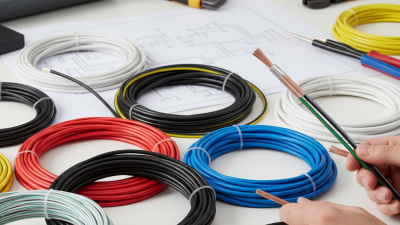
Top 10 Flexible Cable Wire Options for Global Buyers
| Cable Type |
Conductor Material |
Wire Gauge |
Max Current Rating (A) |
Temperature Rating (°C) |
Application |
| Silicone Wire |
Copper |
18 AWG |
10 |
-60 to 200 |
Automotive, Appliances |
| PTFE Wire |
Copper |
16 AWG |
13 |
-200 to 260 |
Aerospace, Electronics |
| PVC Insulated Wire |
Copper |
20 AWG |
5 |
-10 to 70 |
Home Appliances |
| Rubber Wire |
Copper |
14 AWG |
15 |
-40 to 90 |
Industrial Equipment |
| Low Voltage Wire |
Copper |
28 AWG |
3 |
-20 to 70 |
Data Communication |
| Shielded Wire |
Copper |
22 AWG |
7 |
-30 to 85 |
Signal Transfer |
| High Temp Cable |
Copper |
12 AWG |
20 |
-40 to 180 |
Heat Sensitive Equipment |
| Multi-Core Wire |
Copper |
16 AWG |
10 |
-20 to 60 |
Control Systems |
| Battery Cable |
Copper |
4 AWG |
120 |
-20 to 80 |
Automotive, Marine |
| Speaker Wire |
Copper |
16 AWG |
15 |
-5 to 70 |
Audio Systems |
Key Materials Used in Manufacturing High-Quality Flexible Cables
Flexible cables are essential in various industries. Understanding the key materials used in their production is crucial for global buyers. The most common materials include copper, PVC, and thermoplastic elastomers. Copper, known for its excellent conductivity, is often the preferred choice for core conductors. It ensures efficiency in power transmission.
PVC offers durability and flexibility. It is often utilized for insulation and jacketing. The versatility of PVC makes it suitable for various applications. Thermoplastic elastomers, while more expensive, provide superior flexibility and temperature resistance. This material is perfect for harsh environments, though its cost may deter some buyers.
The manufacturing process itself is not foolproof. It requires careful attention to detail. Any oversight can compromise the quality of the cable. Choosing the right materials is not always straightforward. Buyers must weigh flexibility against durability and cost. This balance is critical when selecting high-quality flexible cables for diverse needs.
Global Market Demand for Flexible Cable Wires in Various Industries
The global market for flexible cable wires is increasingly driven by diverse industries. According to a recent market report, the flexible wire market is projected to reach USD 21 billion by 2025, growing at a CAGR of 6.4% from 2020. This growth is fueled by a rise in demand for electric vehicles, renewable energy, and telecommunication advancements.
Flexible cable wires are crucial in the automotive sector, especially for electric vehicles (EVs). Data from industry analysts indicate that by 2030, EVs could account for 30% of total vehicle sales. This shift demands high-quality, flexible wiring solutions that can withstand dynamic environments. Additionally, sectors like aerospace and construction require these wires for their durability and adaptability to various conditions.
While the market shows promising growth, challenges remain. Quality assurance can be inconsistent across suppliers. Buyers may find it difficult to source wires that meet specific regulatory standards. Understanding these dynamics is essential for global buyers navigating the complexity of the flexible cable wire market. A comprehensive evaluation of suppliers and their products is needed to ensure reliability and safety in applications.
Comparative Analysis of Flexible Wire Specifications and Their Applications
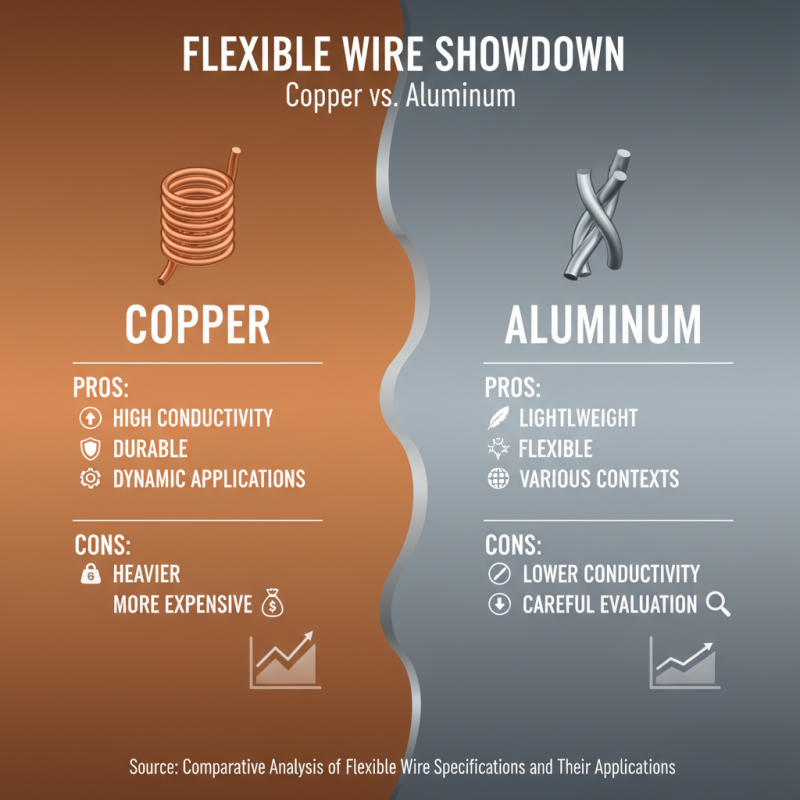
When selecting flexible cables, specifications can vary widely. Buyers often face challenges in balancing flexibility and durability. Copper wires are highly conductive, making them ideal for dynamic applications. However, they can be heavier and more expensive. On the other hand, aluminum wires offer lightweight flexibility, which is beneficial in many contexts. Yet, their conductivity is lower than copper, demanding careful evaluation.
Flexibility also depends on the insulation material used. PVC is common due to its cost-effectiveness, but it may not withstand extreme conditions. Fluorinated polymers provide better performance in harsh environments, enhancing longevity. However, they come at a premium price and may not be necessary for all applications. Additionally, buyers often overlook the importance of temperature ratings. Wires rated for higher temperatures can dramatically affect performance and safety, especially in industrial settings.
Buyers should also consider the specific application of the wire. For example, thin, flexible wires work well in robotics, where movements are frequent. Thick wires may be required in heavy machinery for better reliability and power transfer. There’s no one-size-fits-all solution. Each choice has advantages and disadvantages, and proper research is essential to ensure optimal performance in the intended use.
Innovative Technologies Driving the Future of Flexible Cable Wires
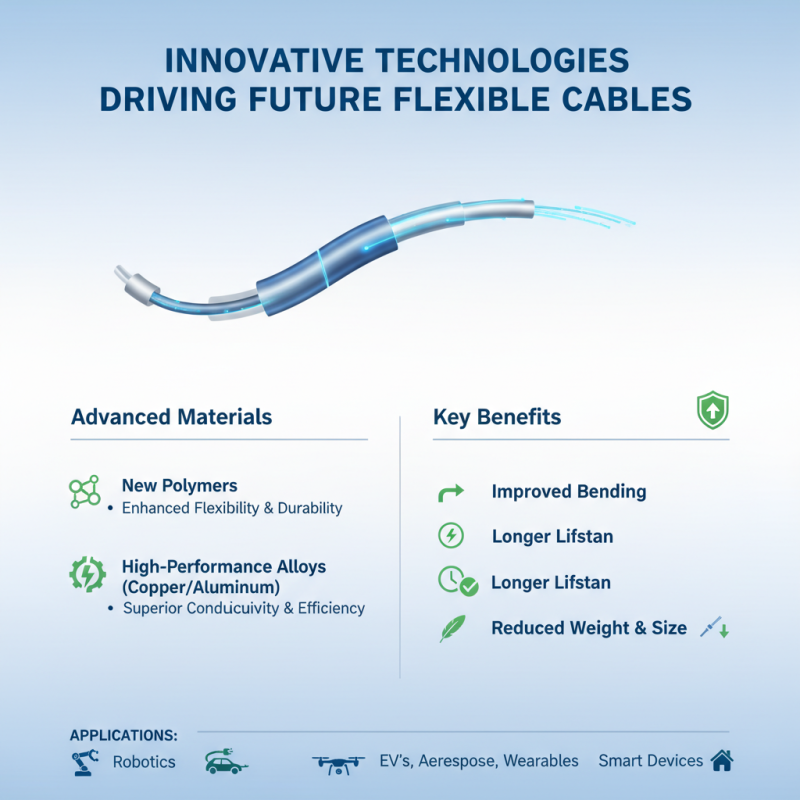
Innovative technologies are reshaping the landscape of flexible cable wires. Advances in material science are introducing new polymers that enhance flexibility. These materials not only allow better bending but also improve durability. High-performance copper and aluminum alloys are now more common, delivering superior conductivity. This shift is crucial for applications requiring low weight and high efficiency.
Manufacturers are experimenting with different insulation techniques. Ultra-thin coatings provide protection without adding bulk. This innovation addresses the growing demand for lightweight and compact wiring solutions in modern electronics. Additionally, smart sensors integrated into cables are gaining traction. They monitor temperature and pressure, signalling potential issues before they escalate.
However, the industry faces challenges. As demand for versatility increases, quality control becomes difficult. Not all manufacturers can meet the same standards consistently. Buyers must vet suppliers carefully to ensure reliability and performance in flexible cable options. Some technologies may promise much, but the real-world application varies. Transparency in production processes is essential for building trust within the market.