2026 Top Welding Cable Types You Should Know?
Welding cables are essential tools in the manufacturing and construction industries. They provide the necessary power for welding equipment and ensure precision in every task. In 2026, various types will dominate the market. Each type of welding cable caters to specific applications and environments.
Knowing the right welding cable can enhance safety and efficiency. Different gauges, insulation types, and materials make each cable unique. For instance, rubber and thermoplastic cables offer flexibility and durability. Choosing the wrong cable can lead to performance issues, increasing risk factors.
Understanding these aspects is crucial for professionals. You must consider the specifications based on your welding projects. This knowledge will not only optimize operations but also ensure long-lasting results. The right welding cable can make all the difference in your work quality.
Types of Welding Cables: A Comprehensive Overview for 2026
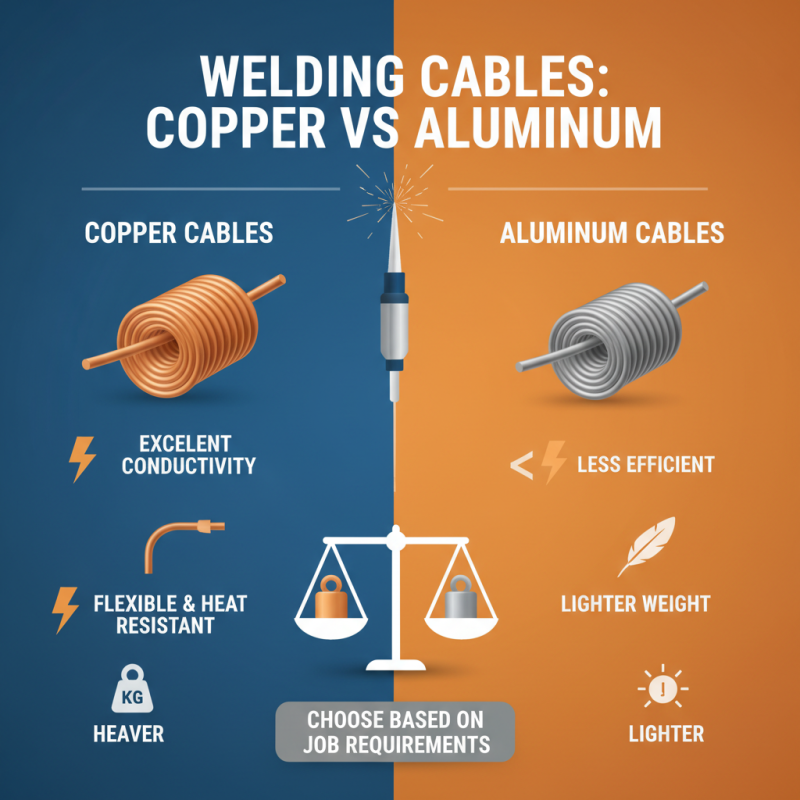
Welding cables come in various types, each designed for specific applications. Copper cables are widely used due to their excellent conductivity. They offer flexibility and resistance to high temperatures. Another type, aluminum welding cables, are lighter but can be less efficient. Depending on the job requirements, one type may be more suitable than another.
In 2026, thermoplastic elastomer (TPE) cables may gain popularity. They provide good abrasion resistance and are weather-resistant. However, some users find them less flexible in colder conditions. It's essential to consider your working environment when choosing a cable. A reliable choice today might not be ideal tomorrow. The industry evolves, and so do the materials.
It's crucial to pay attention to the size of the cables, as this affects their current-carrying capability. Oversized cables can be cumbersome, while undersized ones could lead to overheating. Balancing these factors can be tricky. Every welder should evaluate their specific needs. With the right knowledge, making an informed decision becomes easier. Keep exploring new options in welding cables.
Key Specifications of Welding Cables: Understanding Ampacity Ratings
When selecting welding cables, understanding their ampacity ratings is essential. Ampacity indicates how much current a cable can carry without overheating. Different materials and insulation types significantly affect these ratings. For instance, copper cables usually have higher ampacity than aluminum ones, due to their superior conductivity. According to the National Electrical Code, a 6 AWG copper welding cable can typically handle about 65 amps safely.
Moreover, the environment impacts performance. Cables used in extreme temperatures require more careful consideration. High heat scenarios can reduce ampacity ratings. The American Wire Gauge (AWG) system helps standardize these measurements. However, variations exist due to insulation types. A well-insulated cable can manage higher currents, while a poorly insulated one may fail. This leads to potential hazards, making it essential to choose wisely.
Not all cables meet the required standards. Some may fall short in real-world applications, indicating a need for careful evaluation. Regular testing and monitoring are vital to ensure safety and efficiency. Users should periodically check for wear and tear. Such practices ensure optimal performance and prevent accidents. Understanding these specifications will ultimately lead to better choices in welding applications.
2026 Top Welding Cable Types You Should Know
| Cable Type |
Gauge |
Ampacity Rating |
Insulation Type |
Temperature Rating |
| Welding Copper Cable |
6 AWG |
70 Amps |
PVC |
90°C |
| Welding PVC Cable |
4 AWG |
95 Amps |
PVC |
90°C |
| Heavy-Duty Welding Cable |
2 AWG |
130 Amps |
Rubber |
80°C |
| Flexible Welding Cable |
8 AWG |
50 Amps |
Rubber |
90°C |
| High-Voltage Welding Cable |
10 AWG |
40 Amps |
Cross-linked Polyethylene |
90°C |
Comparison of Welding Cable Materials: Copper vs. Aluminum Insights
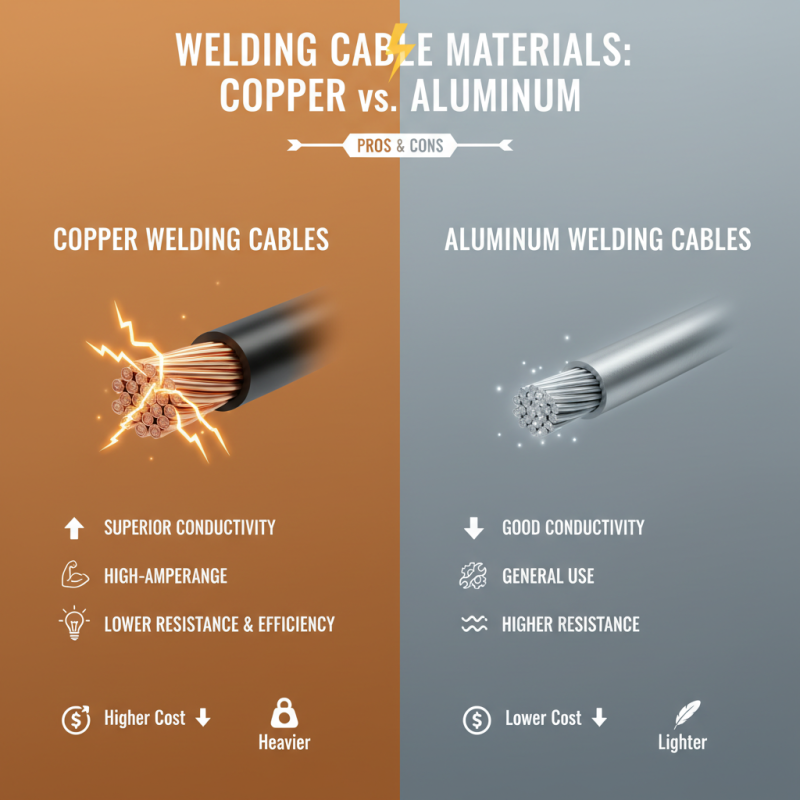
When it comes to welding cables, the choice of material can significantly impact performance. Two common materials are copper and aluminum. Copper is widely favored for its superior conductivity. It is ideal for high amperage applications. With copper, you can expect lower resistance and improved efficiency. However, copper can be more expensive and heavier.
Aluminum, on the other hand, is lightweight and often less expensive. It is suitable for various applications, especially where weight is a concern. Still, aluminum has higher resistance than copper. This could lead to overheating or energy loss in some cases. Each material has its strengths and weaknesses; the right choice depends on specific project needs.
Tips: Always consider the amperage requirements of your project. Higher amperage needs may favor copper. For lighter jobs, aluminum could be a good fit. Regularly inspect cables for wear and tear. This practice ensures safety and longevity.
Safety Standards and Certifications for Welding Cables in 2026
Welding cables must meet safety standards and certifications to ensure reliable performance. In 2026, it's crucial to be aware of the regulations governing these cables. Compliance with standards helps prevent accidents and improves worksite safety. Many organizations set these standards, covering materials, insulation, and durability.
Tips: Regularly check certification labels. Ensure your cables meet the latest safety requirements.
In welding, using subpar cables can lead to overheating or electrical hazards. Inspecting cables for damage is essential. A small fray can compromise the entire system. Consider the working environment as well. Extreme temperatures and exposure to chemicals can degrade cable performance.
Tips: Store cables properly to avoid wear. Protect against moisture and dust.
Choosing the right welding cable involves understanding its ratings and certifications. Not all cables are suitable for every task. Reflect on your specific needs before making a purchase. Sometimes, it’s easy to overlook these details in a busy work setting. Ensuring compliance isn't just a requirement; it’s a responsibility.
2026 Top Welding Cable Types You Should Know
This chart depicts the popularity of various types of welding cables in 2026, showcasing trends in the welding industry.
Emerging Trends and Innovations in Welding Cable Technology for 2026
The welding industry is witnessing numerous innovations in cable technology as we approach 2026. One primary trend is the shift to lighter materials. These new cables improve portability and ease of use, especially on job sites. Workers can maneuver them more easily, reducing physical strain. However, the durability of these lighter cables might need closer examination. Are they sturdy enough for extreme conditions?
Another emerging trend is enhanced insulation materials. These advancements can lead to better heat resistance and flexibility. This makes cables safer and more effective in various welding applications. Nevertheless, the transition to these new insulation types raises questions. Will they perform well over time? This uncertainty could affect long-term investments in such technology.
Smart welding cables are also on the rise. These cables can monitor performance and detect potential issues early on. This technology can prevent accidents and downtime. However, integrating these smart features may complicate maintenance. Workers must adapt to new protocols and understand advanced functionalities. Balancing innovation with practical usability remains a critical challenge for the future.