2026 How to Understand Electrical Cable Standards for Safe Usage?
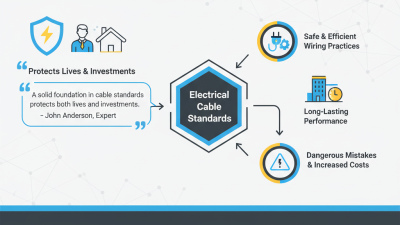
Understanding electrical cable standards is crucial for safety and efficiency. Electrical Cable Standard plays a significant role in ensuring safe installations. These standards help to guide manufacturers, engineers, and consumers in making informed decisions. Observing these guidelines can prevent hazards like electrical fires and equipment failure.
Many might feel overwhelmed by the various standards. It’s easy to get lost in technical jargon. Yet, a basic grasp of these standards can aid in selecting the right cables. This choice impacts both performance and safety. For instance, using the wrong type of cable could lead to overheating or short circuits.
Reflecting on past usage may reveal mistakes. People often use cables without checking compliance with standards. Such oversights can lead to significant risks. By engaging with electrical cable standards, individuals can foster a safer electrical environment. Knowledge is essential for protection and efficiency in your electrical projects.

Understanding the Importance of Electrical Cable Standards
Understanding Electrical Cable Standards is crucial for safety. These standards dictate how cables are manufactured and tested. Without them, the risk of electrical faults increases. Faulty cables can lead to fires, injuries, or equipment damage. Following these standards can prevent catastrophic outcomes.
Different environments require specific cable types. For instance, outdoor cables must withstand various weather conditions. Indoor cables focus on flexibility and insulation. Many people often overlook that not all cables are created equal. Using inappropriate cables can lead to serious consequences. It’s essential to understand the specific needs of your project or installation.
Compliance with electrical cable standards also ensures long-term reliability. People frequently underestimate the importance of regular inspections. A thorough check can reveal wear and tear that isn’t immediately visible. Investing time in understanding these standards can save money and lives. It’s not just about using cables; it’s about using them safely.
2026 How to Understand Electrical Cable Standards for Safe Usage?
| Standard Name |
Description |
Voltage Rating (V) |
Current Rating (A) |
Usage Category |
| IEC 60227 |
Polyvinyl Chloride (PVC) insulated cables for general use |
300/500 |
10-50 |
Residential |
| ANSI/NEMA WC 70 |
Thermoplastic insulated cables for power, control, and signal transmission |
600 |
20-200 |
Commercial |
| UL 83 |
Thermoplastic-insulated wire and cable |
600 |
15-100 |
Industrial |
| IEC 60502 |
Underground cables for power distribution |
0.6/1 kV |
60-250 |
Utility |
Overview of Key Electrical Cable Standards and Regulations
Understanding electrical cable standards is crucial for safety and efficiency. Various standards exist, such as the National Electrical Code (NEC) and International Electrotechnical Commission (IEC) guidelines. These regulations define how cables should be constructed and tested, ensuring they can handle electrical loads safely.
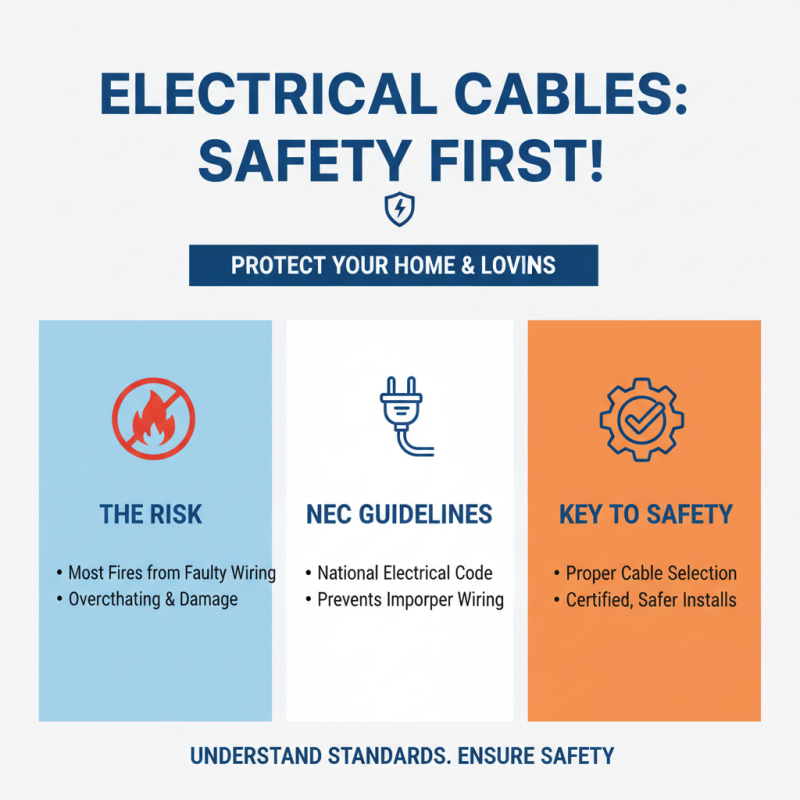
For instance, a recent industry report shows that improper installation and usage of electrical cables account for nearly 40% of electrical fires. This underlines the importance of adhering to established standards. Cables must meet specific requirements regarding insulation, temperature ratings, and load capacity. Connecting mismatched cables can lead to overheating or malfunctions, stressing the need for understanding these regulations.
Tips: Always check for certification marks on cables. Use cables suited for the environment they will be in. Remember, a cable not rated for outdoor use can degrade quickly, leading to risk.
Another aspect often overlooked is regular inspection and maintenance. Users must routinely check cables for wear or damage. Ignoring this could result in hazardous situations, especially in high-load applications. Compliance with standards isn’t just about initial installation; it is about ongoing safety management too.
Common Types of Electrical Cables and Their Applications
When it comes to electrical cables, knowing the types and their uses is essential. Different cables serve specific purposes, ensuring safety and efficiency.
One common type is the THHN cable. It is typically used for wiring in commercial buildings. This cable is suitable for dry locations. However, it may not perform well in moist areas. The insulation can degrade over time if exposed to water.
Another type is the NM cable, often referred to as "Romex." It is widely used in residential wiring. It’s flexible and easy to install. Yet, NM cables should not be used outdoors. They can break down when exposed to sunlight.
Tips: Always check the wire’s rating before use. It’s crucial to match the cable type with its application. Overlooking this can lead to risks. Regular inspections can save lives and property. Use cables that meet local electrical codes. This ensures compliance and minimizes hazards.
Guidelines for Selecting the Right Electrical Cables for Safety
Choosing the right electrical cables is vital for safety. The National Electrical Code (NEC) highlights that most electrical fires result from improper wiring. Inadequate cable selection can lead to overheating and property damage. Understanding standards ensures safer installations.
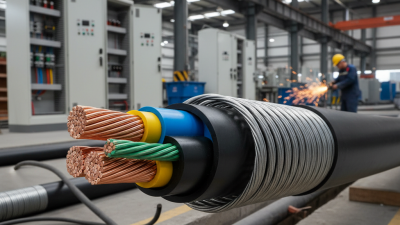
When selecting cables, consider insulation type. Various materials withstand different temperatures and environments. According to an industry report by the International Electrotechnical Commission, using cables rated for specific applications reduces risk. Inspect the voltage ratings, as exceeding them can cause failure.
**Tip:** Always check for certifications. Look for markings from recognized organizations on the cables.
Another critical aspect is the cable gauge. Thicker cables generally handle more current. Industry research indicates that 10% of electrical failures relate to inappropriate gauge selection. Also, be aware of the installation environment. Moisture and chemicals can deteriorate cable integrity over time.
**Tip:** Assess your installation site. A damp location requires more robust insulation.
Make informed choices to prevent accidents. Understand local regulations and consult professionals if unsure. Using subpar cables can lead to severe consequences, including safety hazards.
Best Practices for Installing and Maintaining Electrical Cables
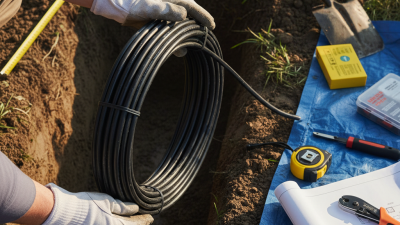
When installing electrical cables, safety is paramount. Proper installation reduces the risk of hazards. Ensure cables are routed away from sharp edges and potential sources of heat. Use cable ties to secure loose cables. This prevents wear and accidental disconnection.
Regular maintenance is essential for safe usage. Inspect cables for signs of damage. Look for fraying, cuts, or exposed wires. These issues can lead to failures or shocks. Replace damaged cables promptly. Keep the area around cables clear of obstructions. This makes it easier to spot potential problems.
In some cases, you might overlook smaller details. For example, ensuring connections are tight can be forgotten. Loose connections can cause sparks. Over time, this can pose serious risks. Always double-check your work. Safety in electrical installations comes from diligence and attention to detail.
Understanding Electrical Cable Standards for Safe Usage
This bar chart illustrates the monthly installation rates (in units) of different electrical cable types. Understanding the distribution of different cable types is crucial for ensuring safe usage and adherence to standards.