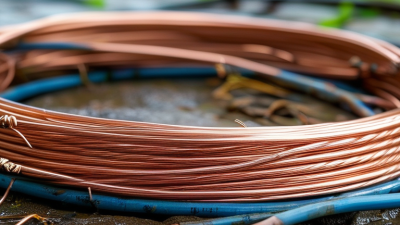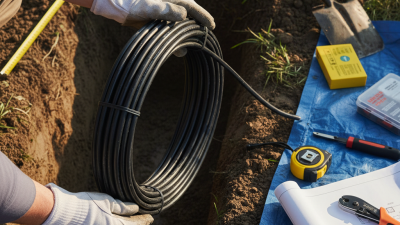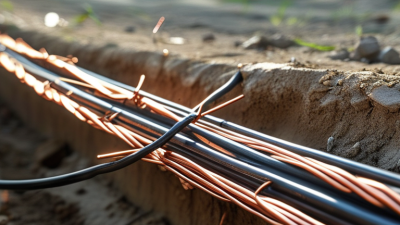
Choosing China Best Direct Burial Wire Suppliers? The right comparison starts below the product photo. Direct Burial Wire must suit the project’s voltage, conductor material, insulation, soil conditions, and installation method. Ask suppliers for current technical data sheets, clear construction details, and traceable test documentation. A polished catalog is not proof. Check the actual cable markings and confirm that the product is rated for direct burial—not simply described as “outdoor” or “water-resistant.”
Electrical educator Mike Holt’s warning, “Electricity can kill you,” is a blunt reminder that underground work deserves careful planning. Verify requirements with a qualified electrical professional and the applicable local code before selecting or installing cable. Then compare suppliers on more than price: request samples, assess response quality, confirm production consistency, and clarify packaging, lead times, and after-sales support. These checks matter when a cable will be difficult and costly to replace after backfilling.
There is no single best supplier for every project. A small landscaping job and a long industrial run may need different specifications and service. Be cautious of vague claims, unusually low quotations, or documents that do not match the offered product. I would still want to inspect the cable itself; paperwork alone can leave questions unanswered. The sections ahead examine supplier credentials, product quality, customization, and practical buying checks to help readers make a more informed shortlist.
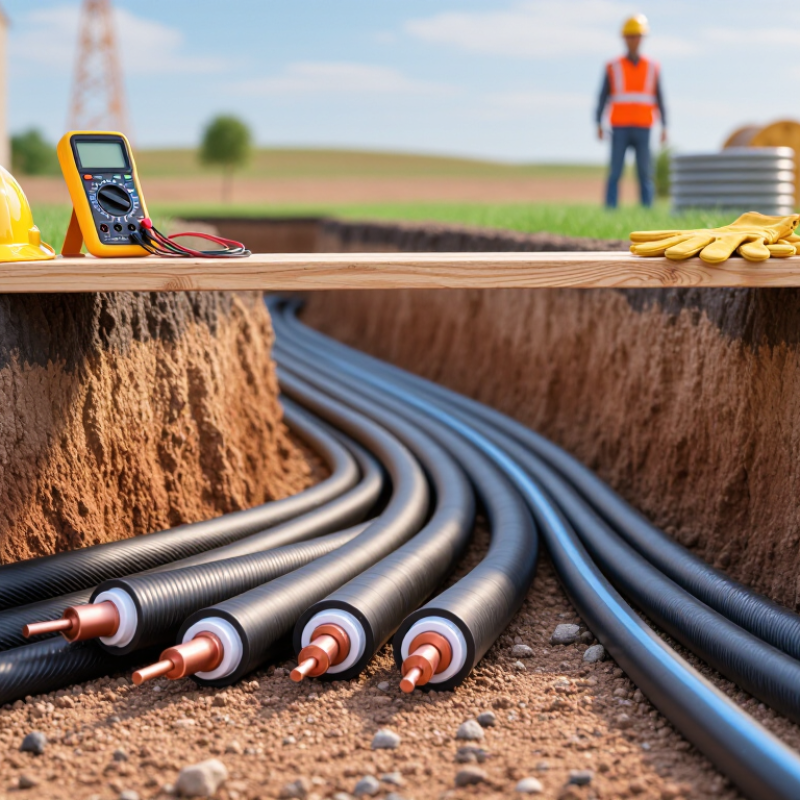
Direct-burial wire is cable designed to be installed in soil without continuous conduit. Its insulation and outer jacket help resist moisture, soil chemicals, and physical wear. The exact cable type depends on voltage, load, and installation conditions. It is commonly used for outdoor lighting, irrigation pumps, detached garages, and power to sheds. A trench can look simple; the cable choice is not.
The U.S. Energy Information Administration estimates that the country’s electricity distribution network spans about 5.5 million miles. That figure covers the wider network, not direct-burial cable alone, but it shows how much wiring supports homes and businesses. Underground runs are useful where overhead wires would obstruct access or be exposed to damage. The soil matters, too. Wet, rocky, or shifting ground can shorten service life if the cable and installation are poorly matched. That detail is easy to underestimate.
Tip: Check the cable’s direct-burial rating, conductor size, and local installation requirements before digging. Mark the route, avoid sharp stones, and use conduit where the cable emerges from the ground or faces impact. The EIA’s “Electricity Explained: Delivery to Consumers” provides the network estimate; always confirm project details with a qualified electrician.
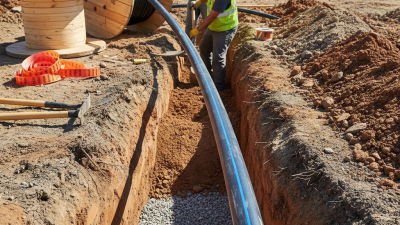
Direct burial wire is designed for contact with soil and moisture, but not every outdoor cable qualifies. Check the jacket for a clear direct-burial or wet-location marking, plus its voltage and temperature ratings. Applicable standards vary by market and installation, so ask suppliers for product markings and current test documentation. Copper and aluminum conductors have different connection requirements; confirm the cable suits the terminals and load. Details matter.
A durable jacket helps resist moisture, abrasion, and soil chemicals, yet damage during installation can still cause trouble. Check the cable before laying it, especially near bends and splices. Burial depth depends on local electrical rules, site conditions, and any protective conduit. Use conduit where the cable rises from the ground or faces likely impact. Keep sharp stones away from the jacket. Even a small nick deserves attention.
Tips: Request a clear cable specification sheet, inspect the printed markings, and match the wire gauge to the circuit load. Don’t rely on a low price alone. I’d also verify that the supplier’s documents identify the exact cable model, not just a similar product.
NEC Table 300.5 specifies minimum cover depths for underground wiring. Direct-burial cable typically requires 24 inches of cover; the listed alternatives shown have different requirements. Actual requirements vary by location, wiring method, circuit conditions, and applicable code editions. Confirm local code requirements before installation.
Evaluating direct burial wire suppliers in China starts with the job site, not the catalog. Tell suppliers the voltage, conductor size, installation depth, soil conditions, and expected exposure to moisture. Ask them to identify the cable’s intended burial use and provide product specifications, test reports, and clear markings. A neat catalog is useful, but it is not proof. Check that the documents match the exact construction you plan to order.
Request a sample and inspect its jacket, conductor, and printed identification. Ask how production batches are traced and how defects are handled. If practical, arrange a factory audit or use an independent inspection before shipment. Confirm packaging, order quantities, lead times, and how changes to specifications are approved. These details can reveal gaps before they become costly delays. Small details matter.
Price deserves scrutiny, too. An unusually low quote may reflect a different conductor material, insulation thickness, or testing scope. Compare like with like. I would not rely on a single report or a polished sample; neither tells the whole story. Supplier evaluation takes time, and even careful checks cannot remove every uncertainty. Keep written records of agreed specifications, sample approval, and inspection results.
Use this evaluation framework to compare suppliers against your destination market, project specification, and required cable type. A “direct burial” claim should be confirmed against the applicable product standard and installation requirements; it is not established by a marketing description alone. Suggested weights are for buyer evaluation and are not industry certification ratings.
| Evaluation dimension | What to verify | Useful evidence to request | Suggested weight |
|---|---|---|---|
| Applicable standards and approvals | Confirm the exact cable type, voltage rating, and standard required in the destination market. Requirements differ by country and application. | Current certificate or listing for the offered product; certificate scope and model details; standard edition; confirmation that the certification covers the intended installation. | Very high — 20% |
| Burial suitability and cable construction | Check that the complete cable design—not just its insulation—is approved or specified for direct burial and the project conditions. | Construction drawing and datasheet showing conductor, insulation, core arrangement, bedding or filler, sheath, and any armor; written confirmation of permitted installation conditions. | Very high — 20% |
| Electrical ratings and conductor data | Match conductor material, nominal cross-section or AWG size, conductor class, voltage rating, temperature rating, and core count to the specification. | Product datasheet; conductor resistance results at the stated reference temperature; conductor-class information; clear identification of copper or aluminum construction. | High — 15% |
| Water and environmental performance | Assess suitability for expected moisture, soil, temperature, UV exposure during installation, and chemical or mechanical conditions. Do not assume every jacket material provides the same performance. | Relevant test reports and material specifications; stated operating and installation temperature limits; written limitations for wet locations, sunlight exposure, and soil conditions. | High — 12% |
| Routine and type testing | Check which tests are performed, their acceptance criteria, and whether results apply to the offered design and production lot. | Sample test report, routine test records, test methods and limits, calibrated-equipment records, and identification linking test results to the product or batch. | High — 12% |
| Factory quality controls | Determine whether documented controls cover incoming materials, process checks, nonconforming products, and final inspection. | Quality-management certificate with valid scope and dates, if applicable; inspection and test plan; sample in-process and final inspection records; audit access or a third-party inspection option. | Medium-high — 10% |
| Traceability and documentation | Confirm that finished cable and shipping documents can be traced to production batches and stated materials. | Sample reel labels, batch or lot records, certificate of conformity, test certificate, packing list, and datasheet matching the quoted product. | Medium — 8% |
| Sample and specification consistency | Compare the approved sample and final datasheet with the purchase specification; document any substitutions or design changes. | Pre-production sample where practical; signed specification or drawing; change-control procedure; pre-shipment inspection against agreed criteria. | Medium — 8% |
| Commercial and delivery capability | Compare total landed cost, minimum order quantity, production lead time, reel lengths, packaging, payment terms, and delivery responsibilities. | Itemized quotation; stated Incoterms® rule and named place; production schedule; packaging and reel details; written warranty and claims process. | Medium — 5% |
| Communication and technical support | Evaluate whether technical questions receive specific, consistent answers and whether the supplier can support document review and issue resolution. | Written responses to a common technical questionnaire; named points of contact; response-time expectations; escalation and corrective-action process. | Medium — 5% |
Suggested scoring: Rate each dimension from 0 (no acceptable evidence) to 5 (evidence fully meets the project requirement), then apply the suggested weight. Verify certificates with the issuing body where possible, and have the cable selection and installation checked against local electrical codes by a qualified professional.
Chinese suppliers of direct burial wire generally fall into three groups: cable manufacturers, OEM/ODM factories, and trading companies. Cable manufacturers usually offer the clearest view of production, from conductor stranding to insulation and outer-jacket extrusion. Some can supply copper or aluminum conductors in different gauges, with jackets designed for moisture, abrasion, or soil contact. Capabilities vary. Ask for the exact construction, not just a product name.
OEM/ODM factories may adjust conductor size, colors, packaging, and print markings to match a buyer’s specification. They can be useful for recurring orders, though custom tooling or minimum quantities may apply. Trading companies often provide a broader catalog and help coordinate export documents, but they may not control manufacturing details directly. Ask who makes the cable and where production takes place.
Compare suppliers using a technical data sheet, a sample cut, and answers about routine testing. Check conductor material and diameter, insulation thickness, jacket material, temperature rating, and stated burial suitability. Request test records for the offered construction, rather than a generic certificate. Small details matter: a jacket that feels thick is not proof of long-term soil resistance. Paperwork can look cleaner than production. If details conflict, pause and clarify them before ordering.
A reliable direct burial wire supplier should explain how its cable performs underground, not just provide a low price. Request the exact construction details: conductor material and size, insulation type, jacket thickness, voltage rating, and stated burial suitability. Check that the product documents match the cable being quoted. A generic catalog page is not enough.
Ask for current test reports and traceable production records, then confirm that the test methods and ratings fit your project requirements and local codes. Request a sample and inspect the jacket for cuts, uneven thickness, or unclear printing. Short on documentation? Pause. One sample cannot prove every production run is consistent, so ask how quality checks are recorded and how defects are handled.
Compare delivery times, minimum order quantities, packaging, and warranty terms in writing. Ask for references from buyers with similar installation needs, and verify that the supplier can answer technical questions clearly. A polished sales reply may still leave gaps. I would note those gaps rather than assume they are harmless. Before placing a large order, confirm the final specification, quantity, and shipping details on the purchase documents.