Hesheng Cable
Leave Your Message

Top 10 Flexible Cable Wire Manufacturers for Global Buyers

Global buyers are reassessing Flexible Cable Wire as electrification expands across automation, robotics, vehicles, medical equipment, and renewable-energy systems. The International Energy Agency’s Electricity 2024 report forecasts strong global electricity-demand growth through 2026, increasing pressure on dependable cable infrastructure. Flexible cables support this shift where repeated bending, tight routing, vibration, and limited installation space are unavoidable.

Market evidence points in the same direction. Grand View Research’s Flexible Cables Market report highlights rising demand from industrial automation, transportation, and consumer electronics. MarketsandMarkets also identifies miniaturization, higher data rates, and durable insulation as important cable-development trends. These findings matter to purchasing teams. A cable that looks inexpensive may fail quickly inside a drag chain, robotic arm, or compact control cabinet.

Performance comes first.

As Christopher Guérin, CEO of Nexans, has stated, “Electrification is at the heart of the energy transition.” His observation explains why cable selection now involves more than price and delivery time. Buyers must examine conductor materials, bend radius, shielding, temperature resistance, certifications, traceability, and factory testing. Supplier experience matters too.

No ranking is perfect. Regional standards, application risks, and after-sales support can change the result. Some manufacturers communicate technical information better than others. That deserves scrutiny. This guide evaluates ten Flexible Cable Wire manufacturers for global buyers, using product range, engineering capability, production consistency, compliance documentation, customization, and international service as practical comparison points.
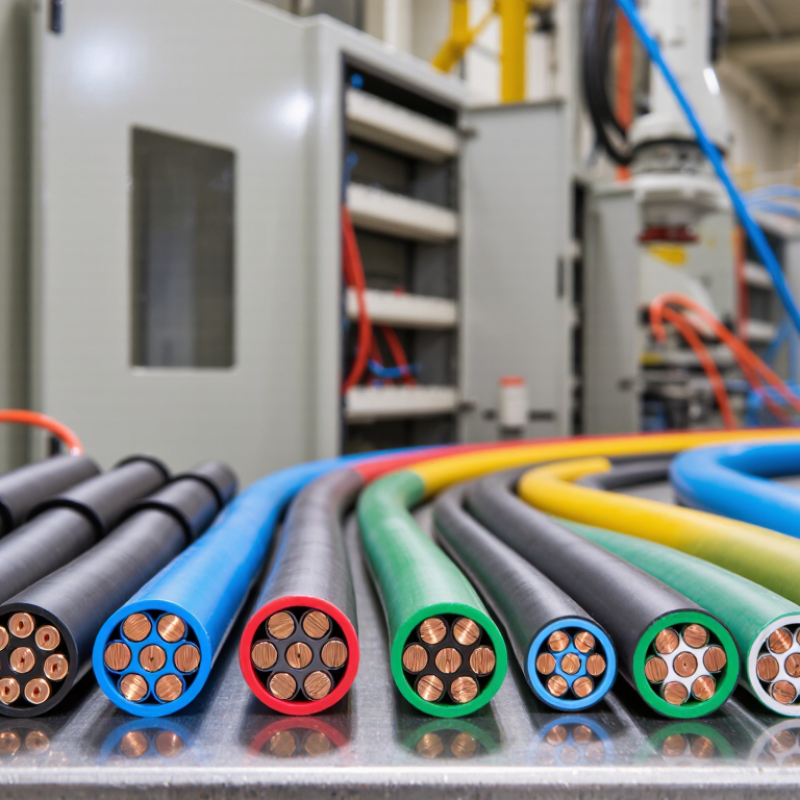
Top 10 Flexible Cable Wire Manufacturers for Global Buyers

What Makes a Flexible Cable Wire Manufacturer Globally Competitive

A globally competitive flexible cable wire manufacturer does more than offer a low quotation. It understands how cables behave under repeated bending, vibration, heat, and tight installation spaces. Engineers should match conductor stranding, insulation thickness, jacket material, and bend radius to the application. Small details matter. A cable that feels soft may still fail after thousands of movement cycles.

Reliable manufacturers support decisions with measurable evidence. They provide clear technical datasheets, batch traceability, inspection records, and relevant safety certifications for each target market. Their laboratories should perform bending, tensile, flame, insulation resistance, and temperature tests. Photos help, but test data carries greater weight. Buyers should ask how samples were tested, not only whether they passed.

Production flexibility also separates strong suppliers from ordinary factories. They can adjust conductor sizes, colors, shielding, lengths, connectors, and packaging without losing process control. Stable raw-material sourcing reduces unexpected changes between orders. Communication matters across time zones, especially when drawings change. Yet no manufacturer gets every decision right. Some customized designs may create longer lead times or higher tooling costs. Honest suppliers explain these limits early and offer practical alternatives. They also review customer feedback after delivery, because field performance can reveal weaknesses that factory testing misses.
Key Criteria for Evaluating Flexible Cable Wire Manufacturers

When evaluating flexible cable wire manufacturers, start with application evidence, not catalog language. Ask for bend-cycle data under the intended radius, speed, load, and temperature. A cable for robotic motion needs different construction from one used in control cabinets. Experienced manufacturers explain conductor class, strand design, insulation compound, shielding, and jacket behavior in practical terms. They should provide test methods, sample reports, and production records. Vague answers deserve caution.

Material control reveals technical maturity. Request copper resistance values, insulation thickness tolerances, and batch traceability. Check whether incoming materials are tested before extrusion. Visit the facility, if possible, or use a qualified third-party audit. Look for calibrated equipment, documented process changes, and operators who understand failure modes. Certifications matter, but certificates alone do not prove consistent production. A clean document folder can hide uneven batches. Ask for samples from more than one lot. This takes time.

Reliability also depends on communication after purchase. Compare response times, engineering support, packaging protection, lead-time records, and corrective-action reports. A credible supplier discusses weaknesses without defensiveness. That is useful. Global buyers should confirm applicable safety and environmental requirements for each destination. Require clear drawings, labeling, and inspection criteria before mass production. I would also test a pilot shipment under real routing conditions. My own mistake was trusting a successful short test too quickly; repeated flexing later exposed jacket wear.

Key Criteria for Evaluating Flexible Cable Wire Manufacturers

Recommended weighting for a global buyer screening model. The criteria reflect commonly reviewed requirements in flexible cable procurement, including IEC 60228 conductor classes, IEC 60332 flame-performance testing, IEC 60502-1 voltage specifications, and applicable RoHS/REACH compliance.

The percentages represent a transparent evaluation framework rather than performance claims about any specific manufacturer. Buyers should verify test reports, technical datasheets, factory audits, certifications, delivery capability, and warranty terms before placing an order.

Top 10 Flexible Cable Wire Manufacturers for Global Buyers

Choosing the top 10 flexible cable wire manufacturers for global buyers requires more than comparing online prices. Reliable suppliers show years of production experience, documented quality procedures, and clear export records. They should explain conductor materials, insulation types, bend radius, temperature range, and rated voltage without vague promises. A useful factory visit may reveal automated stranding lines, clean extrusion areas, and labeled test samples. Small details matter.

The strongest manufacturers provide batch traceability, electrical resistance reports, flame-performance data, and shipment inspections. They can adjust cable length, jacket color, conductor count, and packaging for different markets. Their technical teams should answer practical questions quickly. Not just sales talk. Buyers should also check whether the supplier understands local standards, recycling expectations, and installation conditions. A cable used inside a control cabinet faces different stress from one dragged across a workshop floor.

No ranking is perfect. Production capacity may look impressive, yet after-sales communication can disappoint. I would request samples, bend them repeatedly, inspect the jacket for cracks, and compare measured resistance with the datasheet. Lead time deserves equal attention. A cheap quotation means little if one delayed reel stops an entire assembly line. The top ten choices should therefore balance engineering evidence, consistent delivery, transparent communication, and realistic customization limits. Even experienced buyers can overlook packaging damage during long-distance transport. That mistake is worth reviewing before signing a large order.

Top 10 Flexible Cable Wire Manufacturers for Global Buyers

Rank Anonymous Manufacturer Profile Primary Cable Focus Typical Conductor Common Insulation / Jacket Typical Voltage Range Typical Temperature Range Common Compliance References Suitable Applications Buyer Priority
1 Profile 01 Industrial control and automation cable Fine-stranded annealed copper PVC or halogen-free thermoplastic 300–600 V −40°C to +90°C IEC 60227; IEC 60332; RoHS Control cabinets, sensors, machine tools Flexibility and EMC control
2 Profile 02 Drag-chain and continuous-motion cable Extra-fine stranded copper PUR, TPE or flexible PVC 300–1,000 V −40°C to +90°C IEC 60228; IEC 60332; RoHS Robotics, CNC equipment, automated lines Bending-life testing
3 Profile 03 Shielded instrumentation cable Tinned or bare stranded copper PVC, PE or halogen-free compound 300–600 V −30°C to +80°C IEC 60228; IEC 60332; EMC requirements Measurement, process control, data signals Signal integrity
4 Profile 04 Flexible power cable Class 5 flexible copper PVC or elastomeric compound 450–750 V −40°C to +90°C IEC 60227; IEC 60228; IEC 60332 Portable equipment, control panels, machinery Current capacity
5 Profile 05 Servo and motor cable Fine-stranded copper with symmetrical construction PUR or oil-resistant PVC 600–1,000 V −40°C to +90°C IEC 60228; IEC 60332; EMC requirements Servo drives, motors, packaging machines Shielding and torsion resistance
6 Profile 06 Halogen-free low-smoke cable Stranded copper Halogen-free thermoplastic compound 300–1,000 V −30°C to +90°C IEC 60754; IEC 61034; IEC 60332 Public buildings, transport, enclosed spaces Fire safety
7 Profile 07 Data and communication cable Solid or stranded copper pairs PE insulation with PVC or LSZH jacket Up to 300 V −20°C to +75°C ISO/IEC 11801; IEC 60332; RoHS Industrial networks, sensors, building systems Impedance consistency
8 Profile 08 Flat flexible cable Parallel stranded copper conductors PVC or thermoplastic elastomer 300–600 V −20°C to +80°C IEC 60227; IEC 60228; RoHS Compact machinery, lighting, appliances Space efficiency
9 Profile 09 Outdoor and oil-resistant flexible cable Flexible tinned copper PUR or oil-resistant elastomer 300–1,000 V −40°C to +90°C IEC 60228; IEC 60332; UV and oil-resistance tests Construction, industrial equipment, outdoor systems Weather resistance
10 Profile 10 Custom multi-core cable assemblies Copper conductors, optional shielding PVC, PUR, TPE or halogen-free materials Up to 1,000 V −40°C to +105°C IEC 60228; IEC 60332; RoHS; customer specifications OEM equipment, medical devices, special machinery Customization capability

Note: The specifications shown are typical ranges for flexible cable categories and should be verified against the applicable product datasheet, test report, and destination-market requirements before purchase.

Product Capabilities, Industry Applications, and Market Coverage

Top 10 Flexible Cable Wire Manufacturers for Global Buyers

The strongest flexible cable wire manufacturers offer more than conductor size options. They develop copper, aluminum, insulation, shielding, and jacket combinations for specific working conditions. Buyers should examine bend radius, flex cycles, voltage ratings, temperature ranges, and oil or abrasion resistance. A cable for a robotic arm may require continuous-flex testing, while a control cabinet often needs stable signal transmission and clear identification.

Small details matter.

Experienced suppliers usually provide sample testing, technical drawings, batch records, and traceable material data. Their production teams may use automated stranding, precision extrusion, and online diameter monitoring. Testing should include insulation resistance, tensile strength, flame behavior, and repeated bending. Certificates can support purchasing decisions, but they do not replace factory audits or application trials.

A document can look complete. The sample may still disappoint.

Market coverage also shows operational maturity. Reliable manufacturers support distributors and equipment builders across Europe, North America, Southeast Asia, the Middle East, and Latin America. They should understand regional labeling, packaging, documentation, and delivery expectations. Flexible cables serve machine tools, renewable-energy equipment, elevators, data systems, medical devices, and industrial automation.

However, no supplier fits every project. Some offer excellent customization but slower production. Others ship quickly but provide fewer jacket choices. Buyers should compare lead times, minimum order quantities, engineering support, and after-sales response before selecting a top-ten candidate.

Flexibility has limits.

How Global Buyers Can Select the Right Manufacturing Partner

Top 10 Flexible Cable Wire Manufacturers for Global Buyers

Global buyers should judge manufacturing partners beyond catalog prices. In supplier audits, the strongest evidence is usually process control, not polished presentations. Ask for conductor resistance records, insulation test results, bend-cycle data, and traceable batch numbers. A capable factory should explain its minimum bend radius clearly. It should also provide samples from normal production, not only laboratory pieces.

The ISO Survey 2022 recorded more than 1.2 million ISO 9001 certificates worldwide. Certification helps, but it does not prove consistent cable performance. Request recent audit findings, corrective-action records, and calibration certificates. The International Energy Agency’s Global Critical Minerals Outlook 2024 also identifies copper supply pressure as a growing industrial concern. Therefore, buyers should examine material sourcing, copper purity controls, and delivery buffers. A low quotation may hide unstable raw-material planning.

Tips: Compare suppliers using one technical checklist. Include voltage, temperature, flexing cycles, shielding, jacket material, and destination standards. Test at least three production batches. Confirm packaging details, because crushed reels can damage flexible conductors before installation. Factory visits are valuable, but remote audits can miss small process gaps. That is easy to overlook. Allow time for failure analysis, too. Perfect supplier selection is unrealistic; documented responses matter more than confident promises.