Hesheng Cable

Leave Your Message
Choosing the right Electrical Wire Single Core can affect installation safety, signal stability, maintenance costs, and long-term equipment performance. In 2026, buyers face many options, including copper, tinned copper, aluminum, PVC-insulated, XLPE-insulated, flexible, and rigid designs. Each type suits different environments.
This guide examines practical features that matter during real projects. Conductor material, cross-sectional area, insulation temperature rating, voltage capacity, flexibility, and resistance to moisture all deserve careful attention. A copper core may provide excellent conductivity, while tinned copper can resist corrosion in damp or marine conditions. PVC insulation often supports general indoor wiring, but XLPE may perform better near heat or demanding industrial equipment.
Small details matter.
Reliable selection should begin with verified technical data, not only product photos or attractive pricing. Buyers should check manufacturer test reports, batch information, applicable certification marks, conductor class, and installation temperature limits. Professional electricians can also confirm whether the wire matches local electrical codes and the equipment’s actual load. This article compares leading Electrical Wire Single Core types for purchasing decisions, emphasizing performance evidence and practical use.
There is no universal “best” wire. A low-cost option may become expensive after difficult installation, premature insulation damage, or repeated replacement. Even experienced buyers can overlook bending radius or terminal compatibility. That weakness deserves attention. Product availability and standards may also change by region, so current documentation must be reviewed before ordering.
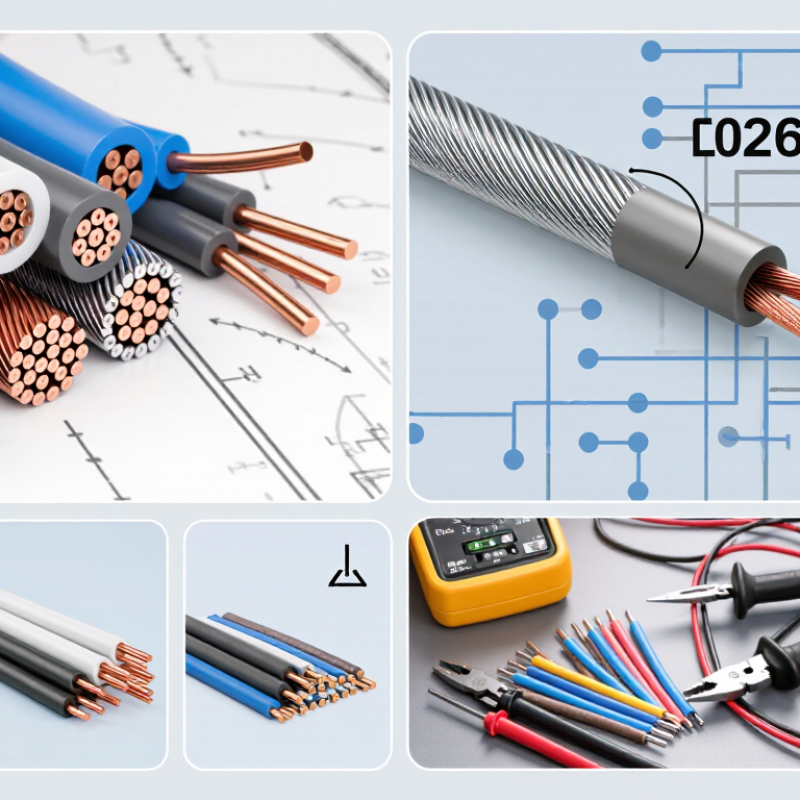
2026 Best Electrical Wire Single Core Types for Buyers
What Single-Core Electrical Wire Is and How It Works
Single-core electrical wire contains one metallic conductor inside an insulating layer. The conductor carries current from a source to a load, while insulation limits contact, leakage, and short circuits. Copper offers high conductivity and easy termination. Aluminum is lighter, but it requires careful connector selection and installation.
The conductor may be solid or stranded. Solid wire holds its shape in fixed routes, such as distribution boards and wall conduits. Stranded wire bends more easily around terminals and equipment. Common insulation includes PVC for general indoor use and XLPE for higher thermal performance. IEC 60228 classifies conductor construction and resistance, giving buyers a useful comparison point.
Size matters. A larger cross-sectional area usually reduces resistance and voltage drop, but it does not automatically make a circuit safe. Ambient temperature, grouping, installation method, and protective-device ratings also affect allowable current. A 2.5 mm² conductor can perform differently inside a crowded conduit than in open air. Check the local wiring standard.
Demand is not standing still. The IEA Electricity 2024 report recorded 2.2% global electricity-demand growth in 2023 and projected average annual growth of 3.4% from 2024 to 2026. That expansion increases pressure for dependable conductors. Yet a neat label can mislead. Buyers should verify conductor material, insulation temperature rating, voltage rating, test certification, and batch traceability. Cheap wire may look identical before installation. It may not behave identically under heat.
| Single-Core Wire Type | Typical Conductor | Insulation or Jacket | Typical Voltage Rating | Typical Temperature Rating | Where It Is Commonly Used | Main Advantages | Important Buyer Considerations |
|---|---|---|---|---|---|---|---|
| THHN / THWN-2 Building Wire | Solid or stranded copper; aluminum is also available in larger sizes | Thermoplastic PVC insulation with a nylon outer jacket | Commonly 600 V | THHN: 90°C dry; THWN-2: 90°C wet and dry | Conduit, raceways, control panels, feeders, branch circuits, and general building wiring | Widely available, relatively easy to pull, and suitable for both dry and wet locations when marked THWN-2 | Confirm the complete marking. THHN alone is for dry locations; wet-location installations normally require the THWN or THWN-2 marking. |
| XHHW-2 | Stranded copper or aluminum; larger sizes are frequently aluminum | Cross-linked polyethylene insulation | Commonly 600 V; higher-voltage versions also exist | 90°C wet and dry | Feeders, service entrances, underground conduit, commercial distribution, and industrial power circuits | Good moisture resistance, high heat capability, and a durable insulation system for demanding installations | It can be less flexible than smaller stranded PVC-insulated wire. Check bending space and the approved termination range. |
| RHH / RHW-2 / USE-2 | Usually stranded copper or aluminum | Heat-, moisture-, and sunlight-resistant cross-linked insulation | Commonly 600 V; some constructions are rated up to 2,000 V | Typically 90°C wet and dry; the exact rating depends on the marking | Service conductors, underground installations, feeders, and certain photovoltaic or utility-related applications | Combines high-temperature performance with moisture resistance and, where marked, sunlight resistance | USE-2 is not automatically acceptable for every interior building-wiring application. Verify the full product marking and local code requirements. |
| PV Wire / Photovoltaic Wire | Fine-stranded copper, commonly tinned or bare depending on construction | Cross-linked, sunlight-resistant insulation and jacket system designed for outdoor exposure | Commonly 600 V, 1,000 V, or 2,000 V depending on the listed construction | Often 90°C wet and dry; the exact rating is product-specific | Solar-module interconnections, photovoltaic source circuits, and photovoltaic output circuits | Resists sunlight, moisture, ozone, and mechanical stress associated with exposed solar installations | Use only connectors and termination methods compatible with the wire. Do not substitute ordinary building wire for exposed PV wiring. |
| MTW Machine-Tool Wire | Flexible stranded copper, often with a relatively fine stranding | Flexible PVC insulation, commonly oil-resistant in listed constructions | Commonly 600 V | Typically 90°C dry and wet-location ratings may be available depending on the marking | Industrial control cabinets, machine tools, internal panel wiring, and equipment wiring | Flexible, easy to route in crowded control enclosures, and suitable for repeated equipment wiring work | It is not a universal replacement for building wire. Check whether the specific marking permits the intended field installation. |
| H07V-K Flexible Single-Core Wire | Fine-stranded copper | PVC insulation, generally flame-retardant in compliant constructions | 450/750 V under the IEC designation | Typically 70°C conductor temperature | European-style distribution boards, control panels, equipment wiring, and protected conduit systems | Very flexible and easy to terminate in compact electrical enclosures | Its IEC rating and construction do not automatically satisfy North American requirements. Confirm regional approvals, conductor size, and installation method. |
| H05V-K Flexible Single-Core Wire | Fine-stranded copper | PVC insulation | 300/500 V under the IEC designation | Typically 70°C conductor temperature | Internal equipment wiring, control circuits, and protected low- to medium-voltage panel applications | Highly flexible and convenient for short internal connections | Its lower voltage rating makes it unsuitable for many power-distribution applications. Follow the equipment and installation standard. |
| Silicone-Insulated Single-Core Wire | Flexible stranded copper, frequently tinned for improved solderability | Silicone rubber insulation | Commonly 300/500 V or 600 V, depending on construction | Often approximately −60°C to +180°C; verify the exact specification | High-temperature appliances, lighting equipment, heaters, test equipment, and areas requiring exceptional flexibility | Maintains flexibility across a wide temperature range and performs well near heat sources | Silicone insulation can have lower abrasion and tear resistance than some thermoplastic jackets. Protect it from sharp edges and mechanical damage. |
| High-Temperature Fiberglass-Braided Wire | Stranded copper, sometimes nickel-plated for high-temperature service | High-temperature insulation with fiberglass braid; construction varies significantly | Often 300 V or 600 V, depending on the listed construction | May exceed 200°C, but the allowable rating is construction-specific | Ovens, furnaces, heating equipment, lamps, and specialized industrial assemblies | Suitable for environments where ordinary PVC insulation would soften or deteriorate | Temperature rating, moisture resistance, abrasion resistance, and termination instructions vary widely. Select only a construction listed for the actual environment. |