Hesheng Cable
Leave Your Message

10 Best Lift Cables for Industrial Buyers?

Choosing a Lift Cable for industrial equipment is not a simple brand comparison. The right choice depends on the load, lifting speed, duty cycle, sheave size, environment, and connection design. A cable working beside a clean indoor hoist may not suit a dusty workshop or a damp loading area. Small details matter. Diameter, construction, core type, and lubrication can affect flexibility, wear, and service life.

This guide examines ten lift cable options for industrial buyers, focusing on practical selection factors rather than bold claims. It considers how each option may fit common lifting tasks, what specifications to verify, and which operating conditions deserve closer attention. Buyers should compare rated capacity and manufacturer guidance with the actual equipment configuration. They should also check compatibility with drums, sheaves, end fittings, and inspection procedures before purchase. A high breaking strength alone does not establish suitability. Installation quality and routine inspection matter, too.

The “best” cable is not universal. That is worth saying plainly. Product descriptions may leave out details that affect performance, so request current technical data and clarify any unclear specifications with the supplier. This overview is intended to support informed purchasing, not replace equipment-specific engineering review. A careful shortlist can reduce avoidable mismatches and help teams ask better questions before committing to a cable.
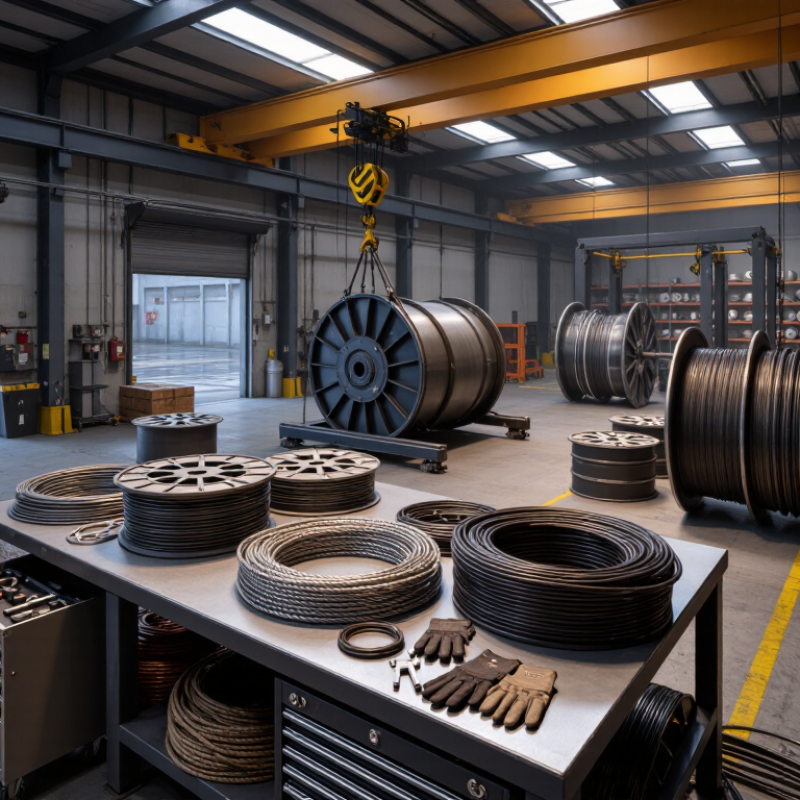
10 Best Lift Cables for Industrial Buyers?

Understanding Lift Cables and Their Industrial Applications

Lift cables turn motor power into controlled movement in cranes, hoists, elevators, and winches. Most industrial wire ropes use steel strands wound around a core, balancing strength with flexibility. The right cable depends on working load, lifting speed, duty cycle, sheave diameter, and reeving pattern. Moisture, dust, heat, and chemical exposure matter too. A cable near a furnace may need different protection from one moving pallets in a dry warehouse. Small details matter.

Inspection is part of the application, not an afterthought. OSHA’s overhead-crane standard, 29 CFR 1910.179, calls for removal when a rope has six randomly distributed broken wires in one lay, or three broken wires in one strand in one lay. These are specific discard thresholds, not permission to ignore corrosion, flattening, kinks, or damaged end fittings. A shiny outer surface can hide internal wear. Operators and maintenance teams should follow the equipment maker’s instructions and document inspections against the rope’s actual service conditions. It is tempting to choose by rated strength alone; that shortcut can miss fatigue from repeated bending over small sheaves.

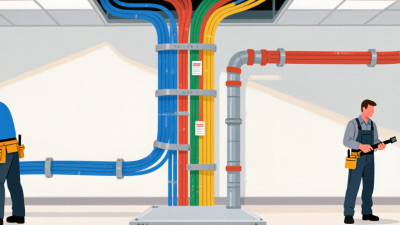
Assessing Cable Materials, Construction, and Load Requirements

Industrial lift cable selection starts with the job, not the price or diameter. Identify the rated load, lift frequency, travel distance, and operating environment. A cable working outdoors near salt spray faces different demands from one running inside a clean warehouse. Galvanized wire rope can help resist corrosion; stainless steel may suit some environments, but its strength and compatibility still need verification. No construction suits every lift.

Tips: Check the cable’s working load limit, not only its breaking strength. The complete assembly is limited by its weakest part, including sockets, clips, and end fittings. Confirm compatibility with the hoist, drum grooves, and sheaves. Do not guess.

Wire-rope construction affects flexibility, abrasion resistance, and fatigue life. A rope that bends repeatedly over small sheaves may wear sooner than one used for occasional straight pulls. Core type also matters: fiber cores can offer flexibility, while steel cores may better resist crushing in some applications. Follow equipment and cable documentation for fit and operating limits. This detail is easy to miss. Inspect for broken wires, kinks, corrosion, or flattening, and remove questionable cable from service. When specifications are unclear, pause and ask a qualified supplier or inspector to review the setup.

Comparing 10 Lift Cable Options for Industrial Buyers

Industrial buyers should compare lift cables by construction, core, and surface protection, not price alone. A cable that suits a dusty hoist may fail early near salt spray or repeated tight bends.

The 6x19 construction favors abrasion resistance; 6x36 bends more readily over smaller sheaves. Rotation-resistant rope helps control spin on taller lifts, while compacted strand designs offer a smoother, denser surface.

Galvanized wire suits damp general service, bright wire keeps cost and coating simple, and stainless steel handles corrosive settings but can cost more. Plastic-coated cable adds a barrier, though hidden damage is harder to spot.

Fiber-core rope is lighter and flexible; an independent wire-rope core tolerates heat and crushing better.

Details matter.

These are ten useful comparison points, but not ten direct substitutes. Buyers should match diameter, rated capacity, sheave ratio, duty cycle, and termination to the equipment maker’s specifications. Check the cable’s certificate and inspection history, then confirm the chosen construction with a qualified supplier. Selection sheets sometimes omit bend frequency; that small gap can change service life considerably. No option is universally best. A quick price comparison can miss the costly part: replacement downtime.

Matching Cable Types to Equipment and Operating Conditions

A lift cable should be matched to the machine, not chosen by diameter alone. Wire rope construction affects flexibility, resistance to crushing, and performance over sheaves. For a hoist with frequent starts and stops, consider the duty cycle and repeated bending. A crane working outdoors may need added protection against moisture and corrosion. Fit matters.

Core type is another practical consideration. Fiber cores can offer flexibility, while steel cores may better resist crushing under certain loads. Neither option is automatically right. Check the equipment maker’s specifications, rope construction, rated load, and sheave dimensions before selecting a replacement. A cable that fits the drum but bends too sharply can wear faster than expected. Small details count.

Operating conditions can change the choice. Dust, heat, chemicals, and long periods of continuous use all affect inspection needs and service life. Rotation-resistant ropes may suit some lifting arrangements, but they are not interchangeable across machines. A selection chart cannot account for every installation; that is worth admitting. Confirm compatibility with a qualified service professional, then inspect for broken wires, flattening, corrosion, or unusual noise at the equipment’s stated intervals.

10 Best Lift Cables for Industrial Buyers? — Matching Cable Types to Equipment and Operating Conditions

Wire Rope Type Construction / Core Typical Equipment Fit Operating Conditions and Strengths Selection Checks
6×19 Seale Six strands with a Seale-style wire arrangement; available with fiber core (FC) or independent wire rope core (IWRC). General-purpose hoists, winches, and straight-pull lifting systems. A relatively robust construction for applications where abrasion resistance is important and bending cycles are moderate. Check the exact construction, core, rope grade, sheave diameter, and duty cycle. Do not assume all 6×19 ropes have identical properties.
6×26 Warrington-Seale Six strands with a Warrington-Seale wire arrangement, commonly supplied with an IWRC. Mobile cranes, hoists, and other equipment requiring a balance of flexibility and wear resistance. Often selected where the rope bends over sheaves more frequently than a less flexible construction would comfortably suit. Confirm that the rope’s specified construction and minimum breaking force match the equipment manufacturer’s requirements.
6×36 Warrington-Seale Six strands with many relatively small outer wires; commonly supplied with an IWRC. Crane hoist ropes, overhead cranes, and lifting systems with repeated sheave bends. Its greater flexibility can suit frequent bending, while the smaller outer wires may be more vulnerable to external abrasion than coarser-wire designs. Assess both bending fatigue and abrasion. Match the rope to the sheave and drum diameters and the actual reeving arrangement.
8×19 Seale Eight strands with a Seale-style arrangement; core options vary by rope specification. Overhead-crane and hoist systems designed for an eight-strand rope. The additional strands can provide a more rounded rope profile, which may be useful in compatible multi-sheave systems. Use only where the equipment is designed for an eight-strand rope. Verify groove fit, drum capacity, and the specified core.
8-strand Warrington-Seale Eight strands with a Warrington-Seale arrangement; constructions and core options vary. Crane and hoist applications where the manufacturer specifies an eight-strand rope. Can offer flexibility for repeated bending in suitable reeving systems; suitability depends on the exact rope design. Check compatibility with sheave grooves and drum winding. Do not substitute it for a six-strand rope without approval.
19×7 rotation-resistant rope Multi-strand construction designed to reduce rotation under load; core and detailed design depend on the rope specification. Single-part hoisting and applications where load rotation must be controlled. Can reduce, but does not eliminate, rotation when correctly selected and used within its design limits. Follow the rope maker’s handling and installation instructions. Avoid uncontrolled swivels and verify suitability for the intended load and lift height.
35×7 rotation-resistant rope Multi-layer, rotation-resistant construction; detailed design varies by manufacturer. High-lift crane and hoist systems that specifically call for this rope class. Designed for enhanced resistance to rotation in appropriate applications; its multi-layer construction requires careful handling. Use only with compatible equipment and approved installation procedures. Inspect for distortion, crushing, and other damage in accordance with applicable guidance.
Compacted-strand wire rope Strands are compacted during manufacture; available in different strand arrangements and with different cores. Heavy-duty crane hoists and systems where a compacted rope is specified. Compaction can create a smoother, denser outer surface and may improve resistance to contact wear compared with a comparable un-compacted design. Compare the rope’s certified specifications, termination compatibility, and sheave-groove requirements—not just its nominal diameter.
Galvanized wire rope Steel wires have a zinc coating; the underlying strand construction and core can vary. Outdoor lifting equipment exposed to moisture or weather, when allowed by the equipment specification. The coating provides corrosion protection, but it does not make the rope corrosion-proof or remove the need for inspection and maintenance. Confirm that the coating, rope construction, and lubricant suit the environment and application. Replace rope that fails inspection criteria.
Stainless-steel wire rope Made from stainless steel wire; construction, grade, and core vary by product. Selected lifting or positioning applications in corrosive or wash-down environments, where the system is designed for it. Offers corrosion resistance in suitable environments, but performance depends on the stainless grade, exposure, and rope design. Verify suitability for load-bearing lifting, the specified grade and construction, and all applicable lifting regulations. Corrosion resistance alone does not establish lifting capacity.

Selection note: These are general wire-rope categories, not a universal ranking. The correct rope depends on the equipment maker’s specification, rated load, rope grade, termination, reeving, sheave and drum dimensions, duty cycle, environment, and applicable regulations. Confirm the required capacity and inspection criteria from the rope and equipment documentation before use.

Evaluating Safety, Maintenance, and Replacement Needs

Industrial buyers should evaluate lift cables by duty, not by price alone. Record the load, lift height, operating cycles, and exposure to moisture, heat, or abrasive dust. These details help identify suitable cable construction and rated capacity. Not capacity alone. A cable used for frequent shifts may wear differently from one used occasionally, even when both handle similar loads.

Maintenance starts with consistent inspections under good lighting. Look for broken wires, flattening, corrosion, kinks, and changes in diameter. Check end fittings and attachment points, too; damage often appears there first. Keep inspection notes with dates, operating hours, and photographs of concerning areas. A quick visual check is useful, but it cannot reveal every internal defect. Follow the equipment maker’s inspection procedure and have qualified personnel assess uncertain findings.

Replacement decisions should follow the cable specification and applicable site requirements, not a guessed universal limit. Remove a cable from service when inspection criteria are met, or when its history is unclear after an incident. That can disrupt production, but postponing replacement creates greater uncertainty. One judgment call remains: borderline wear can be hard to interpret consistently. Clear records and a second qualified review can help, though they do not replace the written criteria.