Hesheng Cable
Leave Your Message

What Is Low Voltage Cable Management and Why Does It Matter?

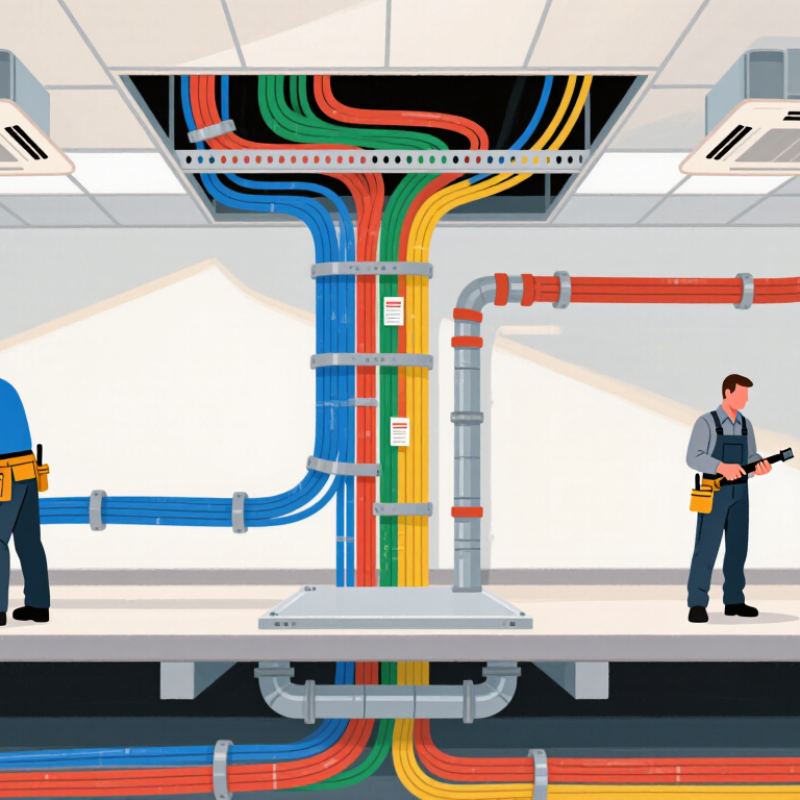
Low Voltage Cable Management is the quiet infrastructure behind reliable buildings. It organizes power-limited circuits, data lines, security wiring, and communication cables. These systems often run above ceilings, beneath raised floors, or inside crowded equipment rooms. When routing is careless, small problems become expensive. A crushed cable may cause intermittent data loss. Poor separation can create interference, safety concerns, or difficult maintenance.

Bill Burr, a former NFPA electrical engineer, captured an important boundary clearly: “The NEC is not intended as a design manual.” His point matters here. Codes establish essential safety requirements, but effective cable management also requires planning, field judgment, and disciplined installation. Experienced technicians consider bend radius, pathway capacity, heat, labeling, grounding, firestopping, and future expansion. They do not merely force every cable into the nearest tray.

Good management should make a cable easy to identify, inspect, replace, and test. Imagine a labeled bundle entering a rack, with smooth loops and enough space for one more connection. That detail saves time during an outage. It also reduces accidental damage during later construction.

Still, a neat bundle is not automatically a good system. That assumption deserves reflection. Over-tightened ties can deform cable jackets. Excessive organization can hide poor documentation. Low Voltage Cable Management succeeds when appearance supports performance, safety, and serviceability. This article explains what the practice includes, why it matters, and how thoughtful decisions protect network reliability over time.

What Is Low Voltage Cable Management and Why Does It Matter?

Definition and Scope of Low Voltage Cable Management

Low voltage cable management is the planned design, installation, identification, and maintenance of cables carrying data, signals, and limited power. The exact voltage threshold varies by jurisdiction and standard, so the term is broader than one number. Its scope commonly includes network, security, audiovisual, fire alarm, access control, and building automation cabling. It also covers pathways, trays, conduits, separation, bend radius, grounding, labeling, testing, and records.

The boundary is not perfectly tidy. A cable may meet a low-voltage definition yet still create operational risks when routed beside power conductors. In practice, technicians need clear routes, service loops, protected entries, and labels readable from a ladder. Poor routing can block airflow or slow fault diagnosis.

The Uptime Institute’s 2024 Global Data Center Survey reported that 54% of respondents experienced an outage costing at least 100,000 dollars.

Cable errors are not the only cause, but accessible and documented pathways can reduce troubleshooting time.

Reliable management begins before installation. Engineers should review occupancy changes, fire-stopping requirements, electromagnetic interference, and future cable capacity. The ANSI/TIA-568 series supports structured cabling performance, while BICSI design guidance emphasizes pathways, administration, and installation quality. These references help, but they do not replace site experience. A beautifully labeled rack can still fail when records are outdated. That weakness deserves attention.

Key Components Used in Low Voltage Cable Systems

Low-voltage cable management organizes wiring for data, security, access control, audio, and building automation systems. It includes cable trays, conduits, raceways, support brackets, junction boxes, and patch panels. Each component protects cables while keeping routes accessible for testing or repairs. Good planning also separates communication cables from power wiring, reducing interference and accidental damage.

Cable trays carry grouped cables across ceilings, corridors, and equipment rooms. Conduits offer stronger protection where wiring passes through walls or exposed areas. Patch panels create clear connection points, while junction boxes protect splices and provide service access. Labels should identify both cable ends, not just the equipment side. Small details matter.

Grounding and bonding can improve safety and reduce unwanted electrical noise when designed correctly. Firestopping materials are also essential wherever cables cross rated walls or floors. Installers should use proper supports instead of hanging cables from ceiling grids or other services. That mistake still appears on rushed projects. It makes future maintenance harder.

Practical inspections should check bend radius, cable tension, support spacing, labeling, and unused pathway capacity. A neat installation is useful, but appearance alone proves little. Cable paths must remain documented and measurable. One overlooked route can create hours of troubleshooting later. Conditions also change after construction, so records need updates when cables move or systems expand.

What Is Low Voltage Cable Management and Why Does It Matter?

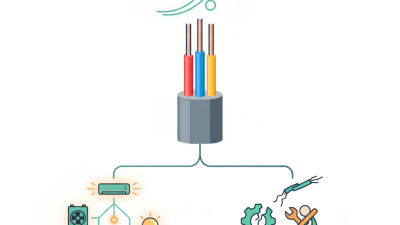
Low voltage cable management organizes, protects, separates, and identifies power, data, control, and communication cables. The chart compares commonly referenced voltage boundaries used when planning cable pathways and system components.

Cables

Carry power, data, voice, video, and control signals through the system.

Pathways

Trays, conduits, raceways, and sleeves route cables and help protect bend radius.

Terminations

Connectors, patch panels, and blocks provide secure and serviceable connections.

Identification

Labels and documentation make testing, troubleshooting, and future changes safer.

Reference basis: IEC 61140 voltage classifications. Exact limits and installation requirements depend on the applicable electrical code, environment, and system design.

How Low Voltage Cables Are Organized and Routed

Low voltage cable management is the planned organization and routing of data, security, audiovisual, and control cables. It keeps pathways readable, protected, and easier to maintain. A practical route usually begins at the equipment rack. Cables then move through ladder racks, trays, conduits, or J-hooks. They should follow clear pathways, avoid sharp bends, and maintain the manufacturer’s minimum bend radius. Power and communication cables also need proper separation. Poor separation can increase noise and complicate troubleshooting.

Labeling matters as much as routing. Each cable should show its source, destination, and service purpose. Technicians should leave a small service loop near racks and outlets. However, excess cable creates congestion. I have seen tidy-looking trays hide crushed cables underneath. A perfect-looking route can still be wrong. The 2023 Global Data Center Survey reported that 60% of organizations experienced an outage during the previous three years. It also found that many outages were considered preventable. Cable pathways cannot prevent every failure, but they can improve inspection and recovery.

Tips: Use color coding carefully, but never depend on color alone. Add printed labels at both ends. Keep high-density routes accessible. Photograph concealed pathways before closing walls or ceilings. Check bend radius after installation, not only during design. Review the route six months later, because real growth rarely matches the original drawing. Standards such as ANSI/TIA-568 and ISO/IEC 11801 provide useful guidance, but field conditions still require professional judgment.

Safety, Performance, and Maintenance Considerations

What Is Low Voltage Cable Management and Why Does It Matter?

Safety, Performance, and Maintenance Considerations

Low voltage cable management organizes data, control, security, and communication cables in a controlled path. Good practice keeps cables separated from higher-voltage wiring when required by local codes. It also protects them from sharp edges, heat, crushing, and excessive tension. Small details matter. A loose cable can become a trip hazard or suffer hidden damage inside a crowded cabinet.

Safety depends on more than tidy appearances. Installers should respect bend-radius limits, use suitable supports, and secure cables without over-tightening them. Fire-rated walls require properly approved penetrations and sealing methods. Clear labels also reduce mistakes during testing or emergency repairs. During site inspections, I have seen neat-looking bundles with poor strain relief. They looked professional, but the connectors carried unnecessary stress.

Performance can decline when cables are tightly packed, poorly routed, or exposed to electromagnetic interference. Separating sensitive signal cables from power sources helps preserve communication quality. Adequate airflow around network equipment also limits heat buildup. Maintenance becomes easier when pathways remain accessible and records match the installed layout. Leave practical service slack, not tangled excess. That balance is often missed. A cable map should show destinations, cable types, routes, and recent changes. Inspections should check damaged jackets, loose supports, blocked ventilation, and labels that no longer match reality. Management plans should be reviewed after every expansion, because yesterday’s clean installation may become tomorrow’s obstruction.

Applications and Selection Criteria for Cable Management Solutions

What Is Low Voltage Cable Management and Why Does It Matter?

Applications and Selection Criteria for Cable Management Solutions

Low voltage cable management organizes data, security, audio-visual, access control, and building automation cables. It protects conductors from crushing, sharp edges, moisture, and accidental disconnection. A tidy pathway also improves troubleshooting when a camera or network outlet fails.

The application determines the right solution. Cable trays suit long routes above ceilings, while conduits protect cables in walls, floors, and exposed areas. Raceway systems can support offices where appearance matters. In equipment rooms, vertical managers and ladder-style supports help maintain clear airflow around racks. Keep power and communication cables separated when required by local codes and project specifications.

Selection requires more than measuring width. Check cable quantity, future expansion, bend radius, pulling tension, weight, and operating temperature. Outdoor routes may need ultraviolet and corrosion resistance. Industrial spaces demand stronger protection against dust, vibration, and oil. Fire performance and material ratings should match the building’s requirements. Always follow installation guidance and applicable electrical and fire codes.

Small details matter. Use smooth fittings and secure supports at practical intervals. Do not overfill a pathway. It makes later work frustrating. A clean installation today can become a crowded problem after one expansion. In field planning, leaving spare capacity is wise, though excessive space can waste money and room. The best choice balances protection, access, cost, and realistic future needs.

What Is Low Voltage Cable Management and Why Does It Matter? - Applications and Selection Criteria for Cable Management Solutions

Application Typical Cable or Signal Common Installation Environment Main Cable Management Risks Suitable Management Solution Key Selection Criteria Practical Guidance
Structured Data Cabling Category 5e, Category 6, Category 6A twisted-pair cable; commonly used for Ethernet networks Offices, schools, hospitals, commercial buildings and equipment rooms Excessive pulling force, tight bends, electromagnetic interference and overfilled pathways Cable tray, ladder rack, basket tray, telecommunications pathway and hook-and-loop straps Pathway capacity, separation from power cables, bend-radius compliance, accessibility and future expansion Use hook-and-loop straps instead of overtightening plastic ties. Maintain the cable manufacturer’s minimum bend radius and avoid sharply compressing twisted-pair cables.
Power over Ethernet Systems Balanced twisted-pair Ethernet cable carrying both data and direct-current power Access-point ceilings, security devices, building automation systems and network closets Heat accumulation in dense bundles, connector damage and reduced performance from poor routing Ventilated tray, basket tray, cable rings and organized patch-panel routing Bundle size, ambient temperature, cable category, pathway ventilation and applicable electrical requirements Higher-power PoE installations may require attention to bundle size and temperature because conductor heating can increase when many powered cables are grouped together.
Fiber-Optic Communications Single-mode or multimode optical fiber Data centers, telecommunications rooms, inter-building links and industrial networks Exceeding bend limits, crushing, contamination of connectors and excessive tensile loading Fiber raceway, enclosed fiber duct, slack-storage system and dedicated fiber tray Minimum bend radius, cable protection, slack capacity, separation from sharp edges and access for testing Follow the cable datasheet for both installation and operating bend-radius limits. Protect unused slack in controlled loops rather than tightly coiling it.
Building Security and Access Control Card-reader, door-controller, alarm, intercom and low-voltage control wiring Doors, corridors, ceilings, security rooms and equipment cabinets Unauthorized access, accidental disconnection, abrasion and mixing with high-voltage circuits Conduit, enclosed trunking, flexible conduit at moving doors and lockable cable cabinets Physical security, impact resistance, fire-rating requirements, serviceability and separation from power wiring Use concealed or enclosed pathways in publicly accessible areas. Provide service loops near controllers and devices to simplify maintenance.
Video Surveillance Ethernet cable, coaxial cable or fiber-optic cable for cameras and video equipment Indoor ceilings, exterior walls, parking areas and perimeter installations Moisture, ultraviolet exposure, mechanical impact, signal loss and difficult maintenance access Outdoor-rated conduit, UV-resistant cable tray, protective raceway and weatherproof junction boxes Outdoor rating, ingress protection, drainage, temperature range, cable support and grounding requirements Outdoor pathways should prevent water retention and protect cable entries. Use cable types specifically rated for sunlight, moisture or direct burial when required.
Fire Detection and Life-Safety Systems Fire-alarm initiating-device, notification-appliance and control-circuit wiring Commercial buildings, industrial facilities, residential towers and public infrastructure Loss of circuit integrity, fire exposure, accidental damage and non-compliant routing Listed conduit, dedicated fire-rated pathway, protected cable tray or approved surface raceway Local fire code, circuit survivability, fire resistance, segregation, identification and inspection access Use only cable-management methods permitted by the applicable jurisdiction and system design. Do not share pathways with incompatible circuits unless the governing requirements allow it.
Industrial Control and Instrumentation PLC I/O, sensor, actuator, analog, digital and industrial Ethernet cables Factories, process plants, machine areas and control cabinets Vibration, oil, chemicals, heat, electromagnetic interference and frequent equipment movement Metal cable tray, industrial conduit, drag chain, flexible conduit and segregated control pathways Environmental resistance, EMC performance, dynamic-bend rating, temperature range and grounding continuity Separate sensitive analog or communication circuits from noisy power circuits where required. Use drag-chain-rated cables for repeated motion and observe the specified travel radius.
Audio, Video and Broadcast Systems Balanced audio, speaker, video, control, Ethernet and fiber-optic cables Meeting rooms, theaters, studios, classrooms and event venues Signal interference, ground loops, connector strain, visible cable clutter and difficult reconfiguration Underfloor raceway, wall trunking, cable basket, floor box, stage cable ramp and hook-and-loop bundling Signal separation, pathway accessibility, noise control, appearance, reconfiguration needs and connector protection Keep low-level audio and sensitive video cabling away from power conductors when practical. Provide labeled routes and accessible service loops for equipment changes.
Building Automation and HVAC Controls Temperature, pressure, occupancy, valve, damper and communication-control wiring Mechanical rooms, ceiling spaces, plant rooms and building-management-system panels Condensation, heat, vibration, interference and confusion between control circuits Conduit, control cable tray, panel wire duct and segregated trunking Operating temperature, moisture resistance, circuit separation, identification, access and expansion capacity Maintain clear labeling at both ends of each cable. Keep pathways away from hot pipework and provide suitable protection in mechanical spaces.
Renewable Energy and EV Control Systems Monitoring, communications, control and auxiliary low-voltage wiring associated with energy equipment Solar installations, battery rooms, charging areas and energy-management panels Outdoor exposure, DC and AC interference, heat, impact and difficult access UV-resistant conduit, outdoor cable tray, sealed raceway and segregated control pathways Temperature, sunlight, moisture, chemical exposure, separation from power circuits and local electrical code Route communication and control wiring separately from high-current conductors where required. Select materials compatible with the installation’s temperature and weather conditions.
Data Center and Equipment-Rack Cabling High-density copper Ethernet, fiber-optic, storage and management cables Server racks, network racks, raised floors and overhead pathways Airflow obstruction, excessive bend radius, poor labeling, congestion and difficult fault isolation Overhead ladder rack, overhead basket tray, vertical managers, horizontal managers and underfloor pathways Rack density, airflow, load capacity, pathway fill, bend radius, redundancy and future growth Keep cable routes clear of equipment air inlets and outlets. Use separate pathways or clearly defined zones for diverse network routes when redundancy is important.

Note: Low-voltage cable management requirements depend on the cable construction, installation location, environmental conditions and applicable electrical, fire-safety and building codes. Always verify pathway fill, support spacing, bend radius, separation and temperature limits against the relevant code and cable manufacturer’s technical documentation.