How to Choose the Right Welding Cable in 2026?
Choosing the right Welding Cable in 2026 requires more than matching amperage to a product label. Modern inverter welders can deliver stable output with lower input demand, yet their cables still face heat, abrasion, oil, moisture, and repeated bending. A cable that works beside a clean fabrication table may fail quickly on a muddy construction site.
Dr. David J. Kotecki, a recognized welding engineer and author, offers a practical reminder: “A sound weld begins with a sound electrical circuit.” That principle still matters. Cable length, conductor size, duty cycle, insulation quality, and connector design all influence welding performance. A long cable run can increase voltage drop. A tightly coiled cable can retain heat. Small details become expensive problems.
This guide explains how to compare cable flexibility, temperature ratings, jacket materials, and current capacity. It also considers robotic cells, portable generators, high-frequency equipment, and demanding field work. Check manufacturer data carefully. Do not rely on appearance alone.
There is no universal best cable.
A thicker cable is not always the smartest choice. It may improve capacity, but it can add weight and reduce operator control. A flexible cable may feel ideal, yet poor storage can still damage it. I have seen specifications look convincing until actual jobsite movement exposed their limits. That is why this article balances technical ratings with practical handling experience, verified product information, and current safety expectations. The final choice should fit the welder, the distance, the environment, and the work rhythm.
Define Welding Cable Types and Their Core Construction
How to Choose the Right Welding Cable in 2026?
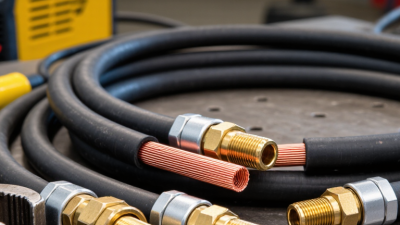
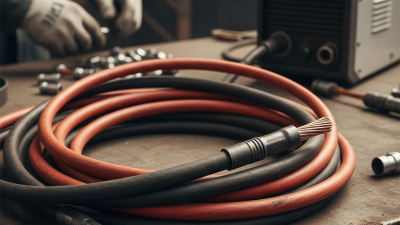
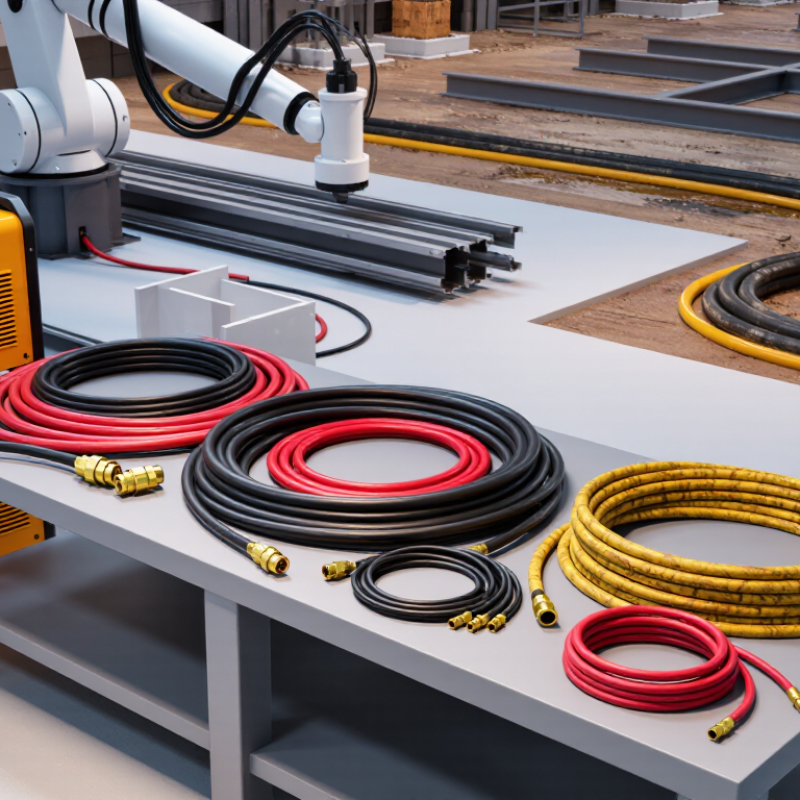
Welding cable is not one universal product. An electrode cable carries current from the power source to the holder. A work cable returns current through the workpiece and clamp. Twin welding cable combines both paths in one jacket. This can reduce tangling, but it may feel heavier during overhead work.
Core construction matters more than appearance. Most cables use finely stranded copper conductors for flexibility and lower electrical resistance. A rubber or thermoset elastomer jacket protects against abrasion, oil, heat, and repeated bending. Class K and Class M designs indicate different strand constructions. They do not automatically confirm the same ampacity or duty rating. IEC 60245-6 also defines requirements for arc-welding electrode cables, including flexible construction and insulation performance.
Market pressure is rising.
Grand View Research reported continued growth in the global welding equipment market through 2030, with automation increasing demand for reliable power connections.
That trend can make cable selection seem simple. It is not. Check conductor size, cable length, rated current, duty cycle, ambient temperature, and connector fit together.
A 25-foot cable may perform differently from a 10-foot cable carrying the same current. The U.S. Occupational Safety and Health Administration also emphasizes suitable welding leads, secure connections, and insulation without dangerous damage.
A cable can look acceptable and still hide internal strand fatigue. That is where my earlier assumption was wrong. Always inspect the cable after sharp bends, crushing, or excessive heat.
Check Flexibility, Connector Compatibility, and Safety Ratings
How to Choose the Right Welding Cable in 2026?
A welding cable must move easily without twisting, cracking, or resisting the operator. Fine-stranded copper usually provides better flexibility than coarse-stranded conductors. Test the cable on the floor before installation. Bend it around a gentle curve, not a sharp corner. In cold workshops, insulation can become stiffer and less forgiving. Check the recommended bend radius and keep the cable away from hot metal, oil, and sharp edges. A heavier cable can feel safer, but that assumption needs checking. Oversizing may reduce flexibility and increase handling fatigue.
Connector compatibility is equally important. Confirm the connector size, polarity, cable diameter, and locking method before purchase. A connector that feels loose can create heat at the contact point. That small gap may damage insulation over time. Match the cable’s ampacity with the welder’s output and duty cycle, not only its maximum current. Review the printed safety ratings, insulation temperature, abrasion resistance, and voltage classification. Reliable documentation matters more than confident sales language. During inspections, look for flattened sections, exposed strands, discoloration, or stiff insulation. Replace damaged cable instead of wrapping it temporarily.
Tips: Measure the actual cable path. Leave enough slack for torch movement. Clean connectors before testing. After a long weld, touch only the insulated area and check for unusual heat. If the cable stays hot, stop and reassess the load, connections, and ventilation. Mistakes happen. Careful checking reduces them.
How to Choose the Right Welding Cable in 2026?
Compare common welding cable constructions by flexibility, connector compatibility, and safety-rating coverage before making a selection.
Scores use a 1–5 comparison scale based on typical cable construction characteristics. Extra-flexible cable is generally easier to route, while high-temperature cable offers stronger protection in heat-exposed work areas. Always confirm conductor size, duty cycle, voltage rating, jacket temperature rating, and connector fit in the cable datasheet.
Compare Standards, Quality, Cost, and Long-Term Service Life
Choosing welding cable in 2026 starts with standards, not shelf price. Check IEC 60245-6 or the applicable national standard. Requirements differ by region and installation. Ask for test reports, conductor size, insulation rating, and duty-cycle guidance. A cable marked “welding” is not automatically suitable for every current level. Confirm ampacity at the actual length, ambient temperature, and duty cycle. Short, thick cables usually reduce voltage drop and heat.
Quality appears during daily handling. Fine-stranded copper bends easily around a power source without sharp kinks. Durable insulation should resist abrasion, oil, moisture, sunlight, and welding spatter. Inspect the jacket after dragging it across steel floors. Check lugs, connectors, and strain reliefs too. A strong conductor cannot compensate for a loose termination. In field work, I have seen new cable ends loosen after repeated pulling. That mistake was mine; I underestimated strain relief.
Compare total cost over service life, not only purchase price. A low-cost cable may need earlier replacement, create downtime, or waste energy through higher resistance. Record cable length, operating current, duty cycle, and inspection dates. Replace damaged insulation promptly, even when the conductor still works. Do not guess. Keep a practical safety margin, but avoid oversized cable that adds unnecessary weight and cost. During maintenance, measure terminal temperature under load; a warm lug often reveals a hidden connection problem.