The question “What Are the Top Three Phase Armoured Cable Types in 2026?” reflects a practical industry concern: stronger grids, renewable projects, data centres, and industrial facilities all require dependable power distribution. The International Energy Agency’s Electricity 2024 report forecasts global electricity demand growth of more than 2.5% annually through 2026. That expansion increases pressure on engineers to select cables that match electrical load, installation conditions, mechanical risk, and future maintenance needs.
Three Phase Armoured Cable remains important because its metallic protection helps shield conductors from impact, crushing, moisture, and demanding site conditions. Steel Wire Armoured cable is widely considered for fixed industrial and underground installations. Steel Tape Armoured cable can offer a compact option where mechanical exposure is moderate. Aluminium Wire Armoured cable may reduce weight, especially in larger power systems. The correct choice still depends on conductor size, fault current, earthing design, voltage rating, and local installation rules.
Dr. Keith Bell, a power-systems specialist at the University of Strathclyde, has stated, “Electricity networks are the backbone of the energy transition.” His observation explains why cable selection deserves more than a catalogue comparison. As the Grand View Research wire and cable market analysis reports continued growth in global infrastructure demand, reliability will remain a commercial priority. Yet, one point is often overlooked: the best cable on paper can fail through poor jointing, incorrect gland selection, or inadequate support. This guide examines the leading Three Phase Armoured Cable types for 2026, while recognising that site conditions can change the final recommendation.
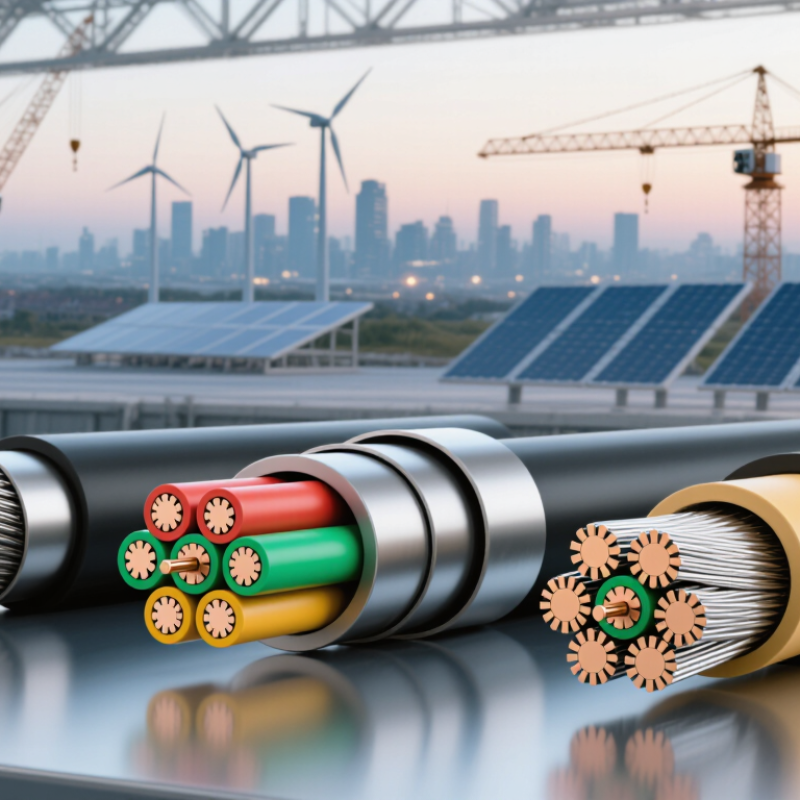
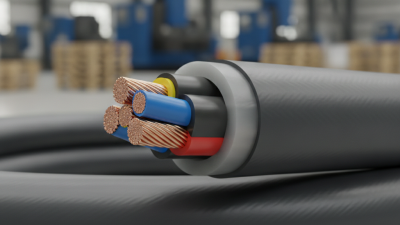
Three-phase armoured cable carries power through three conductors, with each phase offset to support a steady electrical supply. A protective armour layer helps resist crushing, impact, and damage during installation. The cable may also include insulation, an outer sheath, and an earth conductor, depending on its design. Details matter.
In 2026, three common armour types remain steel wire armour, aluminium wire armour, and steel tape armour. Steel wire armour is often selected for robust mechanical protection, including fixed industrial routes. Aluminium wire armour can suit installations where reducing magnetic effects around single-core cables is important. Steel tape armour offers mechanical protection in some multicore applications, but its suitability depends on the installation conditions.
No type fits every job. Cable choice depends on current demand, voltage, route length, fault protection, and exposure to moisture or impact. For example, a cable running beneath a workshop floor faces different stresses from one clipped along an indoor wall. Check conductor size, installation method, and manufacturer specifications before selection.
A small detail can change the result. Also, “armoured” does not mean indestructible; damaged sheaths or poor terminations can still create serious reliability problems.
What Are the Top Three Phase Armoured Cable Types in 2026?
How the Leading Cable Types Are Classified and Compared
In 2026, the leading three-phase armoured cable types are steel wire armoured, aluminium wire armoured, and steel tape armoured cables. Their classification depends on armour material, conductor design, voltage rating, and installation environment. The International Energy Agency’s Electricity 2024 report forecasts global electricity demand to grow by 3.4% annually through 2026. That growth increases pressure on safer, higher-capacity distribution systems. Steel wire armoured cable offers strong mechanical protection for buried routes, industrial plants, and outdoor feeders. Aluminium wire armoured cable is lighter and usually suits single-core AC circuits. Steel tape armoured cable provides practical protection where crushing risk is moderate.
The comparison becomes more technical at the installation stage. Steel armour is generally robust, but it adds weight and may increase magnetic effects around single-core AC cables. Aluminium armour reduces this concern and simplifies handling. Steel tape can lower material use, yet it may provide less impact resistance than wire armour. IEC 60502-1 remains a key reference for power cable construction and performance requirements. Fire and smoke properties also need separate checking under relevant IEC test methods. Cable current capacity depends on conductor size, ambient temperature, grouping, and burial depth. Not just armour. A common mistake is ranking cables by price alone. That method is convenient, but incomplete. Soil moisture, pulling tension, corrosion, and future load growth can change the preferred choice. Industry data supports demand growth, but project conditions still decide the better cable.
The chart compares typical maximum continuous conductor operating temperatures: PVC-insulated cables are commonly rated to 70°C, while XLPE-insulated cables are commonly rated to 90°C. SWA (steel wire armour) is commonly used with multicore cables; AWA (aluminium wire armour) is commonly used for single-core AC cables to reduce magnetic losses. These temperatures are generic insulation-system limits, not cable current ratings; actual selection depends on the applicable standard, installation conditions and manufacturer specifications.
What Are the Top Three Phase Armoured Cable Types in 2026?
Steel Wire Armoured Cable for Heavy-Duty Three-Phase Systems
Three-phase projects increasingly need strong, predictable cable systems. The IEA Electricity 2024 report forecasts global electricity demand to grow by about 3.3% annually through 2026. That growth increases pressure on industrial feeders, renewable sites, and commercial distribution networks.
The leading choice remains copper XLPE/SWA/PVC cable. It offers high conductivity, compact sizing, and good thermal performance. It suits motors, plant rooms, and underground feeders. Aluminium XLPE/SWA/PVC cable is another practical option. It reduces weight and material cost, but requires larger conductors and careful termination. The third option is fire-resistant armoured cable, designed for circuits needing continued operation during fire conditions. Its selection must follow the project’s fire strategy, not guesswork.
SWA protects against impact, crushing, and demanding installation routes. However, armour is not a substitute for correct sizing. Engineers should calculate load current, voltage drop, short-circuit withstand, ambient temperature, grouping, and installation depth. IEC 60502-1 provides important requirements for many low-voltage power cables. Local electrical rules still control the final design.
Tips: Check the cable gland, armour bonding, and phase identification before energising. Test insulation resistance and continuity after installation. Leave realistic bending space. A tidy route can still hide excessive tension. This is where many “good” installations need a second look. Tensile damage may not appear during the first inspection, yet it can shorten service life. Consult a qualified engineer for fault-level and earthing verification.
| Armoured Cable Type | Typical Construction | Typical Voltage Rating | Best Three-Phase Application | Key Advantages | Important Limitations | Example Current Capacity* | Common Installation Areas |
|---|---|---|---|---|---|---|---|
| 3-Core XLPE/SWA/PVC Cable | Three stranded copper or aluminium conductors, XLPE insulation, steel wire armour, and PVC outer sheath. | 0.6/1 kV | Balanced three-phase motors, pumps, compressors, transformers, and industrial feeders where a separate neutral is not required. | High thermal capability, strong mechanical protection, good short-circuit performance, and a compact construction for heavy-duty power distribution. | Not suitable where a full-size neutral conductor is required. The armour must be correctly bonded and earthed according to the installation design. | Approximately 170 A for a 3-core 70 mm² copper cable when installed in air; actual capacity varies by method and correction factors. | Industrial plants, outdoor cable routes, plant rooms, substations, and fixed equipment connections. |
| 4-Core XLPE/SWA/PVC Cable | Three phase conductors plus one neutral conductor, XLPE insulation, galvanized steel wire armour, and PVC outer sheath. | 0.6/1 kV | Three-phase four-wire systems supplying mixed loads, distribution boards, commercial buildings, and equipment with line-to-neutral loads. | Provides a dedicated neutral, supports both balanced and unbalanced loads, and offers a practical single-cable solution for many low-voltage feeders. | Usually larger and heavier than an equivalent 3-core cable. Neutral loading, harmonic currents, voltage drop, and grouping must be assessed. | Approximately 170 A for a 4-core 70 mm² copper cable in a representative installation; reference tables must be used for final sizing. | Factories, data and utility buildings, commercial distribution systems, generator connections, and underground ducts. |
| 4-Core XLPE/SWA/LSZH Cable | Three phase conductors and one neutral conductor with XLPE insulation, steel wire armour, and a low-smoke zero-halogen outer sheath. | 0.6/1 kV | Three-phase power systems in occupied buildings, transport facilities, tunnels, public infrastructure, and areas requiring reduced smoke and corrosive emissions during fire. | Combines mechanical protection with low-smoke, halogen-free sheath performance; improves evacuation conditions and reduces corrosive gas exposure during a fire. | Often costs more than PVC-sheathed alternatives. LSZH materials may have different flexibility, water-resistance, and termination requirements depending on the cable design. | Approximately 165–170 A for a 4-core 70 mm² copper cable under representative installation conditions; the manufacturer’s datasheet and local standard take priority. | Hospitals, airports, rail facilities, high-rise buildings, schools, data centres, and enclosed public areas. |
*Current capacities are indicative examples for common 0.6/1 kV copper cable constructions and are not universal ratings. Final cable selection must consider conductor material, installation method, ambient temperature, soil thermal resistivity, grouping, voltage drop, prospective short-circuit current, neutral and harmonic loading, earthing arrangements, and the applicable national wiring regulations.
What Are the Top Three Phase Armoured Cable Types in 2026?
Steel Tape Armoured Cable for Protected Industrial Installations
Steel tape armoured cable suits fixed installations where cables need added mechanical protection. Its steel layers help resist crushing and incidental knocks from tools or equipment. In a factory, this can matter when a cable runs along a wall, beneath a guarded walkway, or inside a service area. The armour is not a substitute for careful routing. It also does not make every cable suitable for direct burial or demanding pulling forces. Check the cable’s construction and manufacturer’s installation guidance before specifying it.
For three-phase power, the conductor size, insulation rating, voltage, and installation conditions all affect cable choice. A qualified electrical professional should consider load current, voltage drop, fault protection, ambient temperature, and grouping with other cables. The armour’s role in the electrical protection system must also be confirmed for the installation. Small details matter. A cable that looks robust may still be wrong for a wet, hot, or chemically exposed location. This is easy to overlook.
Tips: Inspect the route for sharp edges, tight bends, and likely impact points before installation. Confirm gland compatibility and secure the armour correctly at terminations. Use current product data, not appearance alone, to verify ratings. If site conditions change, review the selection again; plans do not always reflect the finished installation.
Aluminium armoured cable can reduce cable weight in three-phase power networks, making long runs easier to handle and support. That matters. On a rooftop plant room or between site buildings, lower mass can ease pulling and reduce loads on trays. However, lighter does not automatically mean smaller or cheaper.
Aluminium conducts less effectively than copper, so the required conductor size may be larger for the same duty. Cable selection should account for load current, voltage drop, fault conditions, installation method, ambient temperature, and grouped circuits. Armouring adds mechanical protection, but it does not remove the need for suitable routing and physical support. Keep that in mind.
Terminations need particular care. Aluminium can oxidise, and connections must be rated for the conductor material and prepared as specified by the cable and connector manufacturers. Loose or incompatible joints can overheat. A qualified designer should verify the sizing and installation details against applicable requirements before work begins. In practice, the weight saving is useful, but only when the complete route and connection system are considered.