Hesheng Cable

Leave Your Message
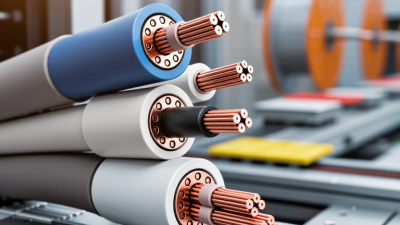
Choosing where to buy the best Three Core Flat Cable in China takes more than comparing prices. Buyers should check conductor material, insulation type, cable dimensions, and the conditions the cable must handle. A sample can reveal practical details that a product photo cannot, such as flexibility, finish, and how consistently the cores sit side by side. Small details matter.
A dependable supplier should provide clear specifications, traceable test information, and direct answers about production capacity. Ask how the cable is tested and whether its voltage and temperature ratings suit your equipment. If a seller cannot explain these points plainly, pause before placing a large order. A polished catalogue is not proof of quality. Factory visits, independent inspections, or documented sample checks can offer stronger evidence, though each has limits.
This guide explores how to compare Chinese manufacturers, distributors, and sourcing options without treating one supplier as right for every buyer. Consider communication, minimum order quantities, lead times, packaging, and after-sales support alongside the quoted price. Request written terms and confirm that the delivered cable matches the approved sample. That step is easy to overlook.
No checklist removes every risk. Specifications can be misunderstood, and a low-cost sample may not represent a full production run. Careful questions and realistic verification help buyers make a more informed choice when sourcing Three Core Flat Cable in China.
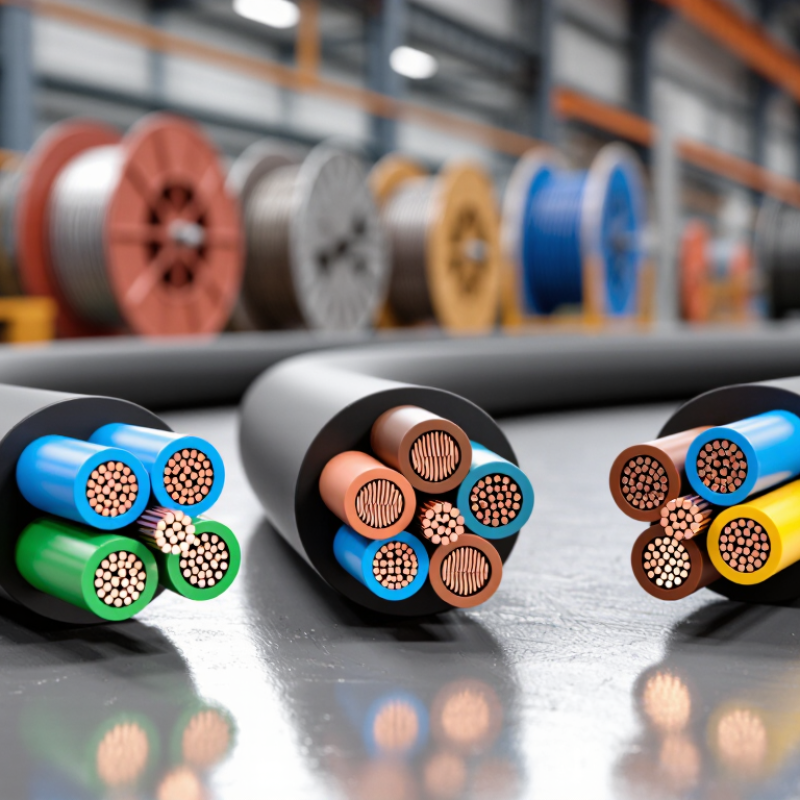
A three-core flat cable is defined by more than its shape. Check the rated voltage against the equipment supply and the full circuit, not just the machine’s normal reading. The three conductors may serve as phase, neutral, and protective earth, but confirm the wiring design before ordering. Copper offers good conductivity; conductor size and strand construction also affect current capacity and flexibility. Small details matter.
Operating conditions narrow the choice. A cable fixed inside a control cabinet faces different demands from one that bends repeatedly on moving equipment. Check the permitted temperature range, installation method, moisture exposure, and contact with oils or cleaning agents. For a tight cable track, ask about minimum bend radius and flex-life test conditions. The specification is not always neat; buyers sometimes overlook how a cable will move after installation.
When sourcing in China, request a datasheet that states voltage rating, conductor material and cross-section, insulation type, and temperature limits. Ask for sample lengths and relevant test records, then compare them with the intended application. A clear answer should connect each cable feature to a real operating condition. If a supplier cannot explain that connection, pause before placing a large order.
| Selection dimension | Common specification or option | When it may be suitable | What to verify before ordering |
|---|---|---|---|
| Rated voltage | 300/500 V or 450/750 V, depending on cable construction and applicable standard | Choose a rating that meets or exceeds the equipment design and installation requirements. These ratings are not interchangeable without checking the product standard. | Confirm the marked voltage, applicable standard, and whether the rating refers to the complete cable type—not just an individual conductor. |
| Conductor material | Annealed copper is common; aluminium is used only in certain designs and applications | Copper is commonly selected for flexible equipment cables because of its conductivity and suitability for stranding. | Specify conductor material, nominal cross-sectional area in mm², and conductor class. Do not compare products by outside diameter alone. |
| Conductor class | Class 1 or 2 for fixed installations; Class 5 or 6 for flexible conductors under IEC 60228 | Flexible classes can suit moving machinery when the cable construction and installation are designed for the movement involved. | Ask for the conductor-class declaration and confirm that the cable is suitable for the actual flexing duty. A flexible conductor alone does not make a cable suitable for continuous motion. |
| Core arrangement | Three insulated cores, commonly identified by color or numbering | May be used for three-phase circuits or for line, neutral, and protective earth, depending on the circuit and local rules. | State the required core identification and function. Where a protective conductor is included, verify its identification and the required cross-sectional area. |
| Insulation and sheath | PVC or rubber-based compounds are common; the correct choice depends on the cable standard and service conditions | PVC may suit many general-purpose installations. Rubber-based constructions may be specified for particular flexibility, temperature, or mechanical requirements. | Check the declared material, temperature rating, resistance to oil or chemicals if needed, and the relevant product standard. Do not assume all PVC or rubber compounds have the same performance. |
| Operating temperature | Specified by the manufacturer for the complete cable and its intended installation | Selection depends on ambient temperature, conductor loading, installation method, and any temperature extremes. | Request the permitted conductor and ambient temperature ranges, and verify that the cable’s current-carrying capacity is suitable for the installation. |
| Movement and bending | Fixed installation, occasional movement, or repeated flexing are different duty conditions | Flat cables are used in some moving systems, such as certain hoists or material-handling equipment, when designed for that application. | Provide the travel distance, movement frequency, bend radius, suspension arrangement, and any torsion or acceleration. Confirm the manufacturer’s stated suitability for the duty. |
| Environmental and mechanical conditions | Indoor or outdoor use; exposure to moisture, sunlight, abrasion, oil, or chemicals | The required sheath and protection depend on the exposure and installation environment. | List the actual hazards and request supporting specifications or test documentation. Verify any required UV, water, flame, or chemical performance rather than relying on a general description. |
| Applicable standards | Examples include IEC 60228 for conductor classes, IEC 60227 for certain PVC-insulated cable types, and IEC 60245 for certain rubber-insulated cable types | The applicable standard depends on the cable construction, rated voltage, and intended use. | Ask the supplier to identify the exact standard and edition claimed for the product. A standard number should match the actual cable type and rating. |
| Where to buy in China | Compare cable manufacturers and authorized industrial cable distributors that can provide a technical datasheet and traceable product documentation | Suitable for project procurement when the supplier can demonstrate that the offered construction matches the required specification. | Request samples where appropriate, a quotation against a written specification, inspection records, test reports, packaging details, lead time, and export documentation if shipping internationally. |
| Order specification | Record voltage, three-core configuration, conductor material and class, cross-sectional area, insulation and sheath, temperature range, movement duty, and required standard | A complete specification helps prevent substitutions that look similar but are not suitable for the application. | Have the final datasheet and order documents confirm the same construction, tolerances, markings, test requirements, and delivery length. |